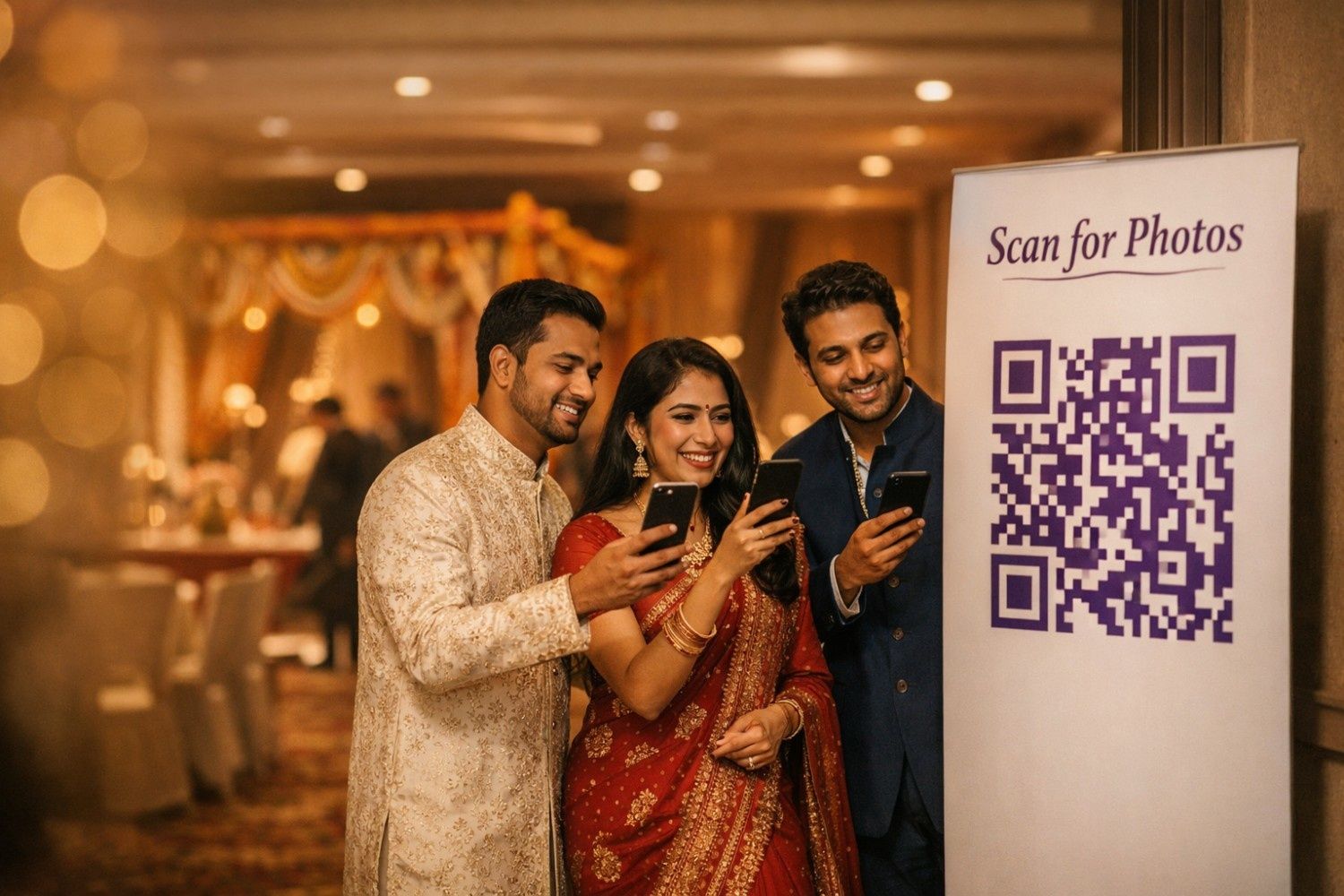
The event energy fades faster than you think—sometimes before the photographer even reaches home.
You’ve seen it happen.
The lights go off, the music stops, guests head home… and within hours, the WhatsApp groups are already buzzing:
“Did you get any good photos?”
“Tag me if you upload!”
“When will the pictures come?”
In that short window after an event, emotions are at their peak. Excitement is high, pride is fresh, and people want to relive the moment.
And yet, in most events, photos arrive days—or weeks—later.
By then, the moment has passed.
This is the uncomfortable truth of modern event photography:
👉 Client memory is shaped more by delivery speed than by technical perfection.
This is especially obvious in weddings. In India, where weddings are deeply social and sharing-driven, reducing photo delivery time for weddings isn’t a “nice-to-have” anymore. It’s a direct lever for how your work is remembered—and how often you get referred.
The Core Problem: Delayed Delivery Breaks Emotional Recall
Photography is emotional work. Whether it’s a wedding, a corporate offsite, a product launch, or an exhibition—your photos aren’t just images. They are memory anchors.
But memory has an expiry date.
When delivery is delayed:
- Guests forget specific moments
- The emotional peak flattens
- Photos feel like documentation, not experiences
You may deliver stunning images—but they no longer feel special.
Because what clients remember isn’t only your framing. They remember the feeling around delivery:
- Did photos come when the excitement was alive?
- Was access smooth—or stressful?
- Did guests find their moments easily—or did the couple become a helpdesk?
This is why delayed delivery affects more than “timeline.” It affects:
- client experience in event photography
- event photography client satisfaction
- perceived professionalism
- referral momentum
In short: late delivery doesn’t just delay photos. It delays impact.
Client Psychology: Speed = Professionalism
Here’s something clients rarely say out loud—but always feel:
“If they were fast, they must be good.”
In the client’s mind, speed signals control, confidence, and professionalism.
Fast delivery communicates:
- You were prepared
- You had systems
- You respected their excitement
Slow delivery, even with great photos, creates doubt:
- “Are they overwhelmed?”
- “Did we choose the right vendor?”
- “Will they deliver the album on time?”
This applies across audiences:
- Wedding couples want instant validation
- Corporate clients equate speed with efficiency
- Exhibition organizers want momentum while footfall is still relevant
Speed is perception. And perception is what gets you referred.
That’s why photographers who build a strong client gallery delivery workflow are often seen as premium—even when their photo quality is similar to others.
Same Photos. Two Timelines. Very Different Outcomes.
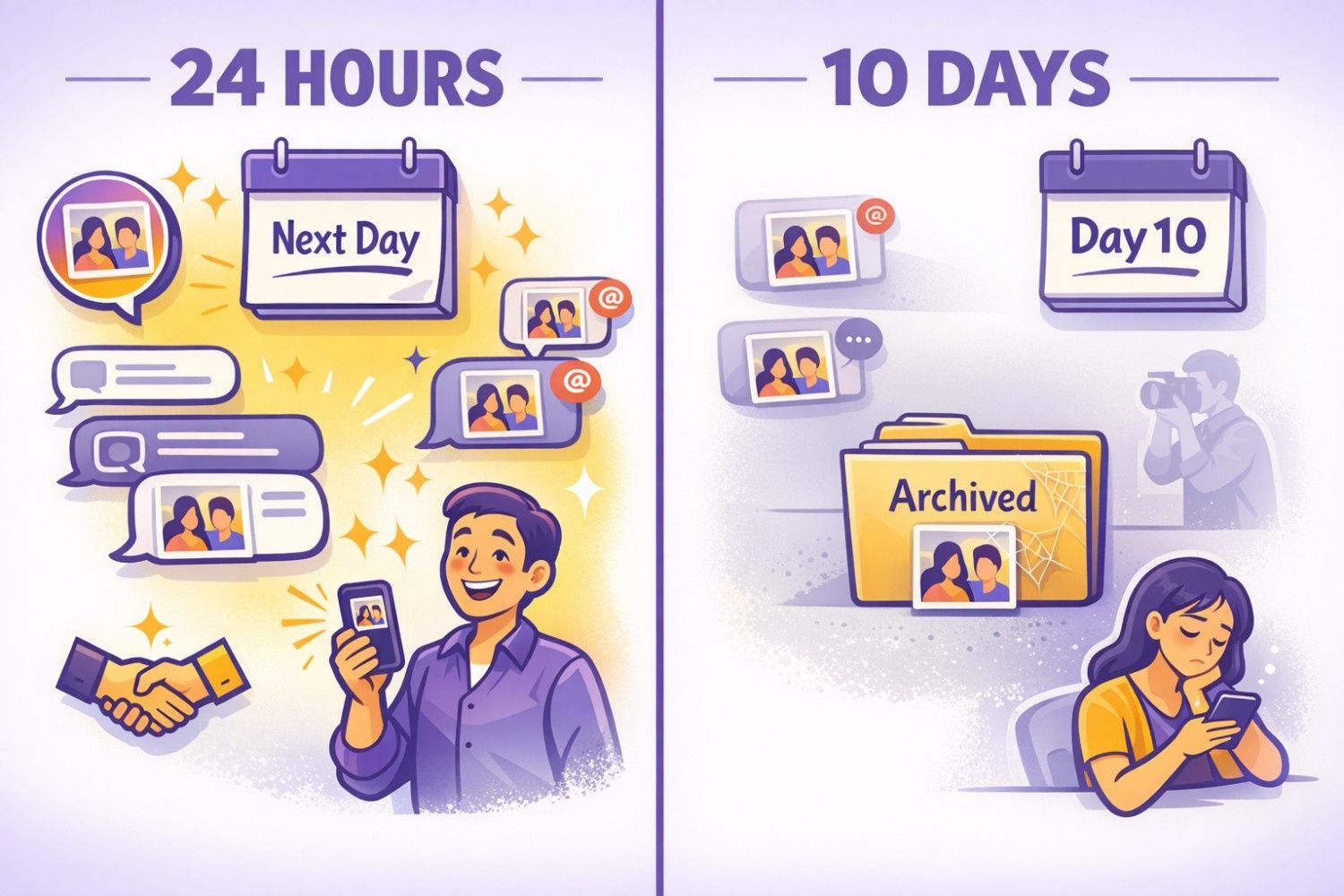
Let’s take the same set of photos and change just one thing: delivery time.
Scenario A: Delivered Within 24 Hours
- Guests share photos on Instagram immediately
- The event trends within internal WhatsApp groups
- Photographer gets tagged repeatedly
- Organizer feels proud and relieved
- Referrals start organically
Scenario B: Delivered After 10 Days
- Guests have moved on
- Social sharing drops sharply
- Photos are seen, not celebrated
- Organizer archives the link
- Photographer is forgotten
Same photos. Same quality.
This is why fast delivery—especially instant photo sharing with QR code access—has become a competitive edge. When guests can enter a gallery instantly and find their moments quickly, the photos don’t just get viewed. They get talked about.
And that conversation is what builds your brand in public.
Why Most Teams Still Deliver Late (And It’s Not Laziness)
Photographers and organizers want to deliver faster.
But traditional workflows are broken—especially once you hit high volume.
Common reasons delivery slows down:
- Manual sorting across thousands of images
- Endless Google Drive folders that guests can’t navigate
- WhatsApp requests and individual follow-ups
- “Can you find my photos?” messages
- Multiple shooters, duplicated bursts, messy merges
- Waiting till the event ends to even start upload
Speed collapses under scale.
And this is exactly where storage tools fail. Storage answers: “Where are the files?”
Delivery answers: “How does every guest quickly find what they want?”
That’s why modern teams are moving toward event photo distribution software—systems designed for real events, not generic file dumping.
The Kamero Flow: Speed Without Chaos
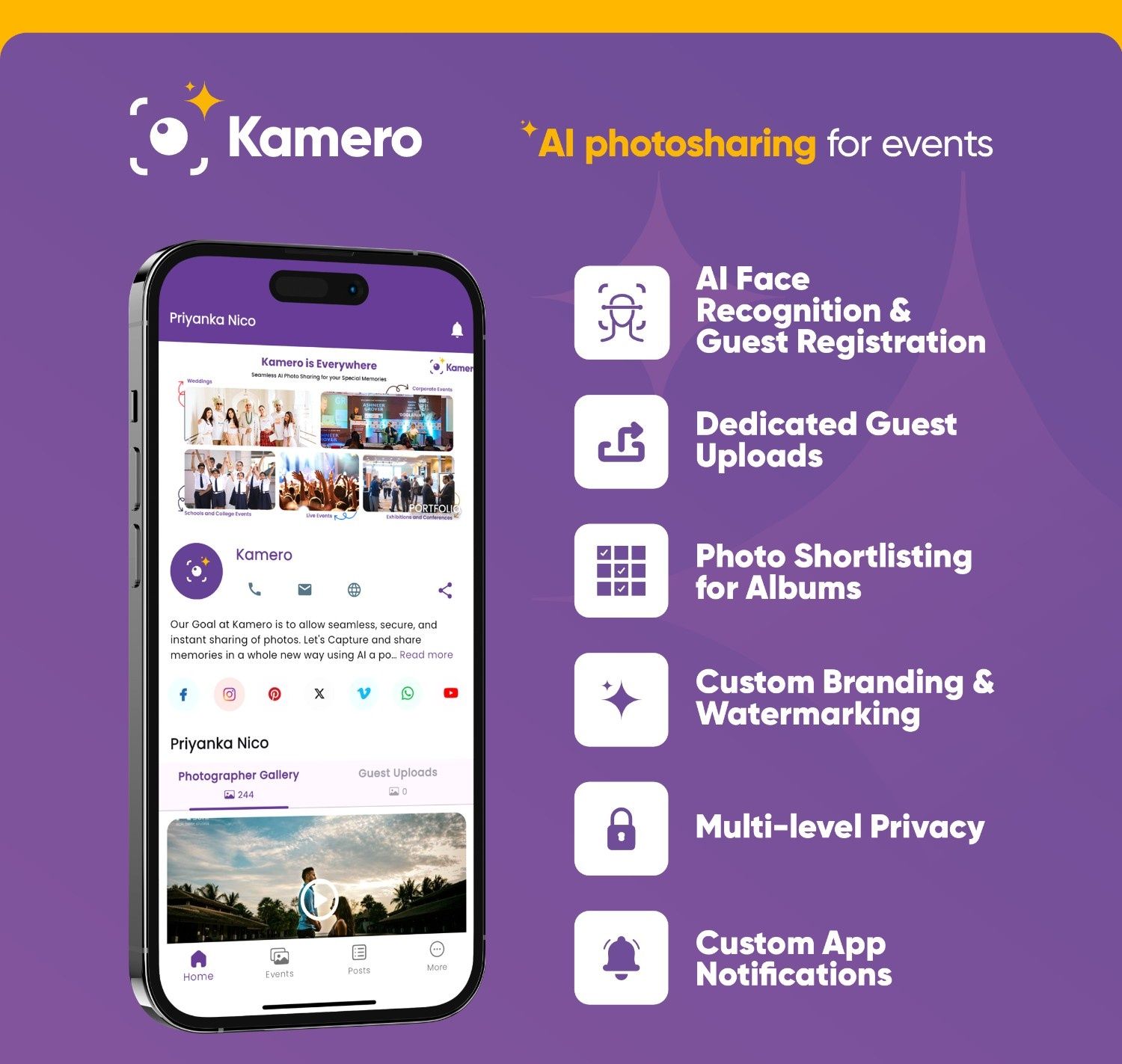
Fast delivery isn’t about rushing edits or sacrificing quality. It’s about removing friction from the workflow.
Kamero is an AI-powered event photo distribution software built for high-volume, high-emotion environments like weddings, corporate events, and festivals.
Here’s how speed becomes possible without chaos:
⚡ Upload Fast (so delivery starts early)
Photographers upload photos directly after—or even during—the event. Delivery becomes a flow, not a post-event project.
This reduces the biggest killer of speed: the “next day backlog.”
🤖 AI Face Match (so guests don’t browse)
Guests take a selfie. Kamero instantly finds only their photos—no scrolling, no searching.
This removes the most time-consuming part of delivery support: individual requests.
📲 Instant Access (so guests enter smoothly)
Guests access photos via QR code within minutes or hours—not days.
This is the simplest access behavior in real events: scan → open → view.
In other words, instant photo sharing with QR code becomes the entry point to a gallery experience that actually matches modern guest behavior.
🔒 Controlled & Branded (so sharing stays safe)
You stay in control of privacy, branding, and downloads.
That matters because speed without control creates fear. Kamero supports fast delivery with guardrails—so clients feel comfortable sharing widely.
What used to take days of manual work now happens as a structured workflow.
That’s the difference between “we will upload later” and a real client gallery delivery workflow.
Where “Event Photography Client Proofing” Fits in Modern Delivery
Most photographers associate proofing with “clients selecting photos.”
But in high-volume events, proofing becomes something bigger: a control layer that protects brand and client comfort while still delivering fast.
Event photography client proofing isn’t only about letting someone choose their favorites. It’s about enabling:
- review-first publishing (hide until approved)
- selective sharing (highlights first, full set later)
- private access controls (family vs guests vs organizers)
- download rules (watermarked previews, controlled originals)
In weddings, this is especially useful: you can deliver early without exposing everything instantly.
So instead of choosing between “fast” and “safe,” you get both.
This is how modern event teams deliver quickly without creating anxiety:
- the couple sees highlights first
- select albums go live after approval
- guests get a smooth experience without awkward leaks
That’s event photography client proofing evolved—from selection workflow to delivery control.
The Real Business Effect of Faster Delivery
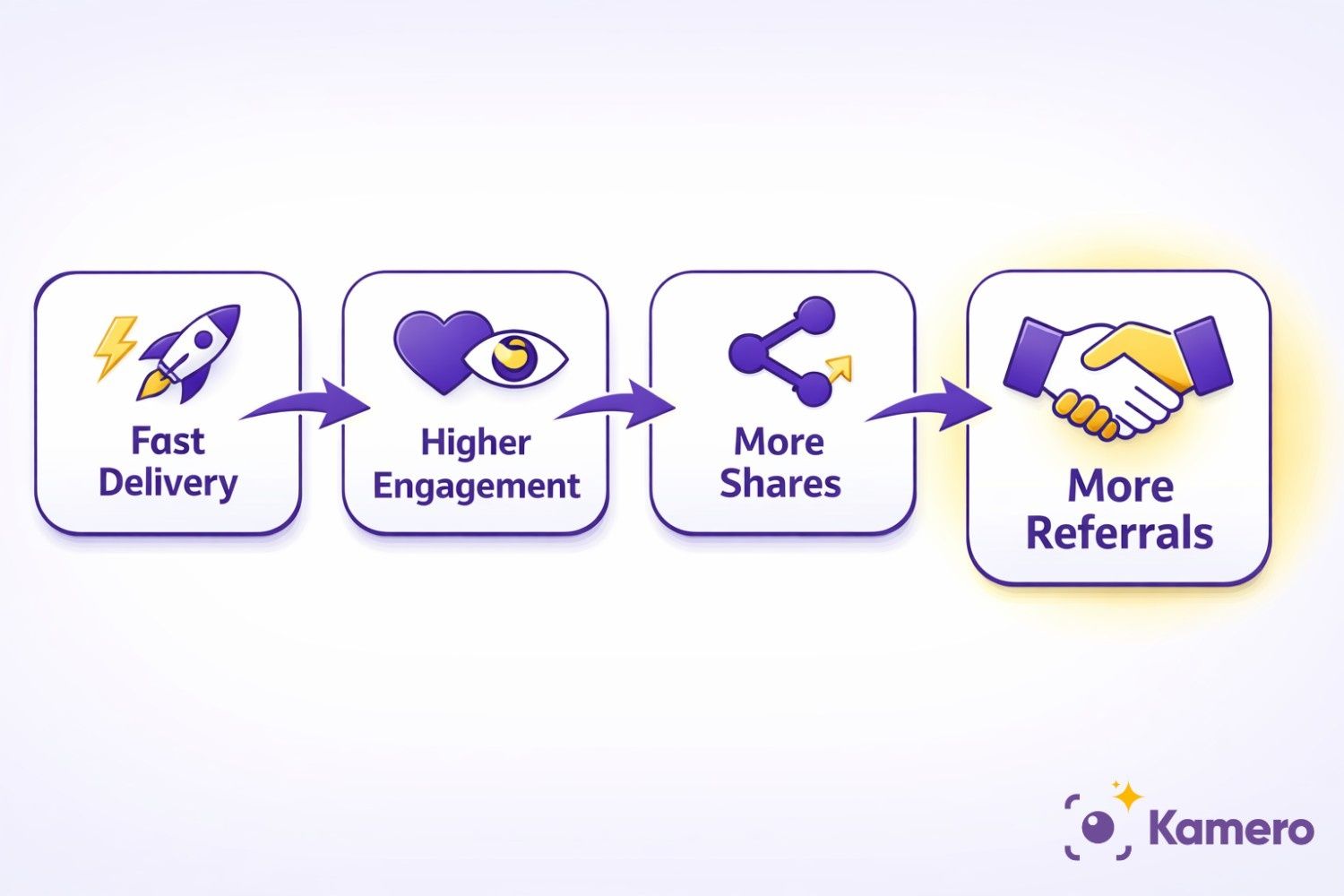
Faster delivery doesn’t just feel good—it performs better.
Across events using Kamero, teams consistently see:
- Higher guest engagement
- More social media shares
- Increased brand recall
- Stronger post-event conversations
And most importantly:
👉More referrals.
Because people don’t recommend photographers weeks later. They recommend the ones who impressed them while the emotion was still alive.
Speed creates a loop:
Fast delivery → guests share → photographer gets tagged → brand spreads → inquiries increase → premium perception rises.
This directly impacts:
- event photography client satisfaction
- repeat bookings
- brand perception
- upsell opportunities (albums, prints, downloads, licenses)
It also reduces operational stress. With a stable system, your team spends less time on follow-ups and more time shooting, editing, and scaling the business.
Reducing Photo Delivery Time for Weddings: What Actually Works
If your goal is to deliver faster without burning out, it’s not about working harder. It’s about upgrading the system.
A practical approach used by high-performing teams:
- Start delivery during the event (even if only for highlights)
- Use structured albums (function-wise) so galleries don’t become chaos
- Enable face-based discovery so guests don’t request manually
- Add privacy controls and review gates to avoid oversharing
- Make access effortless with QR entry so guests don’t chase links
This is why the best wedding teams don’t describe themselves as “fast editors.” They describe themselves as “system-driven.”
Because speed doesn’t come from late nights. It comes from a better client gallery delivery workflow.
Final Thought: Speed is Not Rushing—It’s Respect
Fast delivery isn’t about cutting corners. It’s about honoring the moment while it still matters.
When photos arrive during the excitement window, they get shared, remembered, and talked about—naturally.
That’s when great work turns into momentum (and referrals).
If you’re still delivering with “upload → share link → handle follow-ups,” you don’t have a delivery system—you have storage.
Modern teams are switching to event photo distribution software because it creates speed without chaos, control without friction, and delivery that feels premium.
👉Book a Kamero demo and experience modern event photo delivery in action.
About Tanuj Thakkar
Hi! I’m Tanuj Thakkar – a BCA graduate from St. Xavier's College, Ahmedabad, with an endless curiosity for people, ideas, and stories. I’m passionate about sales, marketing, and finding creative ways to connect with people. Nothing excites me more than understanding what makes someone tick and turning that into solutions that actually make a difference.
When I’m not diving into strategies or brainstorming ideas, you’ll probably find me exploring new places, geeking out on tech and innovation, or having conversations that spark fresh perspectives.