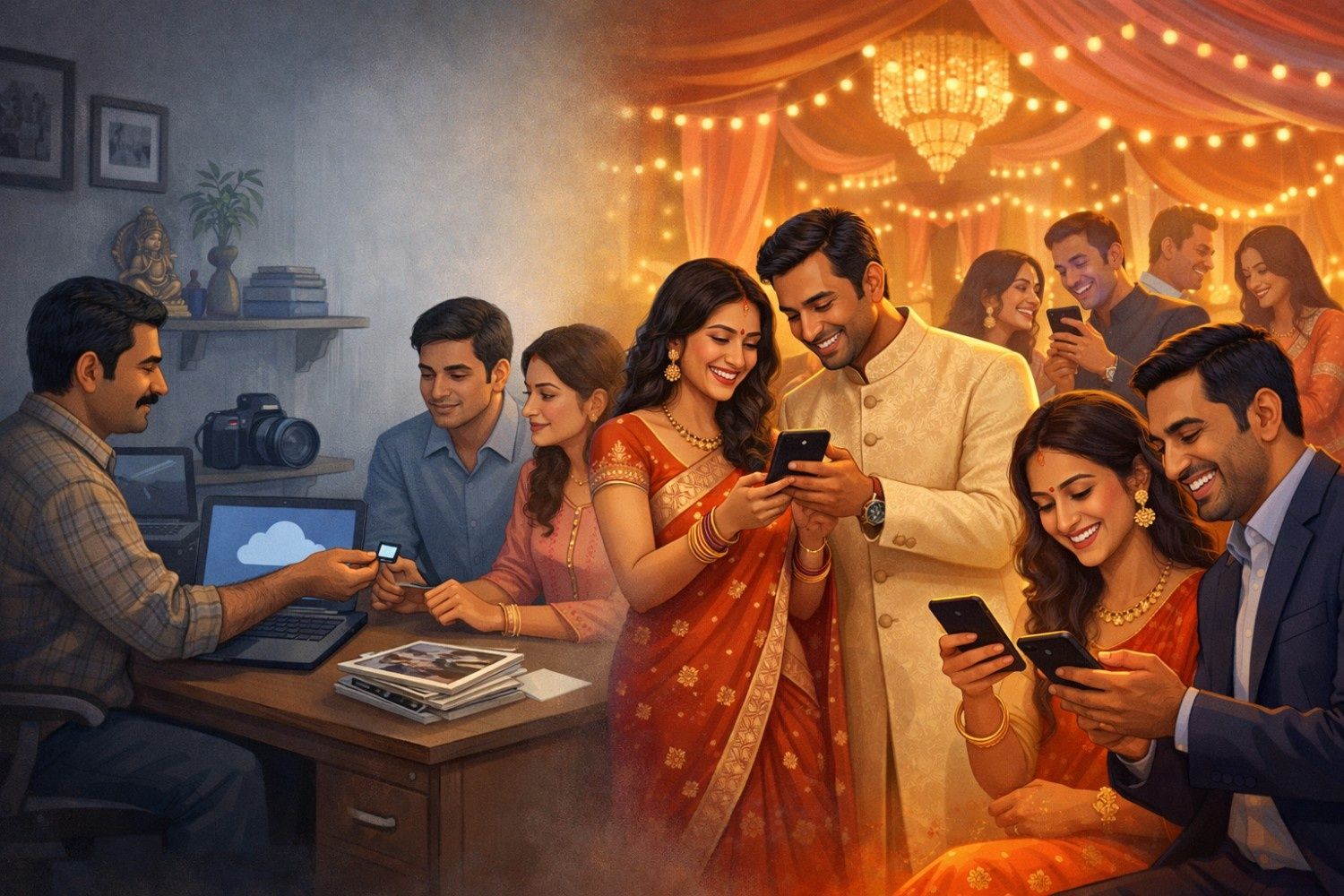
Delivery expectations evolved faster than workflows
A decade ago, handing over a Google Drive link or a USB stick felt like the finish line. Guests got their photos, the job was done, and everyone moved on.
But expectations changed quietly — and fast.
Today, people expect delight the moment their photo is taken: instant access, easy sharing, and a branded experience that connects them back to the photographer or the event. If your delivery workflow still lives in “post-event” mode, you’re leaving engagement — and revenue — on the table.
This is why the industry is shifting toward event photo distribution software: not just a place to upload, but a system that delivers photos as an experience—fast, personal, and controlled.
The past: download links felt enough
For years the standard workflow was simple: shoot, edit, export, upload, share link. It solved the basic problem — guests received images — but it created new problems:
- Guests had to hunt through folders to find themselves.
- Shareability was basic: a link and maybe a zip file.
- Brands and photographers missed the chance to turn views into followers or leads.
That “good enough” approach made sense when expectations were low. But as smartphones and social media pushed instant sharing into everyday life, those expectations shifted — and fast.
But as smartphones and social media pushed instant sharing into everyday life, delivery expectations moved from “give me the files” to “give me the moment.”
And the moment doesn’t wait till next week.
The present: guests expect instant interaction
Modern event guests don’t separate the moment from the memory. They want the thrill of seeing themselves on the big screen, in their phone gallery, or in a branded mobile album — right away. A few realities now shape event photo delivery:
- People expect real-time access and social-ready assets.
- Attendees value frictionless ways to find their photos (selfie-based search, face recognition).
- Organizers want control: privacy settings, branded experiences, and lead capture at scale.
Example: at a wedding or corporate launch, seeing your image on a live gallery — and being able to share it instantly — sparks word-of-mouth and social buzz in the moment. That’s engagement you can measure and amplify.
This is exactly where instant photo sharing with QR code changes the game. A QR isn’t just a link—it’s a doorway. Guests scan, enter, and the gallery becomes part of the event experience, not a post-event deliverable.
The shift: static links → live galleries
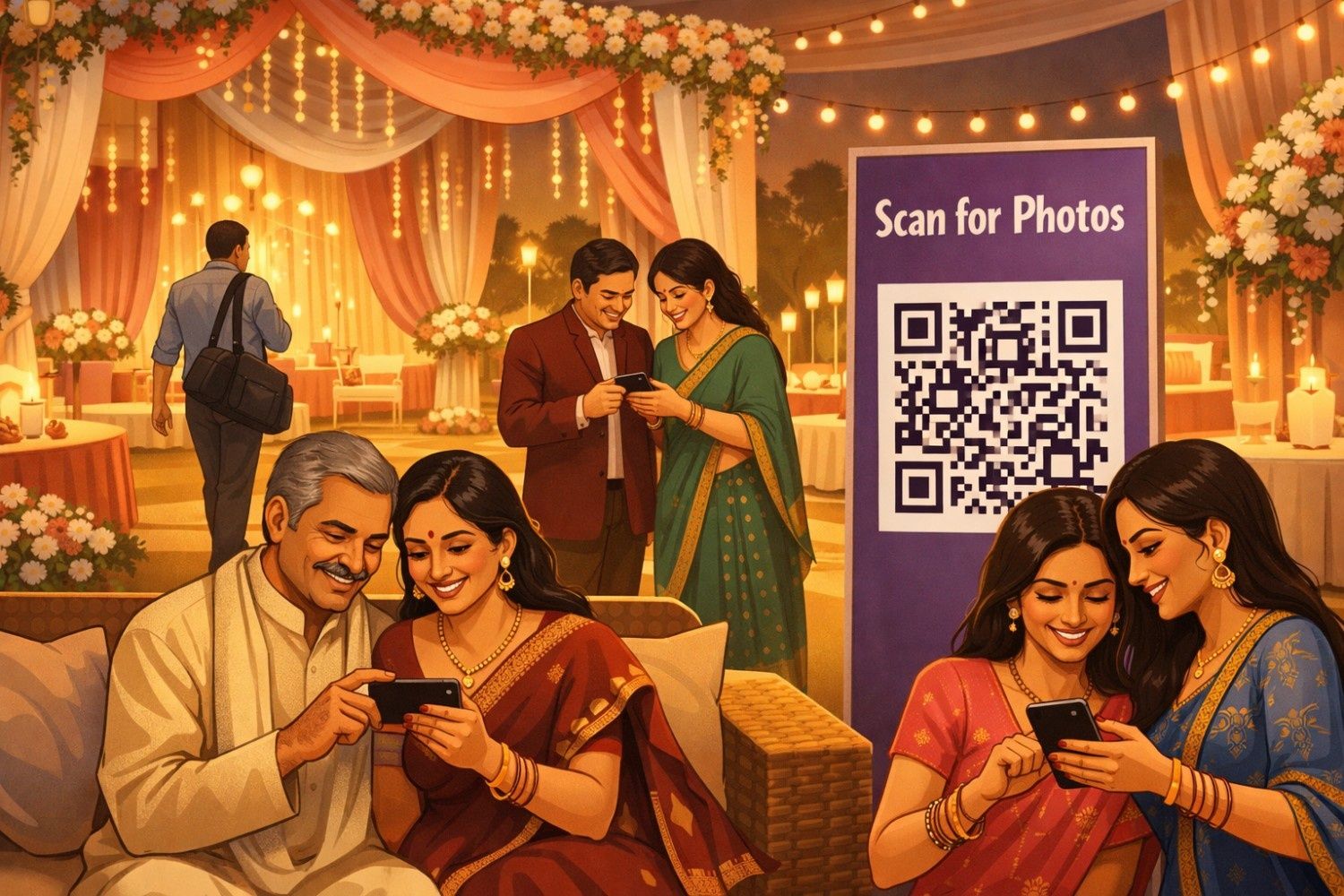
Moving from static download links to live galleries is more than a feature upgrade — it’s a mindset shift. Live galleries change the delivery from a one-time handover to an ongoing engagement channel.
When you use a live gallery, you’re not merely “sharing photos.” You’re running a system where discovery, sharing, and brand recall happen automatically while the event is still hot.
What a live gallery brings to the event workflow:
- Instant discovery: Guests find photos by selfie or quick search rather than digging through folders. This is the biggest upgrade over storage links: people find relevant photos fast, not just “all photos.”
- Crowd-sourced coverage: Guest uploads sit alongside pro shots, giving a fuller story of the event. When moderated well, this becomes a living timeline of the day—multiple angles, multiple moments.
- Branded experience: Custom profiles, watermarks, and branded QR codes turn photos into marketing touchpoints. Every share becomes brand exposure without you having to ask.
- Real-time sharing: Photos go live during the event, fuelling social reach and sponsor visibility.
This is where a real-time event photo slideshow becomes a natural extension. Once photos are live, you can run highlights on screens, LED walls, or venue displays—turning photography into a live audience experience. Guests don’t just “wait for photos.” They watch moments appear and share them instantly.
This shift also improves operational speed: shorter album selection cycles, faster client approvals, and quicker invoicing — all because the gallery becomes an experience, not an afterthought.
The Kamero difference: real-time access, AI discovery, privacy-first access
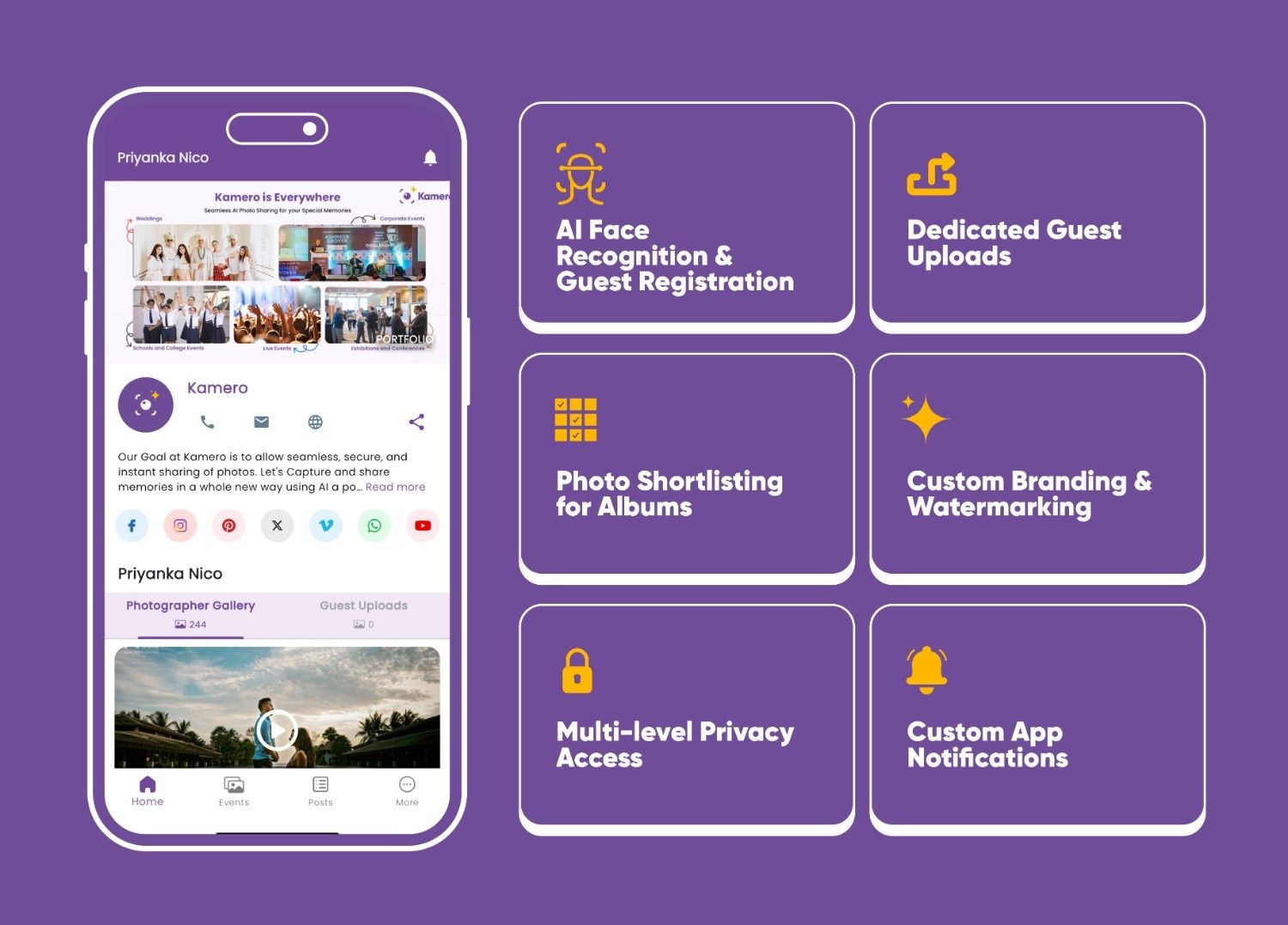
If you’re evaluating platforms, a few capabilities separate hobby apps from a true event photo sharing platform.
Kamero is designed like event photo distribution software—built for real events where guest behavior, privacy, and scale matter.
Here’s what that looks like in practice:
- AI-powered discovery: Guests can locate every photo they appear in with a selfie — instantly. No manual tagging, no waiting for overnight processing. This drives satisfaction and reduces support overhead.
It also means the gallery stays usable even when there are thousands of photos. Guests aren’t browsing. They’re discovering. - Guest uploads + unified galleries: Combine pro and guest perspectives in one curated space so nothing is missed — and attendees feel part of the story.
Instead of the photographer being the only storyteller, the event becomes a shared timeline (with optional moderation). This keeps engagement active because guests aren’t passive viewers—they participate. - Branded profiles & watermarking: Every share becomes a marketing moment; guests promote the photographer’s brand automatically when they post.
This is where many teams see the biggest long-term benefit: the gallery keeps working even after delivery, because it converts viewers into future inquiries. - Privacy & access controls: Multi-level privacy (PINs, event-specific access) keeps sensitive images secure — critical for schools, corporate events, and VIP areas.
This is the difference between an open link and a privacy-first photo sharing app experience. Privacy isn’t an afterthought—it’s built into the delivery logic, so you can move fast without fear. - Lead capture & notifications: QR-code sign-ins and custom push notifications turn galleries into lead funnels and engagement channels.
This matters because the real opportunity isn’t only “delivery.” It’s the moment of attention. If 400 guests view your gallery, that’s 400 warm impressions. With the right system, it can become 400 leads. - Sell Photos (monetization): Let guests buy and download premium photos after the event—turn every gallery into an extra revenue stream.
This is where sell event photos online face recognition becomes powerful. If guests can instantly find their best photos (via selfie discovery), monetization becomes natural. They aren’t paying for a random gallery—they’re paying for their moments, already filtered and ready. - Kam-Sync / Camera-to-Cloud (real-time uploads): Upload directly from your camera while you shoot, so galleries start building during the event—not after it ends.
This is the core reason live galleries feel “instant” instead of “later.”
Real examples (based on real workflows): photographers report that easy shortlisting and instant access can cut album selection time dramatically — meaning faster approvals and payments. And when galleries are branded and discoverable, photographers see more inquiries from event guests who loved their photos.
Outcome: engagement beyond delivery
When photo delivery becomes an experience, the ROI shows up across three layers:
1. Guest delight & social reach
Instant, shareable memories create social proof at scale. Live galleries keep the event alive online while it’s still happening.
This is where instant photo sharing with QR code changes outcomes. The easier it is to enter, the more people participate. And participation drives sharing.
2. Brand recall & lead gen
Branded galleries + QR registration turn attendees into warm leads who already know and like your work.
A storage link ends the relationship after delivery. A live gallery extends it—because it connects guests back to the photographer’s brand.
3. Operational efficiency
Faster curation, shorter delivery cycles, and fewer manual follow-ups mean photographers and planners can take on more events without adding overhead.
And for teams that monetize, the upside compounds: with sell event photos online face recognition, people can buy the photos they care about most, without you manually sending files and chasing payments.
In short: the gallery stops being a passive file dump and becomes a channel for marketing, engagement, and revenue.
How to adopt a modern event photography workflow (practical checklist)
- Start events with a branded QR for guest sign-ups.
- Use a platform with AI-powered event photo discovery so guests can instantly find themselves.
- Enable guest uploads and moderate selectively to enrich the gallery.
- Apply watermarks for brand visibility and protect your work.
- Use custom notifications during and after the event to drive engagement and follow-ups.
- If relevant, run a real-time event photo slideshow for highlights—on screens, LED walls, or venue displays—to keep the gallery top-of-mind during the event.
The key is not “more tech.” It’s less friction.
A good system makes delivery feel automatic for photographers and effortless for guests—which is exactly what event photo distribution software is supposed to do.
Keywords in practice
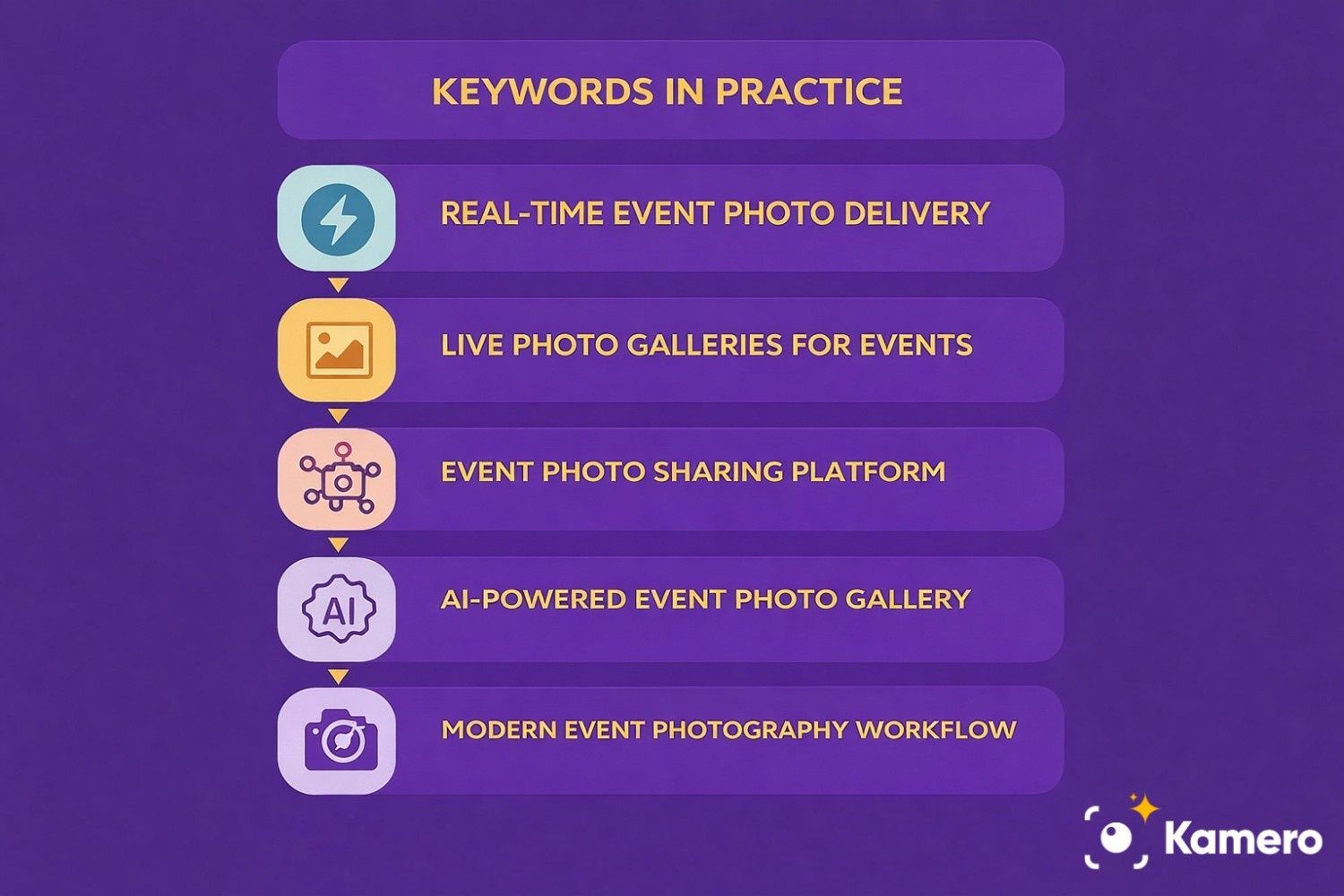
If you’re writing your website, proposals, or marketing copy, focus on how you solve the real problems behind the searchers’ queries:
- “real-time event photo delivery” → show instant selfie-to-album examples.
- “live photo galleries for events” → demonstrate live slideshows and social sharing.
- “event photo sharing platform” → emphasize privacy, branding, and lead capture.
- “AI-powered event photo gallery” → explain face recognition and fast discovery.
- “modern event photography workflow” → map the end-to-end process from capture → gallery → conversion.
From “Link Later” to “Live Now”
Want to see what “live delivery” actually feels like (not just read about it)? 👀
Run one event on Kamero and watch the gallery build in real time—guests find themselves by selfie, share instantly, and your work starts spreading while the event is still hot. 🚀
Choose your next step: book a demo for a guided setup 🤝, or start your first event and test live delivery + AI discovery hands-on.
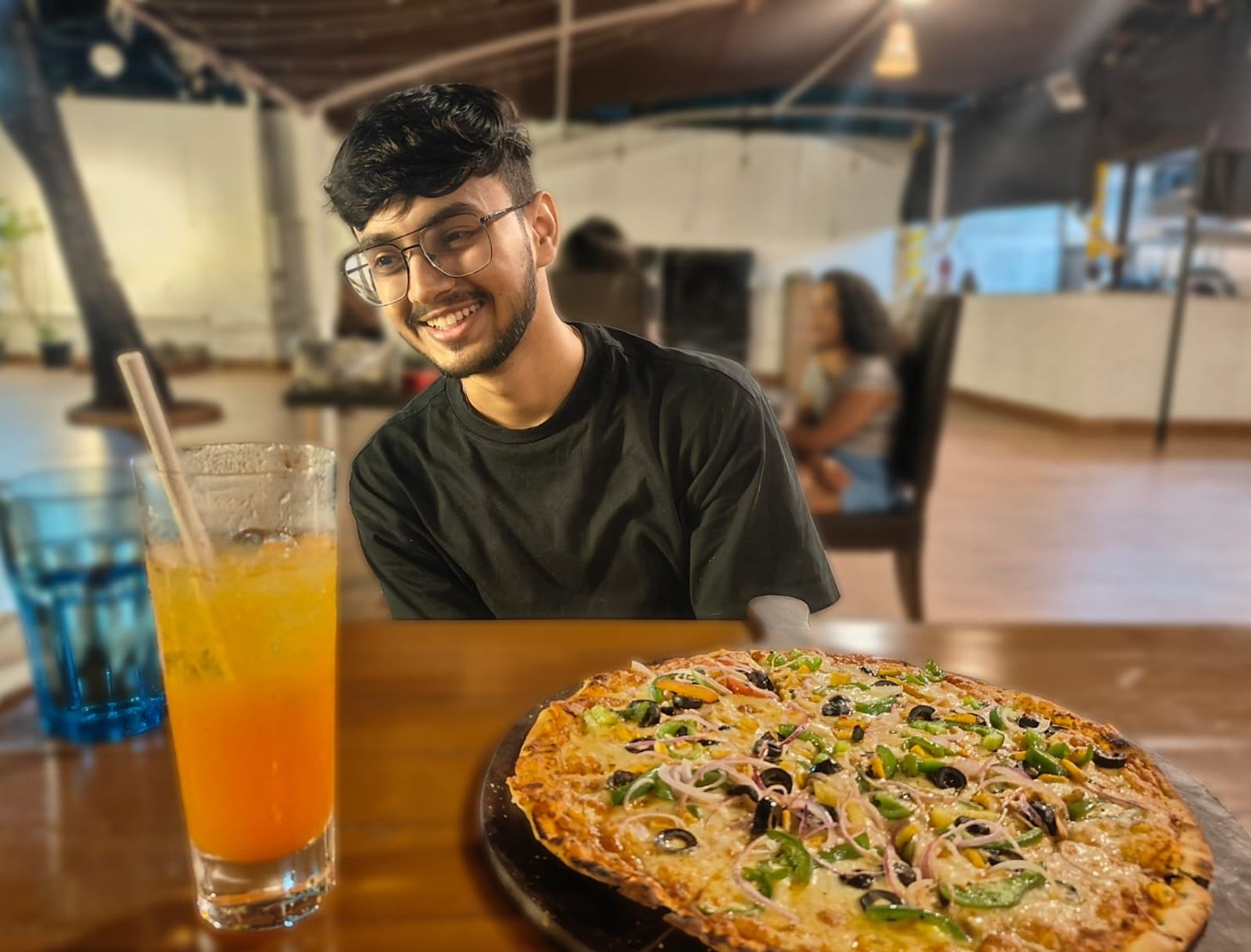
About Tanuj Thakkar
Hi! I’m Tanuj Thakkar – a BCA graduate from St. Xavier's College, Ahmedabad, with an endless curiosity for people, ideas, and stories. I’m passionate about sales, marketing, and finding creative ways to connect with people. Nothing excites me more than understanding what makes someone tick and turning that into solutions that actually make a difference.
When I’m not diving into strategies or brainstorming ideas, you’ll probably find me exploring new places, geeking out on tech and innovation, or having conversations that spark fresh perspectives.