
The first 500 guests feel easy.
The real test of your workflow starts at 5,000.
At small events, almost any photo delivery method works.
A Google Drive link.
A shared Dropbox folder.
A WhatsApp broadcast after the event.
Things move. Clients are happy. You move on.
But scale has a way of exposing weaknesses you didn’t know existed.
Because when guest count grows, complexity doesn’t grow linearly—it multiplies. And event photo delivery is one of the first systems to break under pressure.
That’s why large teams are moving from “links” to event photo distribution software—not because they want extra features, but because they need delivery infrastructure that doesn’t collapse when volume spikes.
When Volume Enters the Room, Assumptions Leave
At 200 guests:
- One photographer
- One folder
- One delivery link
At 5,000 guests:
- 6–15 photographers
- Multiple cameras per shooter
- Thousands of near-duplicate photos
- Guests demanding instant access
- Privacy concerns across VIPs, staff, sponsors, and attendees
Yet many teams still rely on the same tools they used at smaller events.
That’s where the cracks begin to show.
The moment you scale, “delivery” stops being a file-sharing task and becomes an operational system. The goal is no longer “upload everything.” The goal becomes:
- keep the gallery organized without manual sorting
- let guests self-serve without messaging the team
- protect sensitive images automatically
- maintain performance even with tens of thousands of photos
That’s what the best photo gallery for high volume events is actually measured on—not how pretty the folder looks, but whether it survives real usage.
The Problem: Ad-Hoc Delivery Collapses Under Volume
Traditional workflows break quietly at first.
- Drive links stop syncing
- Uploads fail overnight
- WhatsApp groups explode with repeated questions
- Guests download the wrong photos
- Organizers lose visibility into what’s been shared
What felt “manageable” at smaller events becomes operational chaos at scale.
The issue isn’t speed.
It’s fragility.
Ad-hoc tools weren’t designed for event photo management at scale. They weren’t built to handle:
- multi-uploader environments
- guest behavior in crowds
- security needs for sponsors/VIPs
- identity-based discovery (“show me my photos”)
This is where the difference between storage and systems becomes undeniable. Storage can hold 50,000 files. But it can’t deliver a controlled experience to 5,000 people.
That’s why teams running corporate summits and expos increasingly look for a conference photo sharing platform—something designed for high-attendance, high-stake environments where access rules and scale aren’t optional.
The Mechanism: Scale Multiplies Complexity Non-Linearly
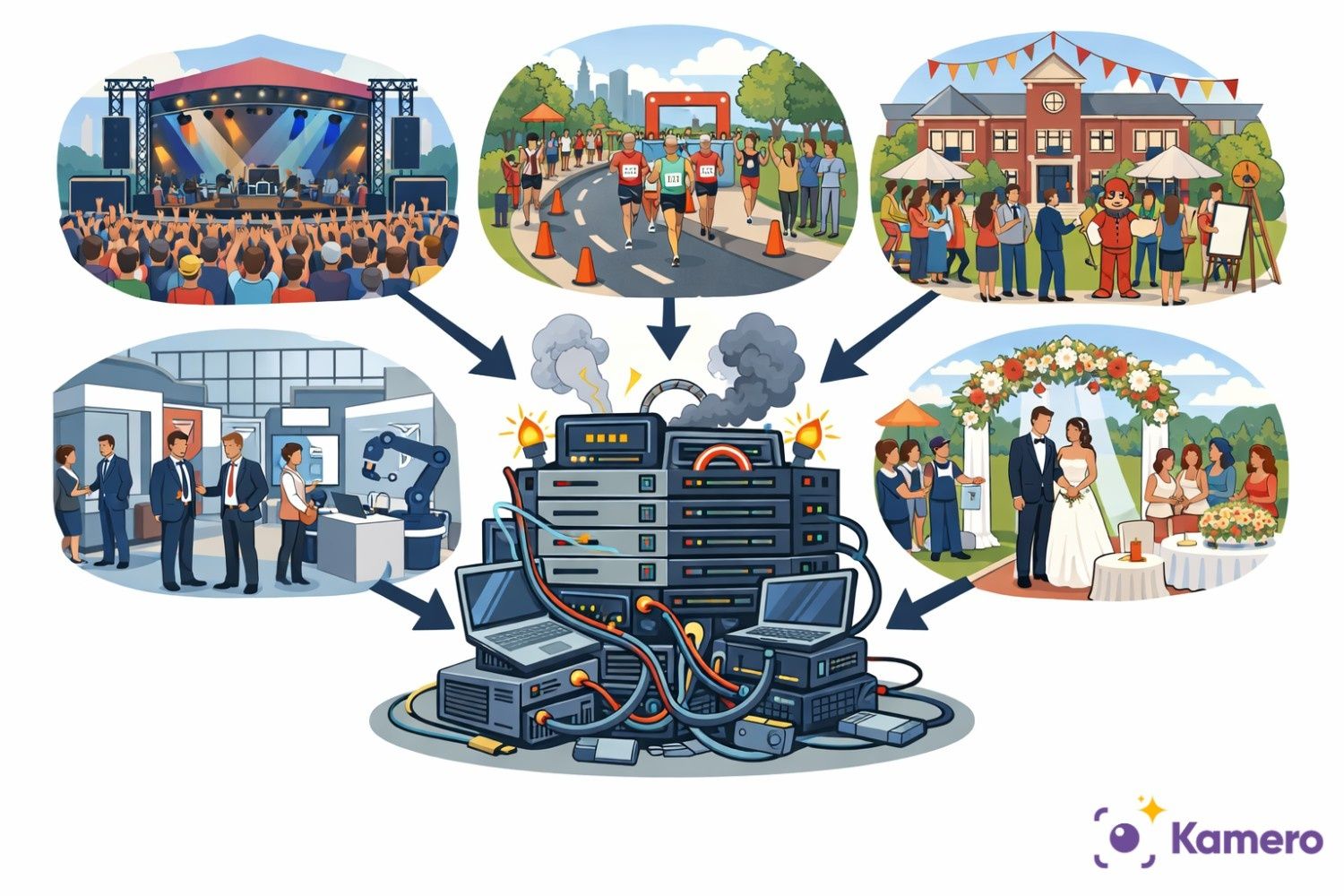
Here’s what large events actually add:
- More photographers = inconsistent naming, uploads, formats
- More cameras = duplicates, missed moments, version confusion
- More guests = exponential increase in “Where are my photos?” messages
- More stakeholders = stricter privacy requirements
Each added layer doesn’t add work—it adds failure points.
This is why multi photographer event workflows break most often during:
- Festivals
- Corporate exhibitions
- Marathons
- College fests
- Destination weddings with multiple functions
The system isn’t stressed—it’s overwhelmed.
And at that point, quality isn’t the bottleneck. Logistics is.
If guests can’t find themselves quickly, they leave.
If links can be forwarded, privacy collapses.
If uploads happen late, engagement dies.
This is exactly why identity-based access is becoming the new standard—especially when paired with a QR code face recognition gallery experience. It reduces browsing, reduces requests, and reduces chaos all at once.
Before vs After: Firefighting vs Resilience
Before (Traditional Workflow):
- Nights lost manually sorting folders
- Teams responding to DMs instead of resting
- Organizers panicking over leaked photos
- Photographers doing customer support instead of shooting
Delivery becomes a crisis management exercise.
And what makes it worse is the timing: large events rarely happen in isolation. You’re often shooting multiple events back-to-back. So the delivery backlog doesn’t just create stress—it compounds.
After (Resilient Workflow):
- Photographers upload continuously
- Guests self-serve their photos
- Privacy rules apply automatically
- The system absorbs volume silently
The difference isn’t effort.
It’s architecture.
A resilient workflow is built like infrastructure: it runs even when humans are busy. It doesn’t require “someone to manage it” every hour. It simply works.
That’s what event teams mean when they say they need event photo distribution software—a system that behaves predictably at scale.
Kamero’s Role: Built for Volume, Not Just Sharing
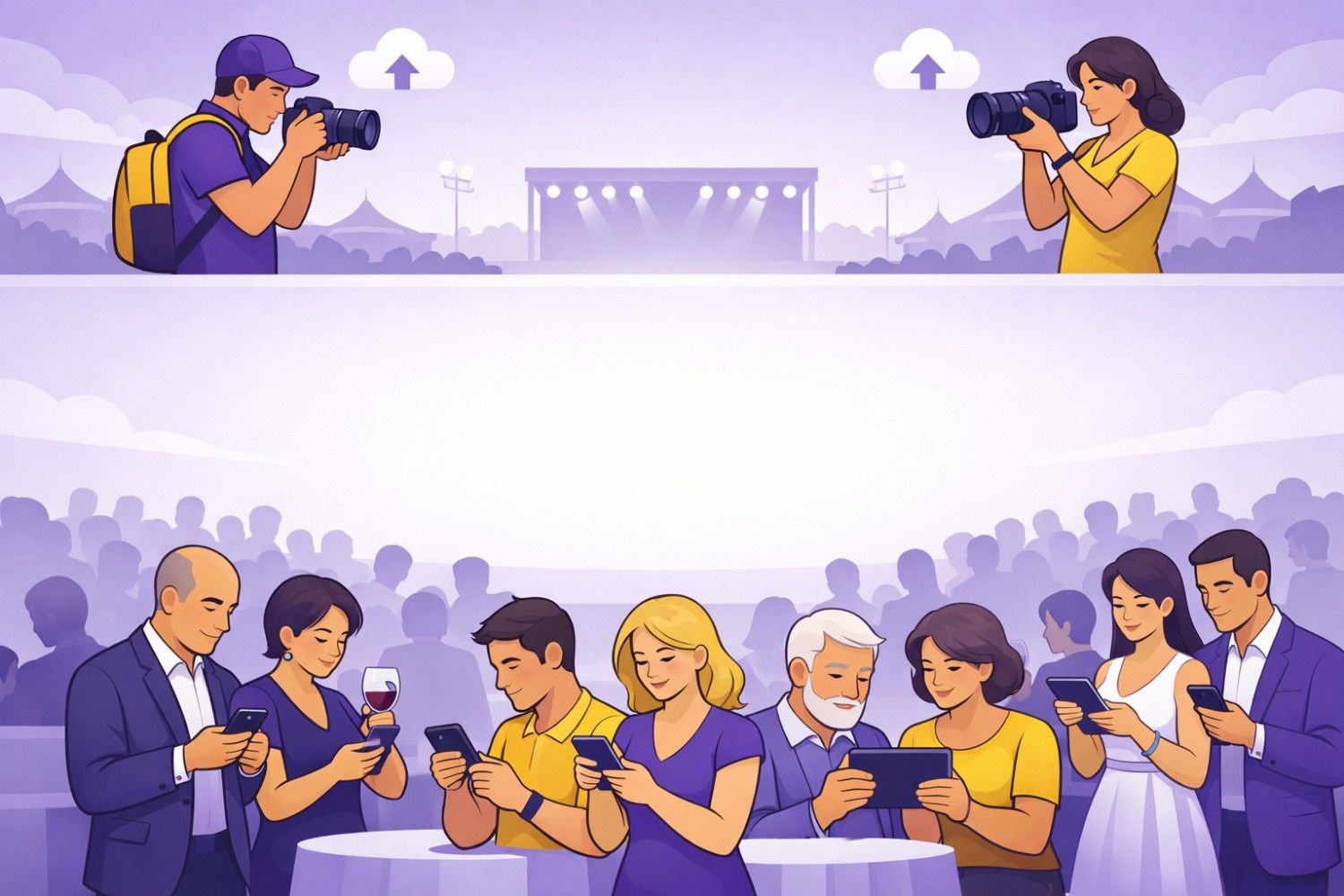
Kamero isn’t positioned as a “photo sharing tool.”
It’s delivery infrastructure for large events.
It’s designed for the moments when volume is so high that manual processes break—exactly the environment where the best photo gallery for high volume events becomes a business requirement, not a nice-to-have.
Here’s what changes when delivery is designed for scale:
✔ Multi-Shooter Uploads
Multiple photographers upload simultaneously into one structured event environment—without folder chaos.
This matters because the biggest delay at scale isn’t editing. It’s consolidation. When folders are spread across shooters, delivery becomes a merge project. Systems eliminate that bottleneck.
✔ AI Face Mapping
Guests find their own photos using a selfie, eliminating browsing, tagging, or manual sorting.
At scale, “discovery” is the real product. Guests don’t want “all photos.” They want their photos. A QR code face recognition gallery makes that effortless: scan → selfie → “my photos.”
This is exactly the kind of experience a modern conference photo sharing platform needs, because conferences aren’t one-family events—they’re mixed crowds where identity-based discovery prevents noise and confusion.
✔ Built-In Privacy Controls
Face-level access and PIN-protected galleries ensure the right photos reach the right people—automatically.
This is where a privacy-first photo sharing app approach becomes essential. Large events are not only public. They often contain:
- VIPs
- sponsor booths
- staff-only moments
- internal teams
- staged brand assets
One open link is enough to create a reputational problem. Privacy-first controls reduce that risk without slowing delivery.
✔ Guest Self-Service
Thousands of attendees access photos without messaging your team. The system handles demand, not humans.
That’s what festival and conference workflows actually need: not “faster uploads,” but fewer interruptions.
This is what festival photo sharing platforms and conference photo sharing platforms must do—scale without noise.
The Impact: Fewer Pings, More Control
At large festivals and exhibitions, Kamero has handled:
- 35,000+ photos
- Thousands of guests
- Multiple access levels
- Continuous uploads during events
And the biggest win?
Not faster delivery—but fewer interruptions.
When guests can find their own photos:
- Support load drops
- Trust increases
- Teams focus on execution, not damage control
That’s delivery resilience.
And this is the quiet KPI most teams miss: not “how fast did we upload,” but “how many times did we get interrupted.”
Because at scale, interruptions are expensive. Every “send my photo” request multiplies across thousands. Every manual step becomes a bottleneck. Systems remove those bottlenecks by design.
The Real Question Before Peak Season
Before your next big season, ask yourself:
- What happens when 10 photographers upload at once?
- Who controls access when sponsors and VIPs are involved?
- How many messages does your team answer per event?
- Is your system built to scale—or just to cope?
Because large events don’t forgive fragile workflows.
And once you cross a certain threshold, your delivery method becomes part of your brand. If it feels messy, the event feels messy. If it feels controlled, the event feels premium.
That’s why teams running large weddings, festivals, and corporate events evaluate tools like they evaluate operations—not like they evaluate storage.
They want:
- a privacy-first photo sharing app level of control
- a QR code Ai face recognition gallery style of self-service discovery
- the reliability of true event photo distribution software
- the performance expected from the best photo gallery for high volume events
- and the access structure of a true conference photo sharing platform
Final Thought: Tools Help. Infrastructure Survives.
Small events reward speed.
Large events reward resilience.
If your delivery system collapses under volume, it’s not a people problem—it’s a system problem.
Kamero exists for teams who’ve crossed that threshold.
For events where delivery isn’t an afterthought—but a core operation.
Go into peak season with a system—create your next event and see how Kamero works end-to-end.
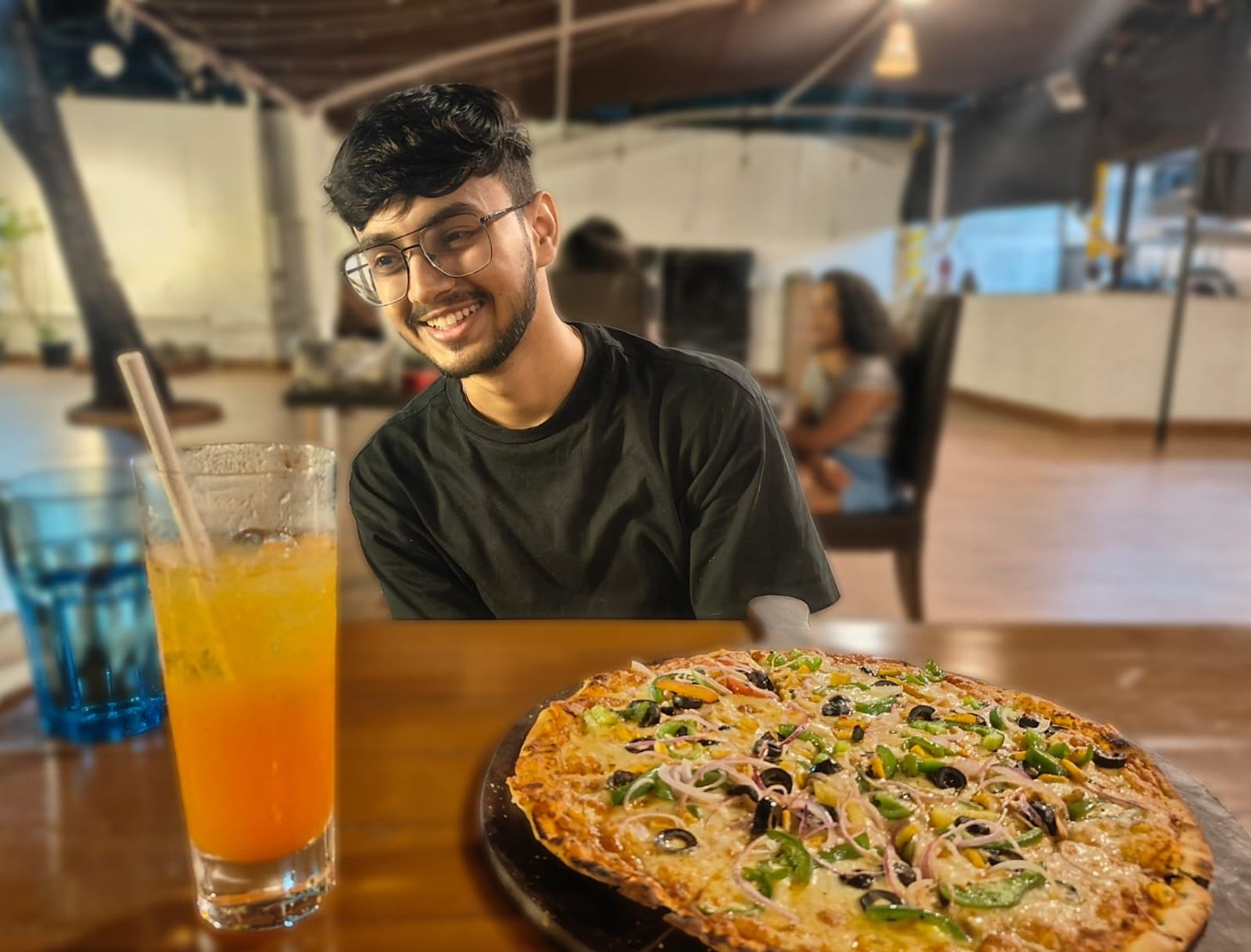
About Tanuj Thakkar
Hi! I’m Tanuj Thakkar – a BCA graduate from St. Xavier's College, Ahmedabad, with an endless curiosity for people, ideas, and stories. I’m passionate about sales, marketing, and finding creative ways to connect with people. Nothing excites me more than understanding what makes someone tick and turning that into solutions that actually make a difference.
When I’m not diving into strategies or brainstorming ideas, you’ll probably find me exploring new places, geeking out on tech and innovation, or having conversations that spark fresh perspectives.