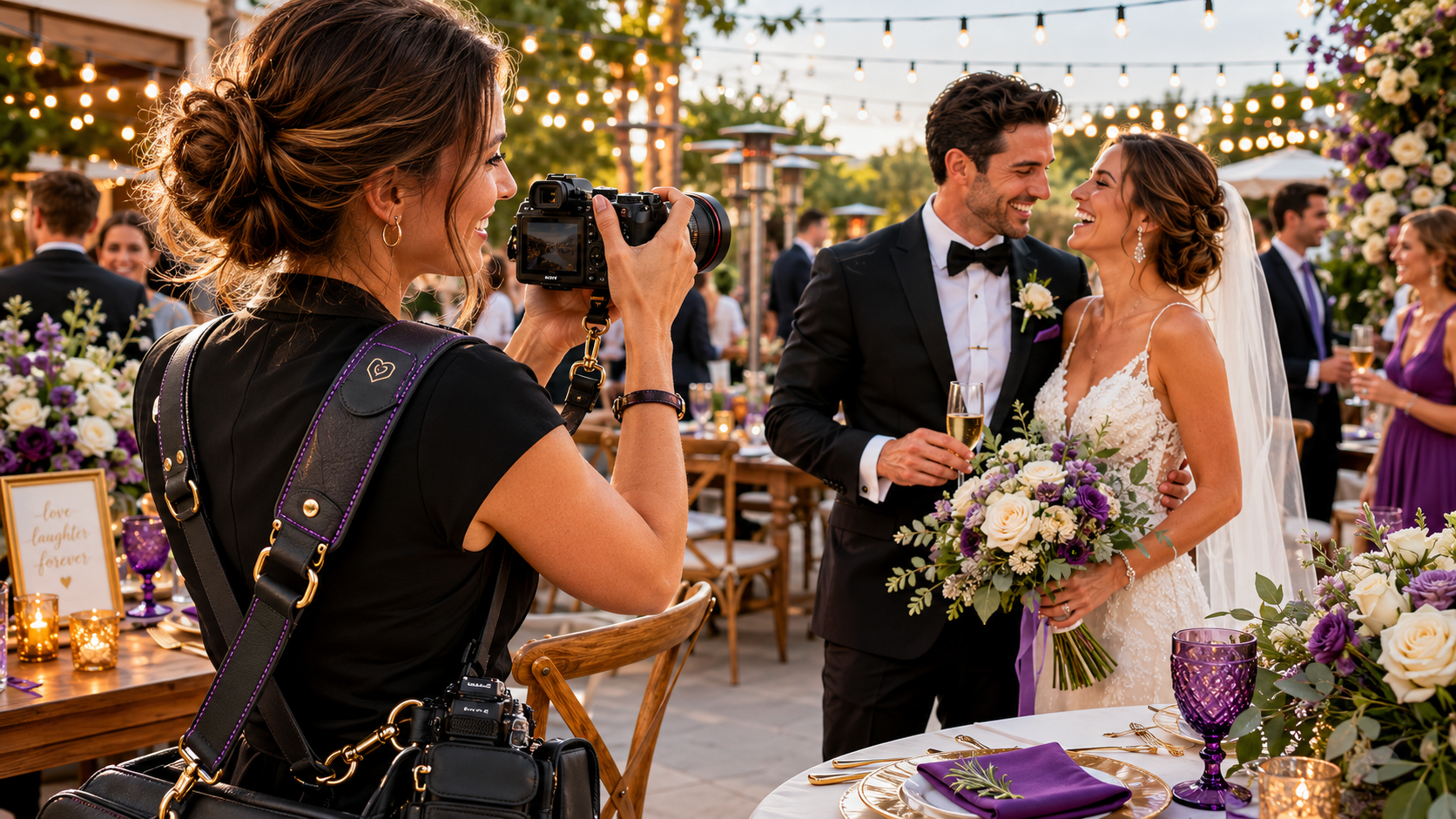
Introduction: The New Standard in Wedding Photography Logistics
For years, wedding photography has been measured by artistic quality. Today, it is increasingly being measured by speed.
Couples no longer live in a world where waiting six to eight weeks for professional photographs feels normal. The same consumers who expect instant communication, real-time updates, and on-demand services now expect faster access to their wedding memories as well.
This shift is creating a new competitive advantage for photographers. Studios capable of delivering same-day wedding photos or guaranteeing a 24-hour wedding delivery are positioning themselves ahead of competitors who still operate on traditional timelines.
The challenge is obvious. Most photographers are already balancing demanding schedules, large image volumes, and client expectations. The idea of faster delivery often sounds like a recipe for burnout.
In reality, the photographers succeeding with rapid delivery are rarely working longer hours. They are working with better systems.
Shifting from 8-Week Delays to Instant Photo Gratification
The traditional wedding workflow was built around delayed delivery. Photographers captured the event, returned to the studio, transferred files, created backups, completed culling, and eventually delivered the gallery.
That process made sense when technology imposed limitations.
Today, those limitations are disappearing.
The modern wedding experience extends beyond the venue itself. Guests continue interacting with the event through Instagram stories, WhatsApp groups, and social media conversations long after the reception ends. The demand for instant wedding photo delivery is not simply a technology trend. It is a reflection of changing consumer behavior.
Modern Guest Expectations: The Social Media Window (First 24 Hours)
The first day after a wedding is often the most valuable period for engagement. Guests are actively discussing the celebration, couples are reliving key moments, and social sharing is at its peak.
A professional photograph delivered during this window generates significantly more visibility than one delivered several weeks later.
The emotional value of a wedding photograph is highest while the event is still being talked about.
Why Long Lead Times Lead to Friction and Drop-offs in Client Satisfaction
Long delivery timelines create avoidable friction. Clients follow up for updates, social engagement declines, and opportunities for referrals begin to fade.
A gallery delivered within twenty-four hours feels like part of the wedding experience. A gallery delivered two months later feels like a retrospective.
The Financial Case for a Fast Wedding Photo Turnaround
Many photographers think about rapid delivery as a production challenge. The more strategic question is whether speed can become a premium service.
Increasingly, the answer is yes.
Premium Pricing Blueprints: How Much to Charge for a 24-Hour SLA Premium
Couples already pay premiums for convenience across countless industries. Wedding photography is no different.
A fast wedding photo turnaround can be offered as a premium add-on, bundled into luxury collections, or positioned as part of a VIP wedding experience. What clients are really purchasing is not faster exports. They are purchasing immediate access to memories while excitement remains high.
Monetizing the Event: Micro-Moments of High-Intent Purchase Behavior
The period immediately following a wedding often generates the highest purchase intent for photography products.
Guests are actively searching for their photos. Families are looking for prints and downloads. Couples revisit galleries repeatedly.
Photographers who deliver faster can capitalize on this engagement window before attention begins to fade.
Deconstructing the Burnout Engine: Traditional Post-Event Bottlenecks
The biggest obstacle to rapid delivery is rarely editing itself.
Most delays are operational.
The SD Card Shuffle: Culling Thousands of Raw Files Overnight
Traditional workflows require photographers to spend hours transferring files, organizing folders, and creating backups before editing even begins.
None of these activities improve image quality. They simply consume time.
The result is an unnecessary bottleneck between image capture and image delivery.
Fragmented Communications: Balancing Clients, Planners, and Guest Requests
Modern weddings involve multiple stakeholders. Couples, planners, venues, content creators, and guests all generate requests and communications.
As businesses grow, these interactions create a hidden operational burden that slows delivery and increases stress.
The Modern Tech Stack for Same-Day Wedding Photos
The photographers successfully offering 24-hour wedding delivery have redesigned their workflow architecture around automation and real-time processing.
The Foundation: Eliminating Local Storage Backlogs
Traditional workflows begin after the event ends.
Modern workflows begin while the event is still happening.
By reducing the delay between image capture and upload, photographers eliminate one of the largest bottlenecks in the delivery process.
Leveraging Real-Time Camera-to-Cloud Workflows
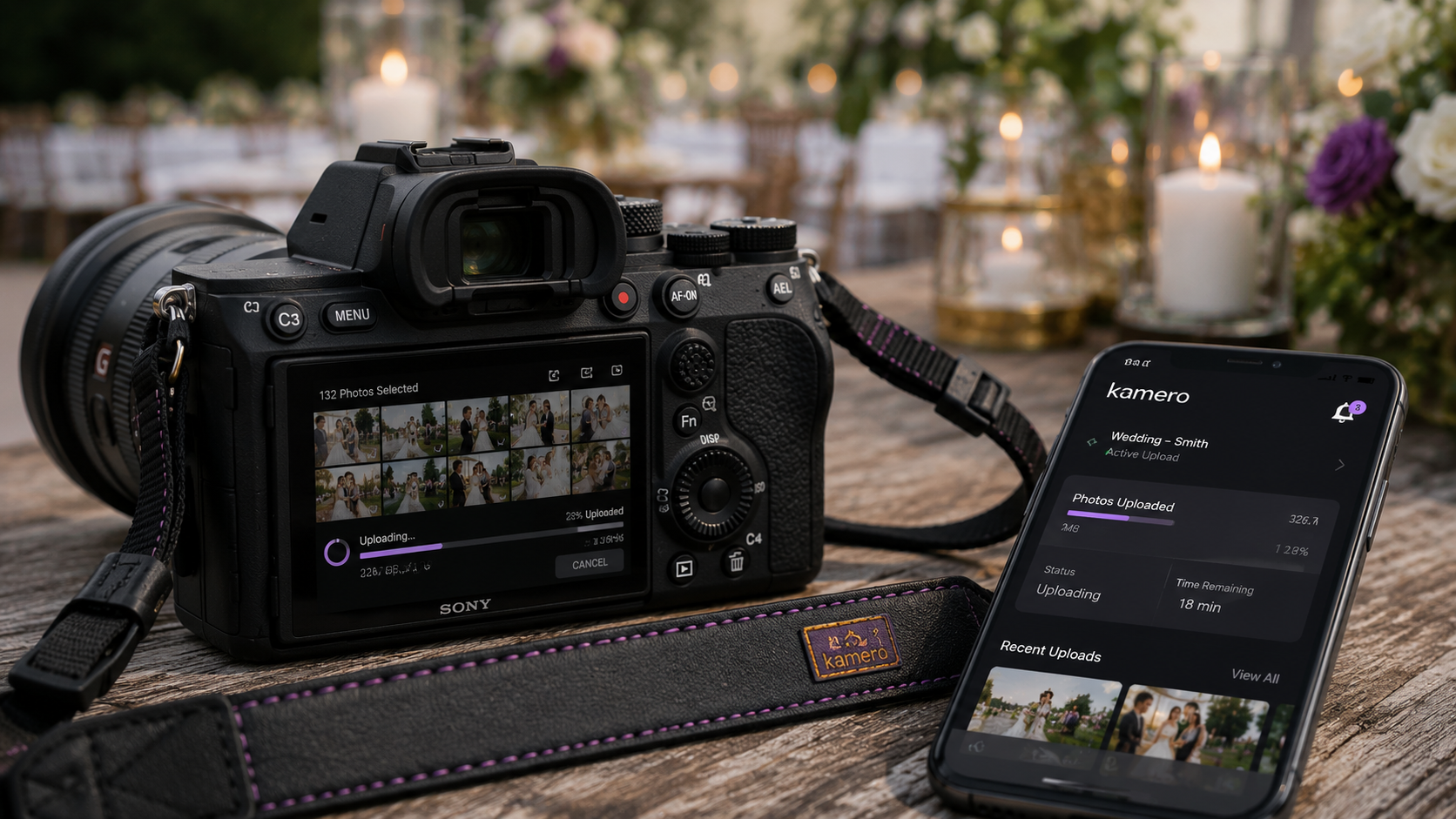
Camera-to-cloud technology allows selected images to move from camera to cloud while the wedding is still underway.
Rather than returning home with thousands of untouched files, photographers can begin preparing galleries throughout the event itself.
This dramatically reduces post-event workload while preserving full-resolution originals for long-term editing and archival purposes.
AI-Driven Guest Discovery vs. Manual Folder Linking
Speed alone is not enough.
Guests must also be able to find their photos quickly.
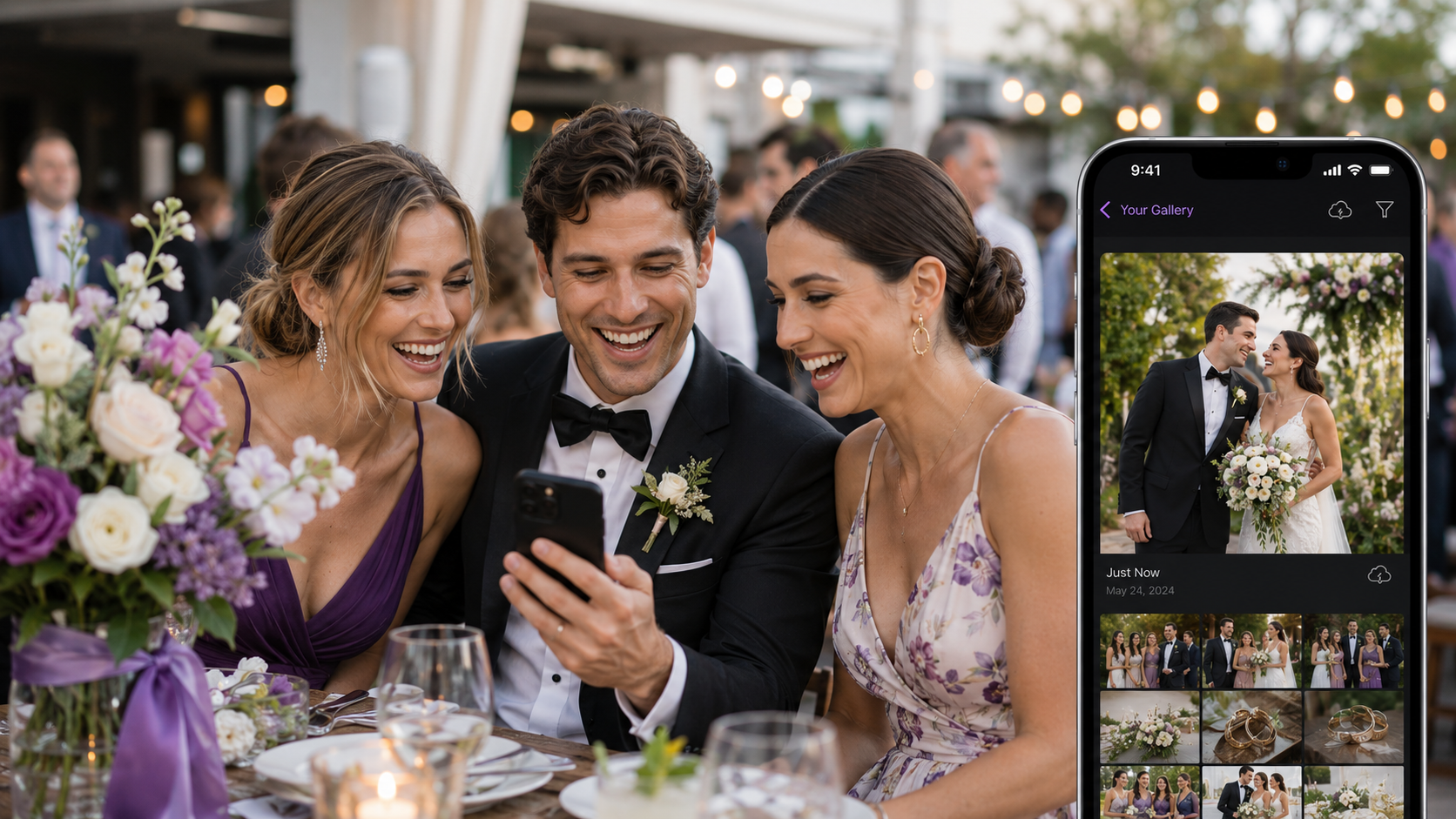
AI-powered discovery systems eliminate the need for endless scrolling through galleries by connecting guests directly with relevant images. The experience becomes personal rather than overwhelming.
Step-by-Step Implementation: Executing a 24-Hour Wedding Delivery
Pre-Wedding Architecture: Setting Up the Digital Infrastructure
Rapid delivery begins before the wedding day.
Event galleries, guest onboarding systems, QR assets, branding elements, and access controls should all be configured in advance. This preparation ensures photographers are not making operational decisions while managing the event itself.
On-Ground Execution: Live Capture and Background Indexing
Technology should operate quietly in the background.
As photographs are captured, they move through ingestion and indexing workflows automatically. This distributes workload throughout the event rather than concentrating it after midnight.
Morning-After Finalization: The 24-Hour Delivery Wrap
By the following morning, most of the heavy lifting should already be complete.
The photographer's role shifts from processing thousands of untouched files to refining and polishing a gallery that has already been partially prepared.
The Kamero Competitive Edge: Dominating India and Global Alternatives
As client expectations evolve, infrastructure quality becomes increasingly important.
Infrastructure Domination: Kamero vs. Domestic Cohort (Samaro.ai, Kwikpic, Fotoowl, Memzo)
Many domestic platforms provide gallery hosting and image discovery. Kamero extends beyond hosting by supporting real-time operational workflows.
Kam-Sync enables true camera-to-cloud delivery without relying entirely on post-event uploads. Event-scoped recognition architecture prioritizes privacy, while support for large high-resolution assets ensures photographers maintain image quality throughout the workflow.
Architectural Superiority: Kamero vs. Global Legacy Systems (Pixieset, SmugMug)
Traditional gallery platforms were designed primarily for storage and presentation.
Modern event photography requires significantly more.
Kamero combines mobile apps, AI-powered discovery, integrated commerce, dynamic branding controls, and real-time delivery infrastructure within a single workflow. This allows photographers to manage engagement, delivery, and monetization from one platform rather than stitching together multiple tools.
Building Long-Term Scale: Turning Instant Wedding Photo Delivery into Lead Gen
Capitalizing on High Revisit Rates and Guest Engagement Metrics
Fast delivery does more than improve client satisfaction.
It creates a powerful lead-generation engine.
Every guest who revisits a gallery becomes a potential future customer. Through integrated business profiles, social links, and first-party engagement data, photographers can transform post-event attention into long-term business growth.
The gallery stops being a delivery destination and becomes a marketing asset.
Conclusion
The shift toward same-day wedding photos reflects a broader change taking place across the photography industry.
Clients increasingly expect speed, convenience, and personalization alongside creative excellence. Studios that continue relying on traditional workflows will find it harder to meet those expectations.
The future belongs to photographers who can combine artistry with operational efficiency.
A 24-hour wedding delivery is no longer just a premium service. It is becoming part of the wedding experience itself.
Ready to Modernize Your Wedding Delivery Workflow?
Discover how Kamero helps photographers deliver faster, engage guests more effectively, and create new revenue opportunities through AI-powered galleries, Kam-Sync camera-to-cloud workflows, and integrated event commerce.
To see the future of event media delivery in action:

About Mayank Oraon
Hi, I’m Mayank, an MBA student exploring the business world with a focus on operations, supply chain, and product strategy (aka the parts of a business that keep things from quietly falling apart).
I’m interested in understanding how systems actually run behind the scenes- and why they sometimes don’t. I also enjoy simplifying complex ideas - partly because it helps others, and partly because if I can’t explain it simply, I probably didn’t understand it in the first place (which is a humbling but effective feedback loop).