Introduction: Why Corporate Event Content Is Becoming Harder to Manage
Corporate events generate more media than ever before.
A single leadership summit may include keynote recordings, session highlights, event photography, social media clips, attendee-generated content, sponsor assets, and post-event marketing videos. While creating content is no longer a challenge, organizing and distributing it efficiently through robust enterprise event photo and video management remains a major operational hurdle.
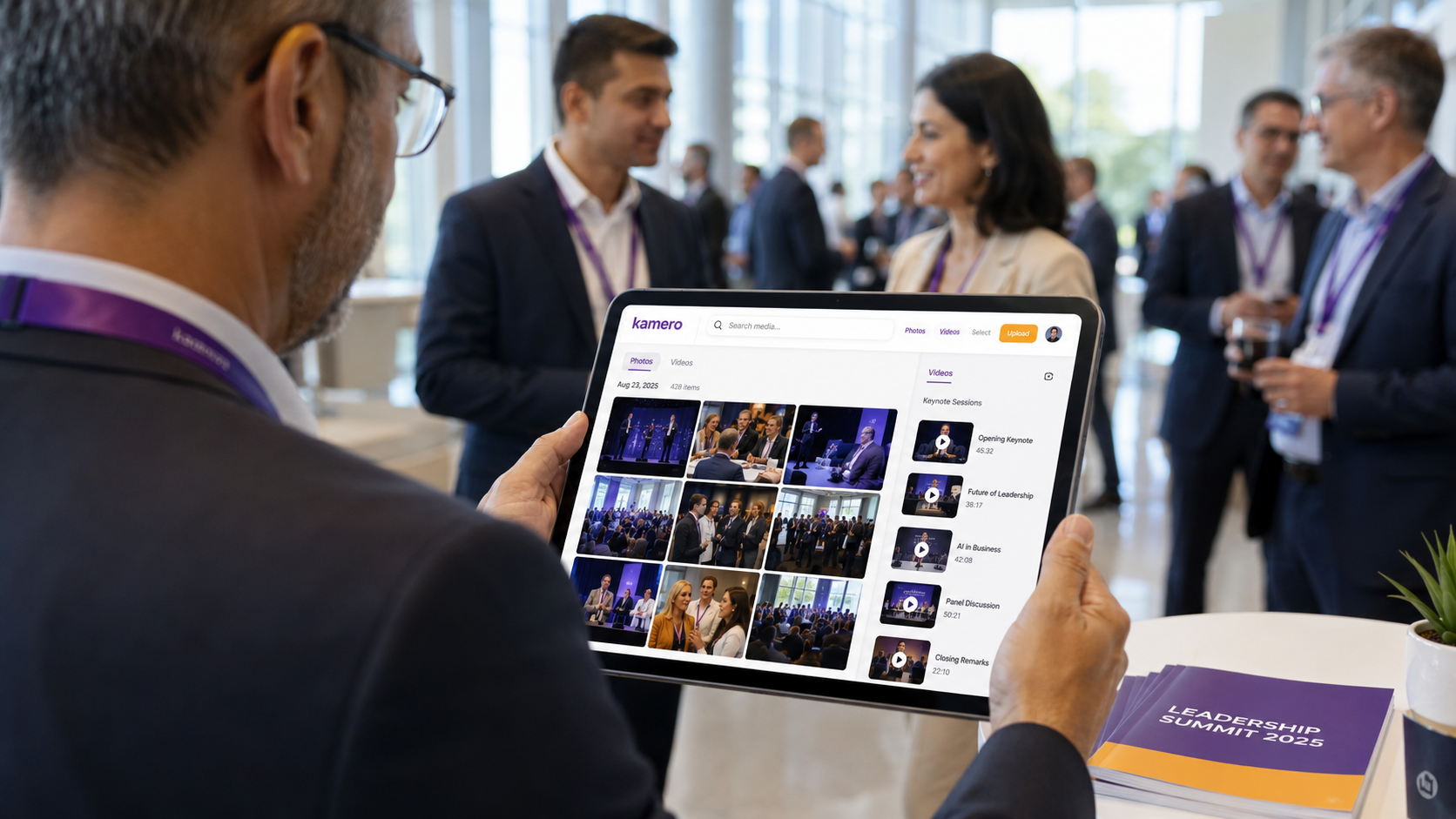
Many organizations still rely on fragmented workflows where photographs are shared through one platform, videos are hosted elsewhere, and attendees receive multiple links through emails, messaging groups, or internal portals. The result is a poor user experience, increased administrative overhead, and lower engagement with event content.
This is why enterprises are increasingly moving toward a comprehensive corporate event media hub that brings every asset into a unified environment. Instead of asking stakeholders to navigate multiple systems, organizations can create a single destination for all event media. For corporate communications teams, this shift is becoming less of a convenience and more of a necessity.
The Fragmentation Problem in Modern Corporate Events
Too Many Assets, Too Many Platforms
Most corporate events follow a familiar pattern:
- Photos are uploaded to a gallery platform.
- Videos are hosted on YouTube, Vimeo, or internal servers.
- Presentation decks are distributed separately.
- Marketing teams create social content using another workflow altogether.
While each system may work individually, the combined experience often feels disconnected. Employees struggle to find content, executives request assets repeatedly, and event teams spend days responding to download requests. Internal communications teams become accidental media librarians.
The problem isn't the quality of the content—it is the lack of a unified event media gallery and cohesive delivery architecture.
Why Unified Media Experiences Matter
Modern audiences expect simplicity. When attendees receive event content, they want a single destination where they can access everything related to the experience.
A unified gallery that combines photography, keynote recordings, highlight reels, sponsor videos, and downloadable assets creates a far more professional experience than distributing multiple links across different platforms. For organizations, this approach improves engagement while reducing operational complexity. For attendees, it dramatically improves usability.
Building a Comprehensive Corporate Media Hub
Bringing Photo and Video Event Delivery Together
The future of enterprise media distribution is not about replacing video platforms—it is about integrating them intelligently.
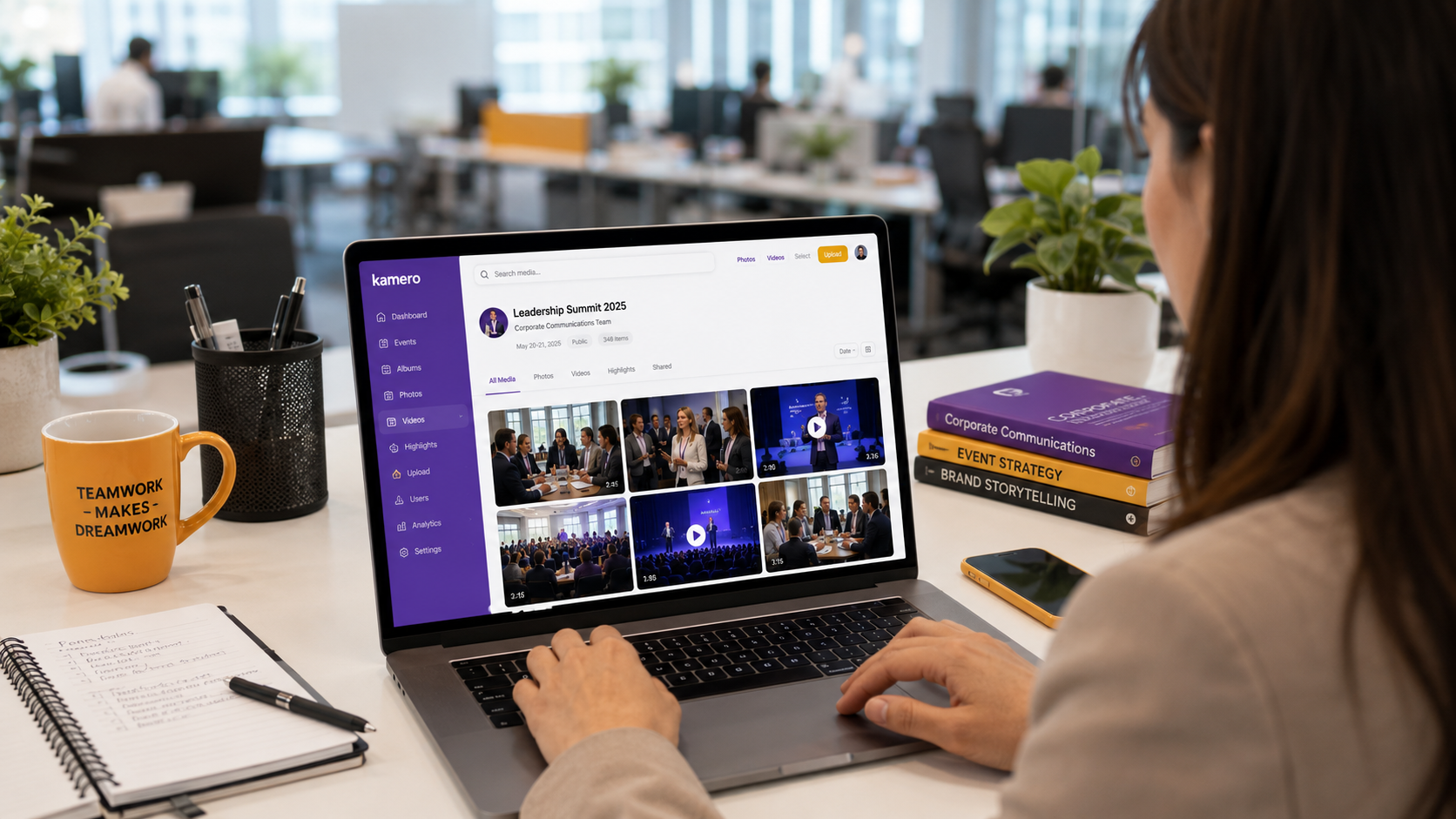
A modern corporate media hub allows organizations to embed external video content directly alongside event photography. Instead of forcing users to switch platforms repeatedly, video content becomes part of the overall gallery experience. Attendees can browse event photos, watch keynote recordings, revisit panel discussions, and access branded content without leaving the same environment. This creates a seamless experience while increasing overall content consumption.
Creating Structure at Enterprise Scale
Large events often involve multiple photographers, videographers, agencies, and internal stakeholders. Without structure, even the best media libraries quickly become unmanageable.
Modern platforms solve this challenge through automated folder hierarchies, metadata mapping, intelligent sorting, and role-based permissions. Rather than manually organizing thousands of assets, teams can create scalable systems that maintain order automatically. This becomes particularly important for recurring events, annual conferences, and large corporate retreats where content volume continues growing every year.
Eliminating Administrative Burden Through Real-Time Automation
Real-Time Capture Changes the Distribution Timeline
Traditional workflows begin after the event. Modern workflows begin during the event.
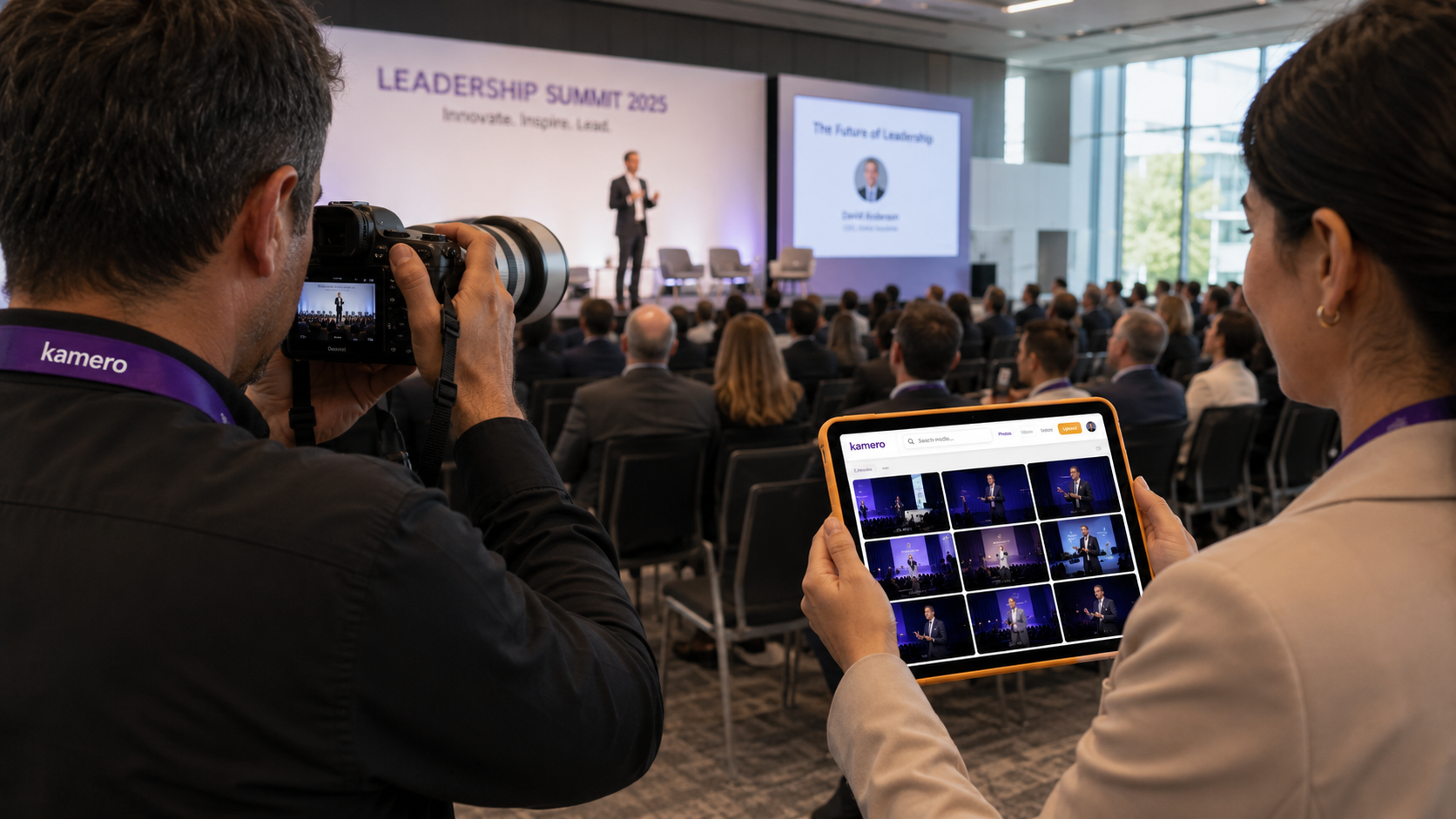
With camera-to-cloud enterprise infrastructure, photographers can transfer files directly from professional cameras into cloud environments as content is being captured. This eliminates memory card bottlenecks and dramatically reduces the delay between creation and distribution.
For organizations running live events, marketing teams can begin using approved content while sessions are still taking place. The event becomes a live content engine rather than a post-event editing project, achieving true real-time event media delivery.
Delivering Content at Scale Without Additional Work
Corporate events often involve hundreds or thousands of stakeholders. Manually fulfilling content requests becomes impossible at scale.
AI-powered photo delivery systems allow attendees to discover relevant photos through privacy-focused, event-specific matching processes. VIP guests, executives, speakers, and delegates can access their own event photos without requiring manual support from event organizers. This significantly reduces administrative requests while improving attendee satisfaction.
The same infrastructure can also support moderated attendee uploads, allowing organizations to combine professional coverage with user-generated content inside a single media hub.
The Kamero Advantage: Enterprise Media Infrastructure Built for Scale
Designed for Modern Corporate Events
Many gallery platforms were originally built for consumer use cases. Corporate environments require different capabilities.
Kamero enables organizations to manage photography, video integration, stakeholder delivery, branding, and communications through a unified platform designed for enterprise-scale operations. Through Kam-Sync, photographers can stream high-resolution assets directly into the cloud using local Wi-Fi or 5G networks. Files up to 50 MB can be transferred while maintaining image quality and workflow speed, creating a solid foundation for real-time media distribution across large events.
Stronger Security and Compliance Controls
Enterprise organizations cannot treat media distribution casually. Corporate events often contain sensitive information, executive participation, partner content, and regulated communications.
Kamero supports enterprise-grade controls through encrypted infrastructure, role-based permissions, approval workflows, and compliance-aligned operating models. For organizations navigating GDPR, DPDP, and internal governance requirements, this becomes a critical differentiator.
Corporate Branding Without Compromise
Corporate events are extensions of the brand. Every gallery, video, image, and shared asset contributes to how attendees perceive the organization.
Kamero enables enterprises to create branded media experiences through customizable interfaces, white-label environments, sponsor integration, and dynamic watermark controls. Instead of directing users to generic consumer platforms, organizations can maintain brand consistency throughout the entire content journey.
Transforming Event Media Into a Strategic Business Asset
Extending the Life of Corporate Retreat Photography
Most corporate event content loses value because it is difficult to access after the event ends. A centralized media hub changes this dynamic.
Photography and video assets become long-term resources for employer branding, recruitment campaigns, internal communications, investor relations, and future marketing initiatives. Rather than serving a single purpose, event content continues generating value months after capture.
Supporting Lead Generation and Brand Engagement
For public-facing events, conferences, and brand activations, media hubs can become powerful engagement channels.
Interactive profiles, branded experiences, inquiry forms, and registration systems create opportunities to convert audience engagement into measurable business outcomes. Instead of treating galleries as passive storage locations, organizations can transform them into active communication platforms. This is particularly valuable for agencies, event organizers, sponsors, and enterprise marketing teams seeking stronger ROI from event investments.
Accelerating Social and PR Distribution
The value of event content is highest when conversations are still active. A unified media hub enables communications teams, PR agencies, and social media managers to access approved assets immediately.
Instead of waiting days for file transfers, teams can distribute content while keynote sessions are trending, announcements are generating coverage, and attendee engagement is at its peak. The result is stronger earned media, greater social reach, and higher event visibility.
Conclusion: The Future of Enterprise Event Media Is Unified
Corporate events no longer generate just photographs—they generate entire ecosystems of content.
Organizations that continue distributing these assets through fragmented systems will face growing operational complexity, weaker engagement, and increased administrative costs. The future belongs to unified media architectures that combine photography, video, stakeholder delivery, communications, and analytics into a single experience.
A comprehensive media hub does more than organize content. It transforms event media into a scalable business asset that supports communications, marketing, engagement, and growth long after the event ends.
Ready to Build a Unified Corporate Media Hub?
- Book a Demo – Click here
- Start Your Free Trial – Click here
- Follow Kamero on Instagram – Click here

About Mayank Oraon
Hi, I’m Mayank, an MBA student exploring the business world with a focus on operations, supply chain, and product strategy (aka the parts of a business that keep things from quietly falling apart).
I’m interested in understanding how systems actually run behind the scenes- and why they sometimes don’t. I also enjoy simplifying complex ideas - partly because it helps others, and partly because if I can’t explain it simply, I probably didn’t understand it in the first place (which is a humbling but effective feedback loop).