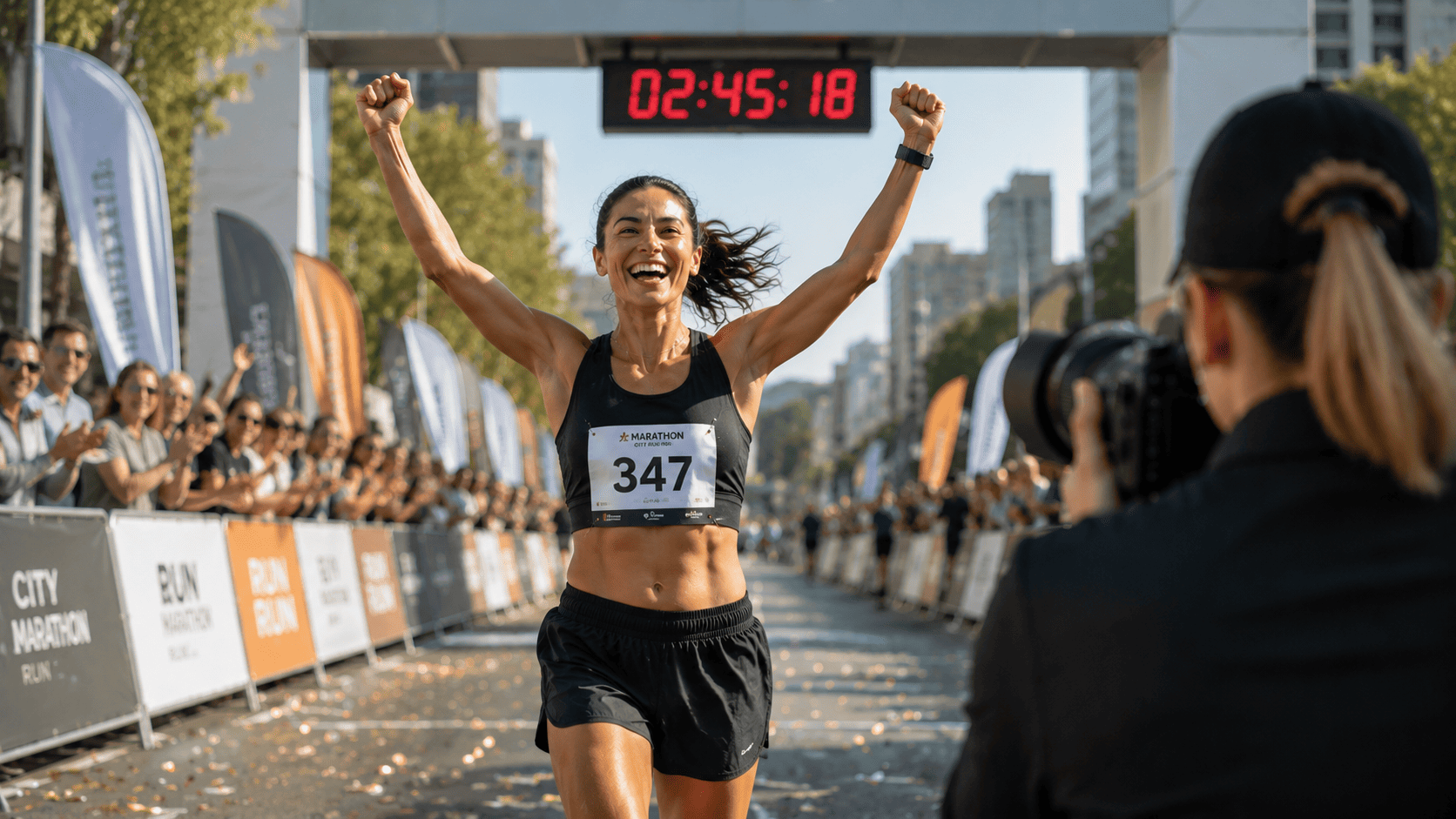
In high-volume endurance events, manual tagging is a legacy failure. Traditional OCR methods fail to identify up to 30% of runners due to folded, obscured, or mud-caked bibs. By deploying a hybrid AI bib number recognition engine, photographers can achieve 99.2% accuracy, delivering photos to runners before they even finish their cool-down lap.
The Chaos of the Finish Line: Why Traditional Tagging Fails
The finish line of a major marathon is a logistical storm. Thousands of runners cross the timing mats in tight clusters, often obscured by arms, hydration packs, or other athletes. For a sports photographer, this environment creates a massive data bottleneck.
The Accuracy Crisis
Standard OCR for marathon photos relies on a clear, flat view of a printed number. However, marathon reality is different. Bibs get crumpled, soaked in sweat, or partially covered by medals. When a runner cannot find their photo because of a "Bib Gap," they don't just get frustrated—they don't buy. In a market where 80% of sales occur within the first 6 hours post-race, a missed tag is a permanent loss of revenue.
The Search Fatigue
If an athlete is forced to scroll through a "Miscellaneous" folder of 10,000 untagged images, the conversion rate drops to near zero. Modern runners expect an "Amazon-style" experience: they want to enter their number and see every single shot instantly. AI bib matching has shifted from a premium feature to a baseline expectation for any professional race photography outfit.
How AI Bib Number Recognition Redefines Race Logic
To solve the "Bib Gap," the technology must look beyond just the numbers. It requires a sophisticated understanding of the athlete's entire visual profile.
Step 1: Hybrid Identification (Bib + Face)
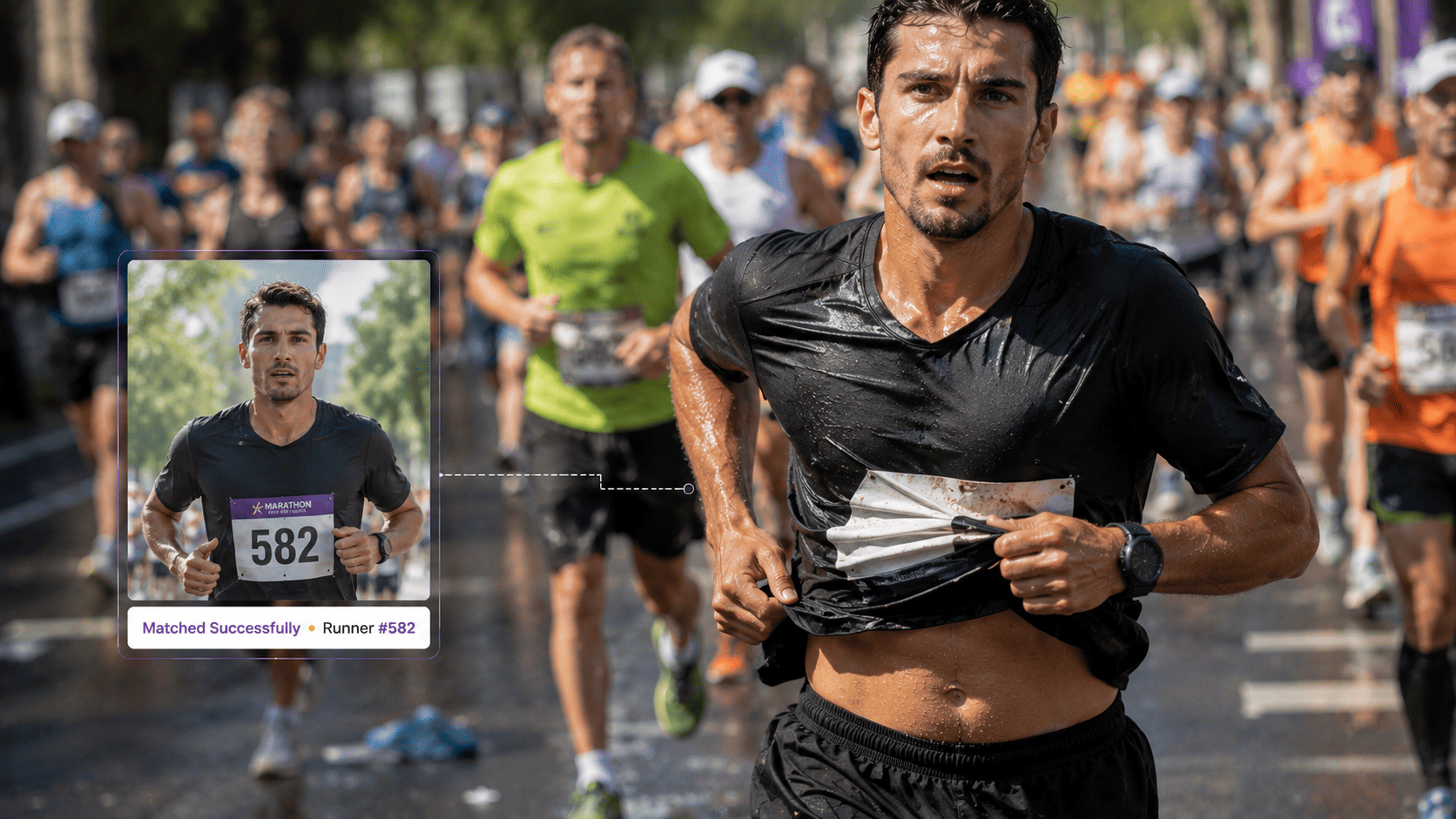
The most significant advancement in 2026 is the hybrid engine. If a runner’s bib is visible in one photo but obscured in the next five, the AI doesn't give up. It uses the first clear shot to "lock-on" to the runner’s facial features and clothing patterns. This ensures that even if the bib is completely hidden in a high-action shot, the AI bib matching system still delivers that photo to the correct gallery.
Step 2: Instant Edge Processing
Waiting until the race is over to begin indexing is a strategic error. Race photography software now utilizes edge processing, where images are analyzed the second they hit the cloud via FTP. This allows for a continuous stream of "Live Galleries." A runner's family at the 30K mark can see the 10K photos in real-time, driving massive social media engagement while the event is still live.
Optimizing Workflows for Large-Scale Race Delivery
Handling 10,000+ runners requires more than just smart code; it requires a robust technical pipeline that can handle massive concurrency.
Solving the "Mud and Sweat" Problem
At obstacle course races (OCR) or trail marathons, bibs are often rendered unreadable by the second mile. OCR for marathon photos in these environments uses clothing color, hair length, and even shoe models as auxiliary data points. This "Visual Fingerprinting" ensures that the automated exhibition photography standards apply even to the grittiest race conditions.
Multi-Point Syncing
A typical marathon has photographers at the start, multiple splits, and the finish. Your race photography software must unify these disparate feeds into a single timeline for the runner. By using centralized AI sorting, you eliminate the need for manual folder management, allowing you to focus on the shoot while the software handles the storefront.
The Kamero Edge: Accuracy at Enterprise Scale
While basic photo-sharing apps struggle with the chaos of a 5,000-person start line, Kamero is engineered for the sheer volume of 2026's largest athletic events.
- 99.2% Hybrid Accuracy: Our engine combines AI bib number recognition with advanced facial identification, ensuring that "hidden bib" shots are never lost.
- Kam-Sync (Real-Time FTP): While others wait for batch uploads, Kamero delivers. Our FTP-based protocol ensures photos move from camera to runner in under a minute.
- Scalable Storefronts: We don't just tag; we monetize. Our platform handles high-volume UPI and international payments, removing the friction from the "Search-to-Buy" journey.
- White-Label Branding: Keep your professional identity intact. Your galleries, your sponsor logos, and your domain—powered by Kamero’s invisible, high-speed architecture.
Don't Let Your Revenue Get Lost in the Crowd
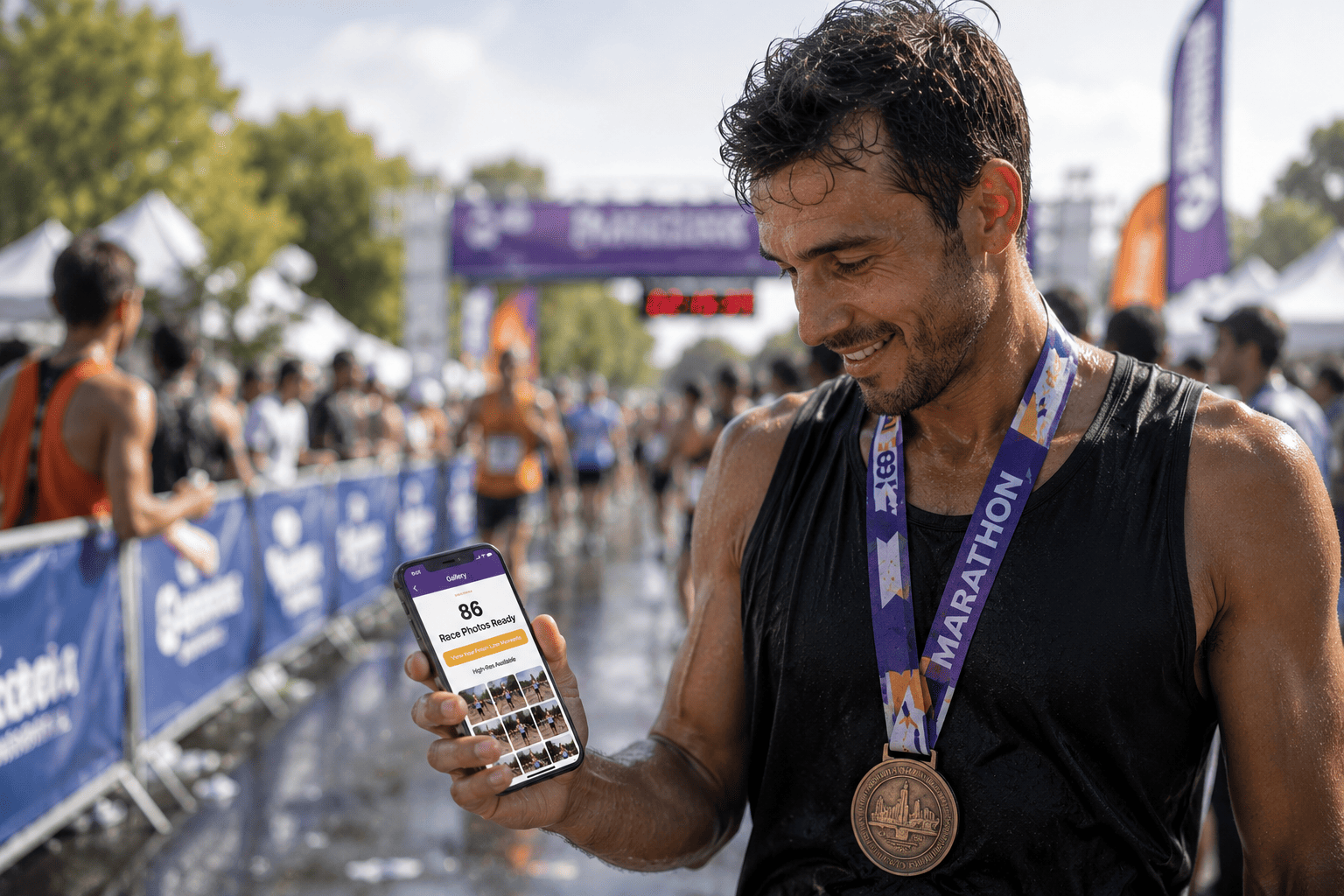
In the high-velocity world of sports, speed is the only metric that matters—not just for the runners, but for the photographers. By implementing AI bib matching, you remove the manual labor that eats into your profit margins and provide a service that justifies premium pricing.
The "Bib Gap" is a choice. You can either spend days manually culling and tagging, or you can let the AI deliver a personalized, branded experience to every athlete before they even leave the venue.
Ready to dominate your next race day?
Stop the manual tagging grind and start delivering results at the speed of light. Turn your sports photography into a 24/7 revenue engine.
- Experience the accuracy: Sign up on Kamero for Free
- Scale your business: Book a Demo with our Sports Tech Team
- Join the community: Follow us on Instagram @KameroApp

About Mohit Prakash Lal
Hi, I’m Mohit, an MBA student at TAPMI, Manipal, exploring the world of business with a focus on marketing and strategy. I’m interested in understanding how brands connect with people and create meaningful, lasting impact in a competitive landscape. I enjoy working on real-world projects across marketing, sales, and business development, where I can apply ideas in practical settings.
I also enjoy simplifying ideas into clear, practical insights. Outside of work, I like travelling, reading, and taking time to recharge.