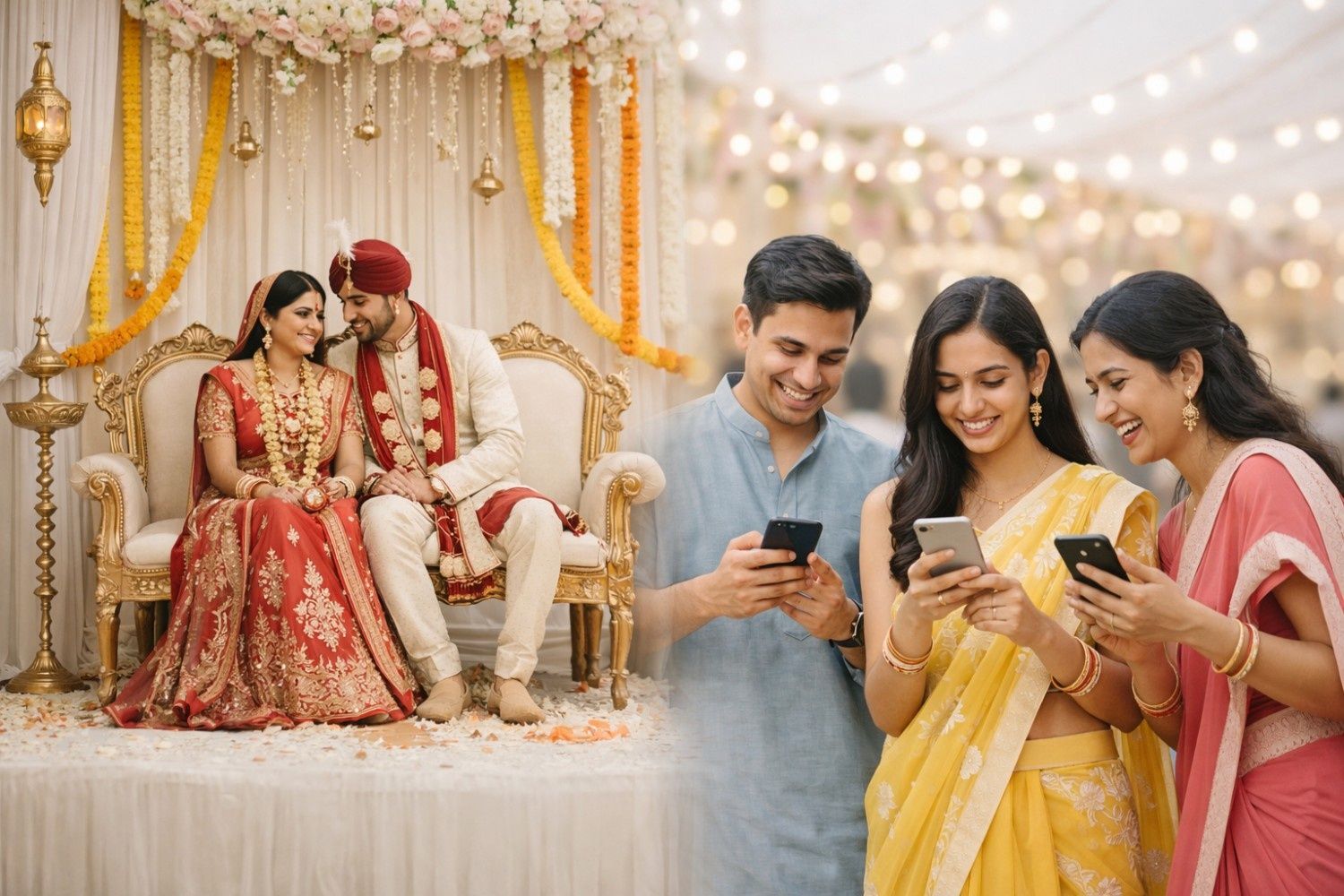
Guests won’t complain — but they will remember the wait.
Not in a dramatic, angry-review way. More like this: the wedding ends, the excitement peaks, everyone’s posting outfits and stories… and then the photos don’t show up (or they arrive weeks later in a confusing folder). The excitement quietly fades.
And that matters, because guest perception isn’t just built on decor and food anymore. It’s built on the mobile wedding photo experience — how fast, easy, and personal it feels to access their moments.
The silent expectations: instant, mobile, private access
Modern guests rarely spell out expectations. They just behave like the internet trained them to behave.
They expect instant access (or at least same-day momentum)
Nobody expects the full 8,000-photo set instantly. But guests do expect something fast:
- a live gallery starting to fill up
- a teaser set
- “photos are live” notifications
- a simple way to check their pictures
Because guests share while the emotion is fresh. The longer the gap, the less they post, tag, and talk about the event.
This is exactly why instant wedding photo access is becoming the new baseline — not because people are impatient, but because sharing windows are short.
And in 2026 weddings, “fast” is increasingly defined as:
✅ The gallery starts getting updated during the event.
✅ Guests don’t have to chase the couple or the photographer.
✅ People can find their photos quickly, on mobile, without confusion.
They expect mobile-first, not “open laptop and search folders”
Guests don’t want a workflow. They want a tap-tap-done experience.
Most guests will view photos on their phone — between travel, office, and family chaos. A modern gallery has to feel natural on mobile: fast to load, easy to swipe, easy to share.
That’s why modern platforms prioritize share photos without app download experiences: no friction, no installation, no “I’ll do it later.”
In reality, the simpler it is, the higher the participation:
- scan a QR
- open instantly in browser
- view and share in seconds
That’s how people behave. Anything that feels like “steps” becomes abandonment.
They expect privacy without effort
Weddings are personal. Guests want access to their photos — but they don’t want awkward moments going public, or random people downloading everything.
That’s why “one open link for all” increasingly feels outdated. Guests may not say it, but privacy is a trust signal.
A modern system needs privacy-first photo sharing built in, so:
- guests can view only their own photos if needed
- select family/organizers can access broader albums securely
- access feels controlled, not chaotic
Privacy isn’t a restriction anymore — it’s part of what makes a wedding experience feel premium.
The gap: folders and delays feel outdated (even if nobody complains)
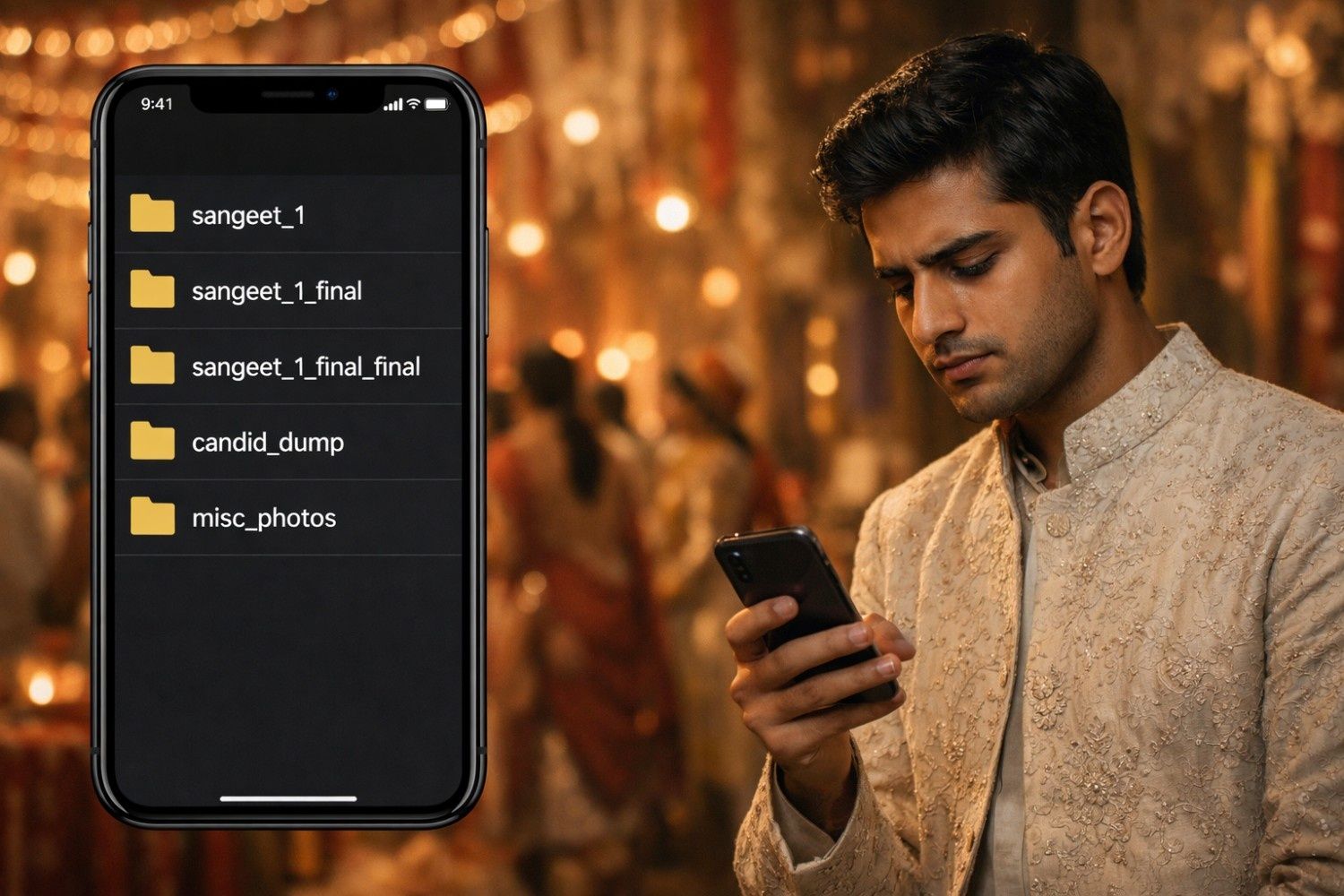
Here’s the hidden problem: when delivery is slow or confusing, it doesn’t only affect “photos.” It affects how guests remember the wedding.
Folders don’t match how guests search
A shared drive assumes guests will:
- open a massive folder
- scroll endlessly
- figure out filenames
- download and share manually
But guests don’t search by folder name. They search by self:
- “Show me my photos”
- “Show me our group”
- “Show me family portraits”
And when they can’t quickly find themselves, they don’t say, “your folder structure is poor.” They just exit. Or they message the couple. Or they ask you directly.
That’s where the delivery experience starts feeling messy — and mess reduces perceived professionalism.
This is also why a best photo gallery for high volume events doesn’t just mean “can store many photos.” It means the gallery can handle discovery at scale.
Delays quietly reduce excitement and sharing
If photos arrive while the wedding is still being talked about, guests share them. If photos arrive weeks later, the wedding has already moved into “past tense.”
Same photos — different timing — different impact.
That’s why wedding guest photo expectations are no longer just “good photos.” They include speed and ease, because those decide how much the wedding lives online and in memory.
And this is where QR-based access becomes powerful — because instant photo sharing with QR code makes the first step effortless: guests can enter the gallery in seconds.
The new norm: face-based personal discovery
The most natural way to give guests what they want is also the simplest:
Let them find themselves.
This is why AI face recognition in wedding galleries is no longer a “wow feature.” It’s becoming the default expectation for premium weddings, large guest counts, and high-volume events.
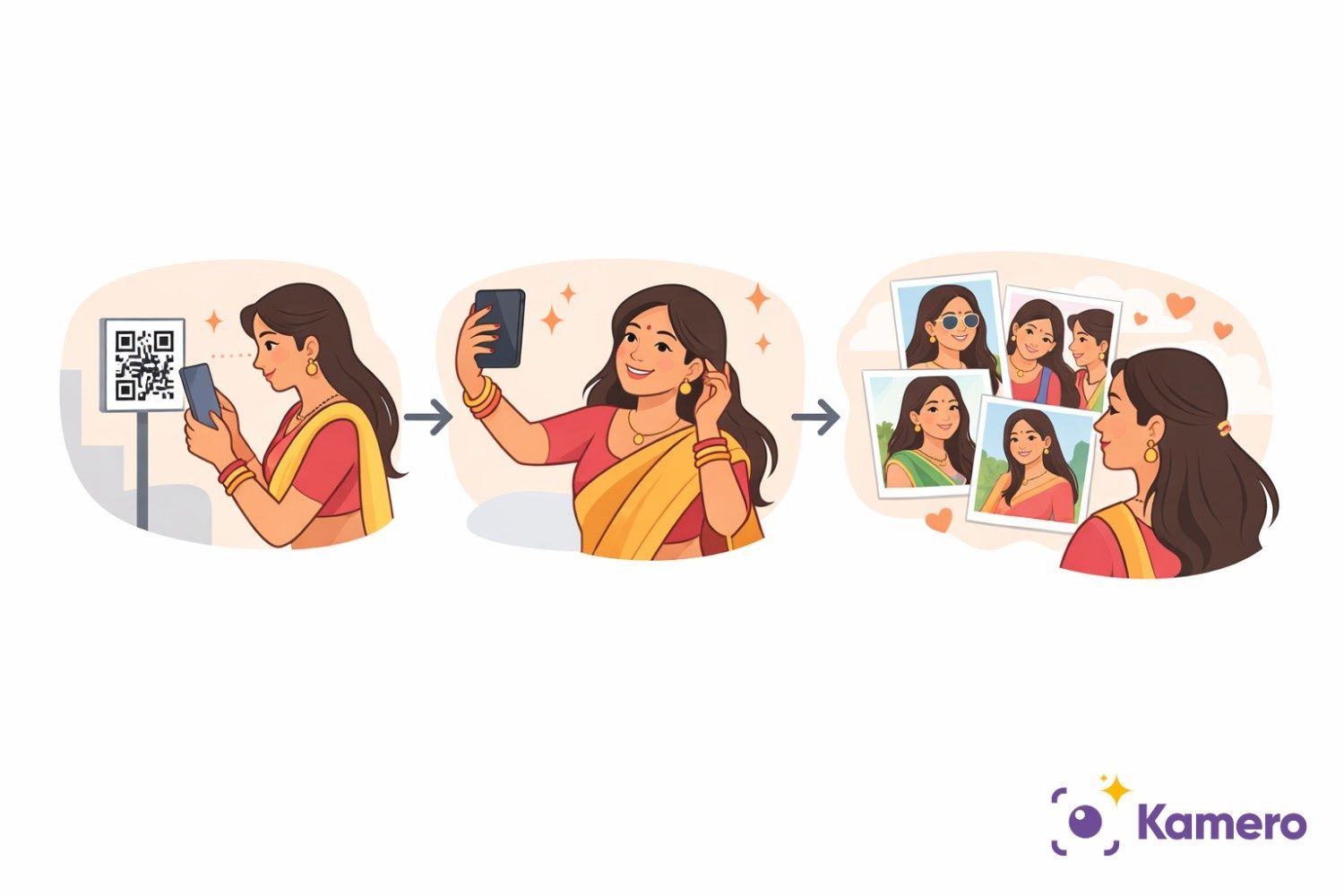
Kamero’s AI Face Recognition lets guests instantly find all their photos by taking a selfie — filtering through thousands of images within seconds, creating a personalized album without manual sorting.
In many modern setups, the flow becomes even smoother with a QR code face recognition gallery approach:
- guest scans the wedding QR code
- opens the gallery instantly (no app)
- takes a selfie
- sees their personal photos in seconds
That’s not “tech for the sake of tech.” That’s matching how people actually behave: fast, mobile-first, and personal.
What changes when discovery becomes personal?
When guests can instantly locate their own moments:
- Guests stop browsing “everything”
- Guests stop requesting photos one-by-one
- The couple stops acting like a helpdesk
- Sharing becomes effortless (and happens earlier)
And because each guest sees their gallery, the experience feels premium — even if the wedding is huge.
This is also the hidden reason reducing photo delivery time for weddings feels so dramatic with face recognition: delivery isn’t just faster — it becomes more targeted.
Instead of “here are 8,000 photos, good luck,” it becomes:
“Here are your 45 best moments.”
How to use face recognition at weddings (without making it complicated)
A lot of photographers assume face recognition sounds complex to explain or deploy. But the best systems are designed to feel simple for guests.
A clean guest flow looks like this:
- Put a QR code at the venue (welcome board, photo booth, entry standees, table tents)
- Guests scan the QR code and open the gallery instantly
- They take a selfie once
- The system shows them a personal gallery of their photos
That’s it.
No logins. No “create an account.” No digging through folders.
And because guests can share photos without app download, participation stays high—even among older family members who don’t want extra installations.
Pro tip: If you want maximum adoption, the QR placement matters more than the technology:
- entry gate signage = best scan rate
- dining area = second-best
- stage backdrop = good for family photos
- DJ booth / dance floor = great for party candids
The simpler the access, the more guests actually use it.
Why Kamero fits modern guest behavior: accuracy, no logins, privacy-first
A modern wedding photo gallery doesn’t need more complexity. It needs fewer steps.
Accuracy + speed at scale
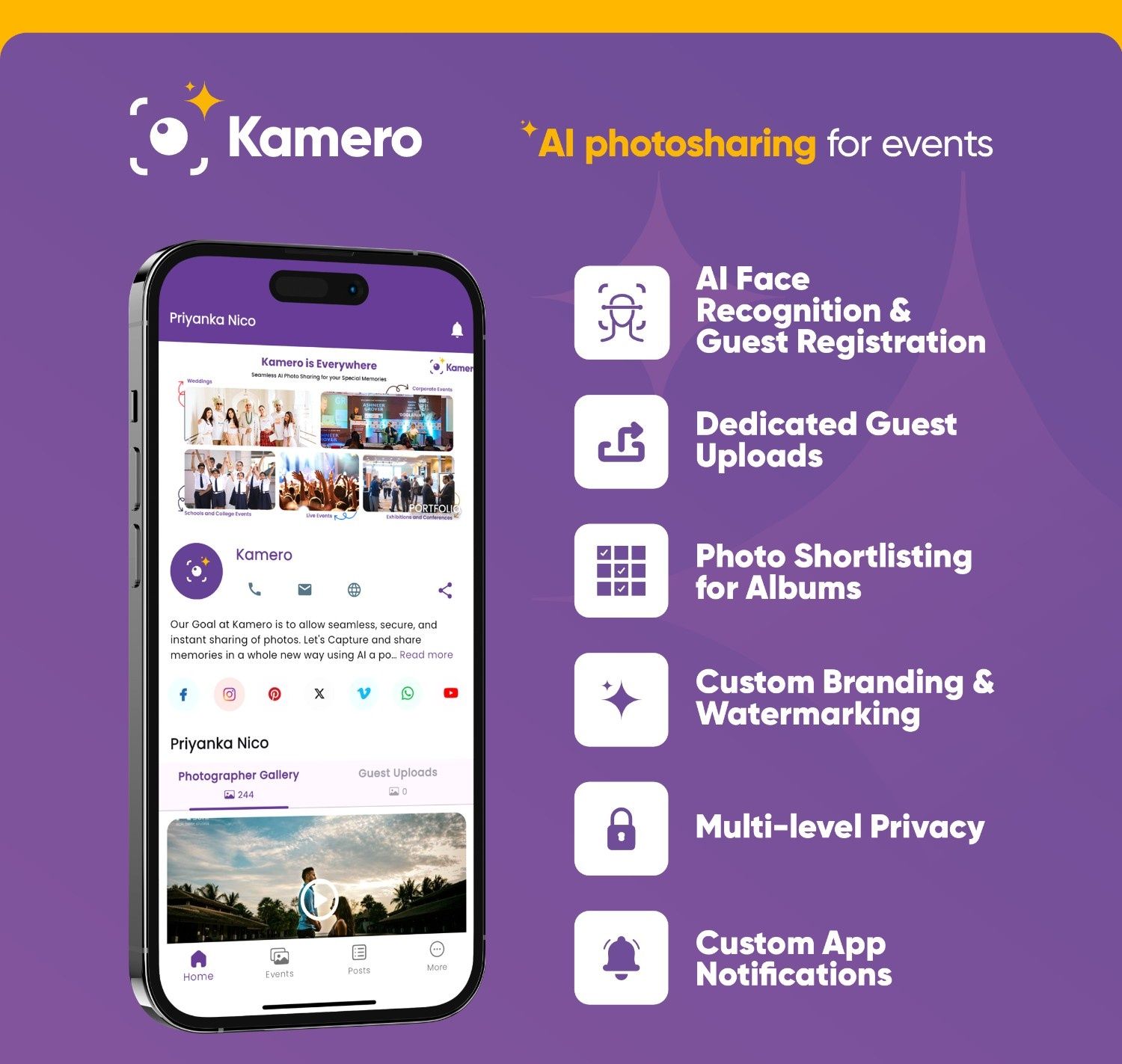
Face recognition only works when it’s fast and reliable. Kamero is designed for real-time results — personalized albums in seconds, without manual tagging.
This is what makes it suitable for best photo gallery for high volume events scenarios: it doesn’t collapse under thousands of photos and hundreds of guests.
Share photos without app download (because guests won’t bother)
Guests are not your customers — they’re your audience.
So the gallery must work instantly, on any phone, without pushing users into onboarding.
Kamero supports frictionless access for guests (QR-first, instant entry) and unlimited guest views without forcing everyone to install an app.
That’s the difference between a link that gets opened… and a link that gets ignored.
Privacy that feels built-in, not “managed manually”
Weddings need sharing + control.
Kamero’s multi-level privacy settings let hosts decide who sees what, including guest-only views and secure access for family/organizers. That’s how you enable privacy-first photo sharing without making the couple anxious.
Put simply: Kamero aligns with how guests already behave — mobile-first, instant, personal, and safe.
The result: higher sharing, better recall, stronger event perception
When guests get fast, personal access, the wedding feels more “alive” even after it ends.
More sharing (while the wedding is still trending)
Guests post when they’re excited — same night, next morning, during travel back.
A smooth instant photo sharing with QR code flow creates a natural wave of tags, stories, and forwards—without anyone chasing anyone.
Better recall (because memories are easy to revisit)
If someone can find their photos in seconds, they’ll revisit them. They’ll show family. They’ll save highlights.
That’s how weddings become long-term stories, not just “delivered files.”
Better perception of the photographer and the event
Guests rarely say, “Amazing delivery system.” But they absolutely feel:
- “This wedding was well managed.”
- “The photographer was professional.”
- “Everything was smooth.”
And that sentiment is what creates referrals — for photographers, planners, venues, and even photobooth teams.
In a world where weddings are shared in real-time, experience is everything—and delivery is part of the experience now.
View a modern wedding gallery
Guests may not say it out loud—but they always feel the difference between “a folder link” and a truly modern gallery ✨
If you want to experience a modern wedding photo gallery—instant, mobile-first, personal, and privacy-safe—explore a live example:
Want to set up your own? Create your Kamero account.
About Tanuj Thakkar
Hi! I’m Tanuj Thakkar – a BCA graduate from St. Xavier's College, Ahmedabad, with an endless curiosity for people, ideas, and stories. I’m passionate about sales, marketing, and finding creative ways to connect with people. Nothing excites me more than understanding what makes someone tick and turning that into solutions that actually make a difference.
When I’m not diving into strategies or brainstorming ideas, you’ll probably find me exploring new places, geeking out on tech and innovation, or having conversations that spark fresh perspectives.