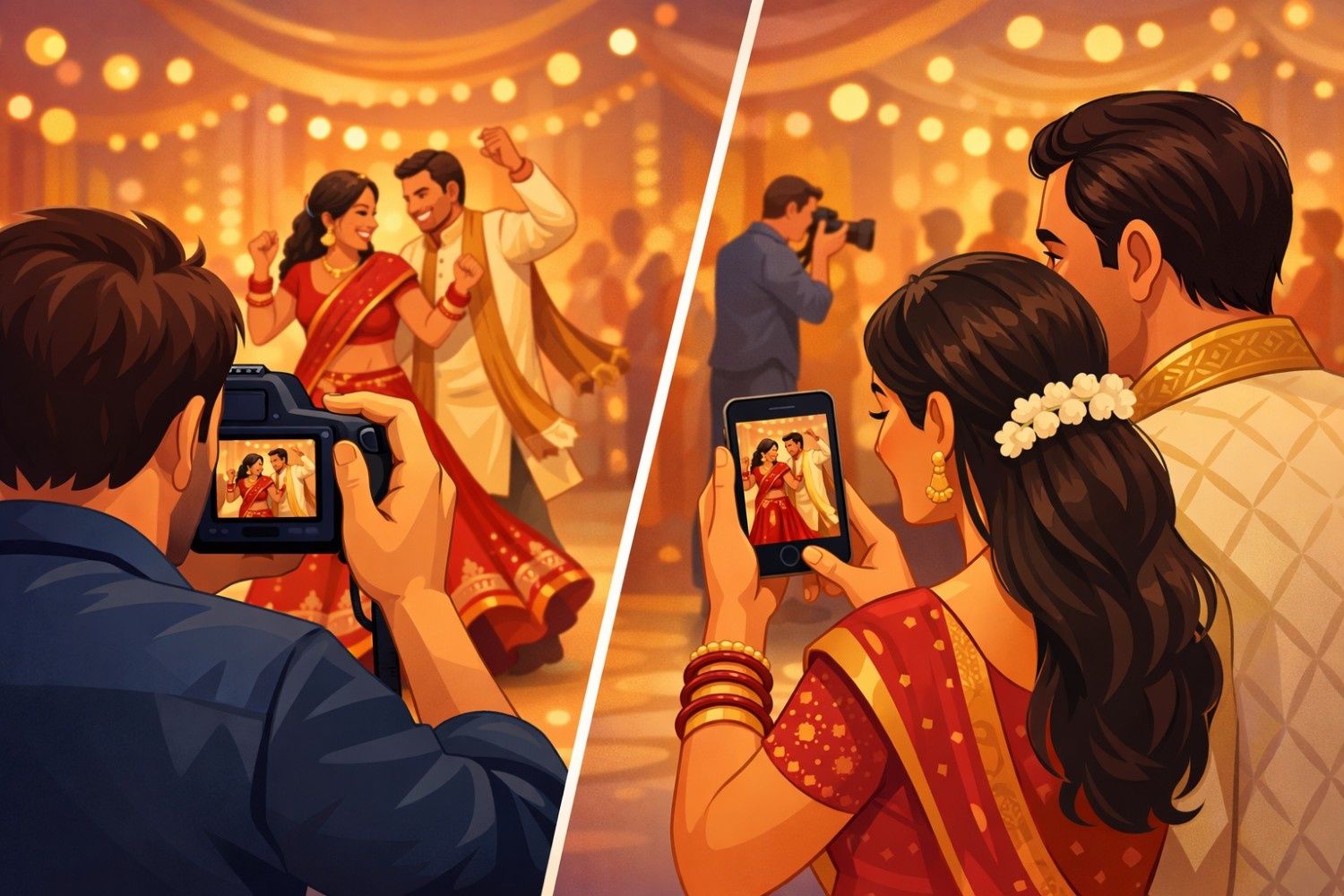
Delivery now starts at the moment of capture.
Imagine this: your photographer snaps a candid on the dance floor. A guest scans the QR code, takes a quick selfie — and within moments their personal gallery lights up with every photo they’re in. No waiting. No digging through folders. That’s the reality of real-time event photo delivery, and it’s changing the way events are remembered, shared, and monetized.
In fact, once photos start arriving live, they don’t behave like “files” anymore. They behave like content—something guests interact with immediately. That’s why the most successful events now treat delivery as part of the experience, not a post-event task.
Below I’ll walk you through the problems with the old way, the modern — and surprisingly simple — workflow, real examples from events you run in India, and exactly how Kamero turns this into a frictionless, AI-driven process that saves hours of post-event work.
The challenge: instant upload, sorting & access
Traditional event photo delivery still looks familiar to anyone who’s worked events:
- Photographers shoot all day.
- Memory cards are downloaded after the event.
- Files are uploaded — sometimes days later.
- Guests get a single, generic link and spend ages searching for their pictures.
That creates 3 real problems:
- Guest disappointment. People expect instant gratification — especially at weddings, concerts and corporate events.
- Massive manual effort. Sorting, tagging, and shortlisting thousands of images eats hours.
- Missed marketing and sales moments. Photos that could be working for the venue, sponsor, or photographer sit unused until days later.
Put bluntly: the moment the photo is taken is also the moment its marketing value and emotional impact are highest. Delaying delivery squanders that peak window.
This is why the move toward event photo distribution software is accelerating. It’s not “another platform.” It’s a workflow shift: delivery happens while attention is still alive, and guests can instantly access what matters without waiting for you to finish a night of uploads.
The modern flow: capture → AI match → notifications
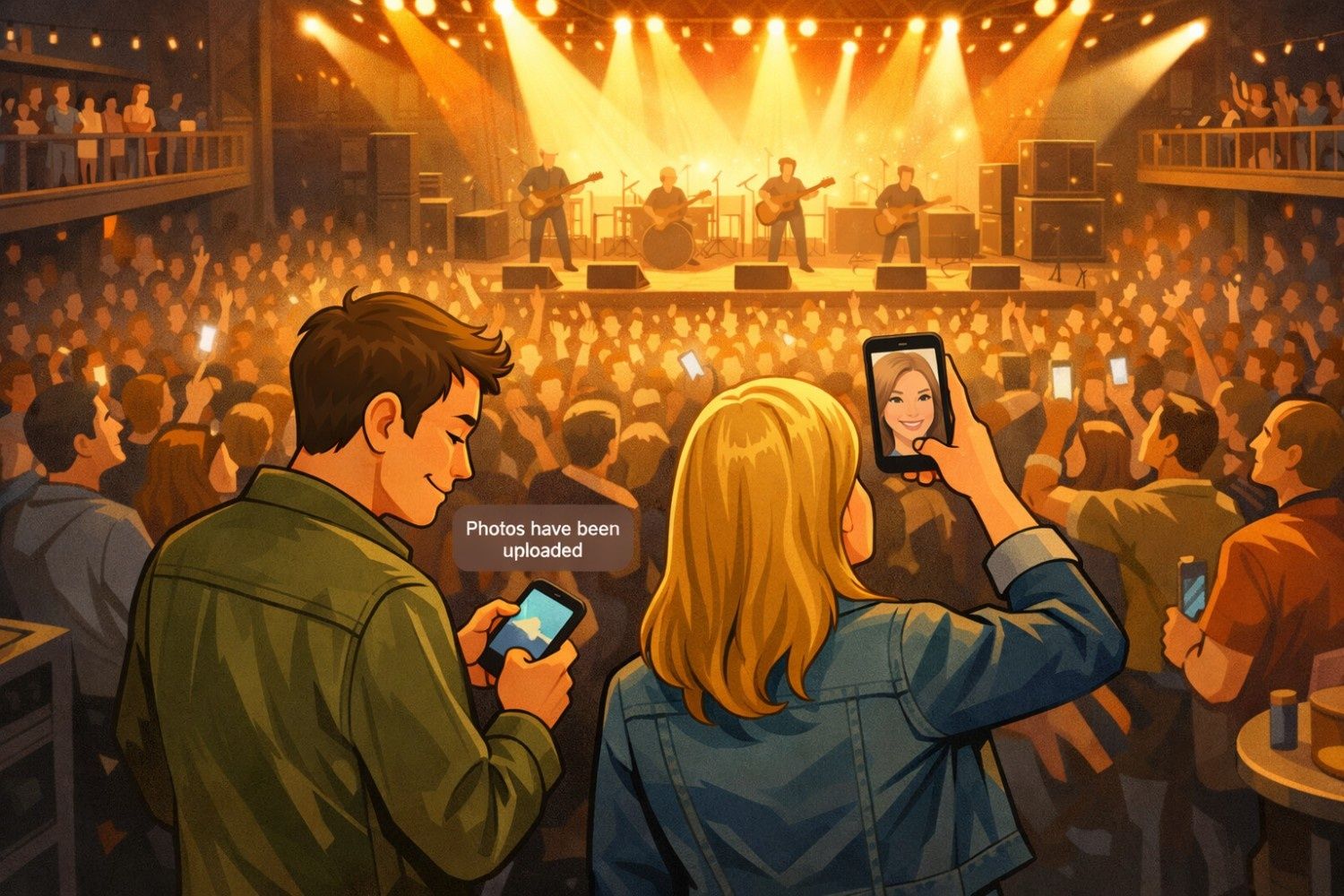
A modern event photography workflow flips the script. Instead of waiting, you right-size the tech to the pace of the event.
Here’s the flow — step by step:
1. Capture — Photographers shoot as usual (DSLRs, mirrorless, photobooths). No change to craft.
Example: A roaming photographer captures photos across a live event.
The biggest misconception about modern delivery is that it changes how photographers shoot. It doesn’t. The craft remains the same. What changes is what happens next: the path from camera to guest.
2. Instant upload to a live platform — cameras or tethered devices upload photos continuously to the event gallery (cloud).
This is the foundation of any live photo sharing platform.
When images are uploaded progressively (instead of in one big dump later), you reduce end-of-day chaos and start building the gallery while the event is still active.
This is where instant photo sharing with QR code becomes meaningful: not just “scan to open a link,” but scan to open a gallery that is actually filling up in real time.
3. AI face match — Guests scan a branded QR code, take a selfie, and AI finds every photo they appear in.
No manual tags, no menus — just their personal album.
This is the most important shift for the guest experience. Instead of forcing people to browse everything, the gallery gives them relevance instantly.
A QR code face recognition gallery makes this incredibly frictionless:
- scan the event QR
- take one selfie
- instantly see “my photos”
In large events, this single feature eliminates the biggest reason guests give up: endless scrolling.
4. Instant notifications & sharing — Guests get notified as their photos arrive.
They download, share to social, or shortlist photos for prints — all while the event momentum is still high.
This is also where an event starts to feel “alive” beyond the stage or dance floor. Photos become a live feed. Guests see the gallery updating, get their moments fast, and sharing becomes natural.
For many events, this also powers a real-time event photo slideshow experience—where highlights can be displayed live on screens or shared as a live stream of moments, keeping energy high and engagement constant. The key is the same: photos arrive fast enough to be used during the event, not after it.
This isn’t sci-fi. It’s AI photo sharing for events made practical and mobile-first.
Kamero pipeline: real-time, secure, automated
Here’s where Kamero fits into your operation. Kamero is built as a live photo sharing platform tailored to events — wedding to enterprise — with these differentiators:
- Real-time uploads: Photos show up in the gallery as they’re taken — no waiting overnight.
- AI face recognition: Guests get instant event photo access with a selfie, even at large scale.
- Privacy & control: Event organizers set multi-level access (PINs, QR sign-ins, download options).
- Branding & lead capture: Each gallery can be white-labelled, watermarked, and paired with QR registration that captures guest contacts — turning galleries into lead funnels. Platforms like Kamero report lead uplift and higher conversion when galleries are used as marketing touchpoints.
- Automation: From shortlisting to notifications, much of the post-event admin is automated so you can deliver faster and get paid sooner.
Real example (wedding): instant access + sharing during the reception
A wedding photographer in Mumbai used a live gallery and QR guest sign-in. Guests were sharing their photos during the reception; album shortlisting was complete within a few days instead of months, and the studio reported faster final invoicing.
This is what changes when you combine:
- instant photo sharing with QR code entry
- QR code face recognition gallery discovery
- real-time uploads that remove the “later we’ll upload” bottleneck
Guests don’t have to wait. The couple doesn’t have to forward links repeatedly. The photographer doesn’t have to manually send images to dozens of people.
And because sharing happens while the wedding is still trending in conversations, the photographer gets tagged more—creating organic marketing without spending a rupee.
Real example (corporate expo): content becomes a live campaign asset
At a 3,000-attendee exhibition, on-site photo access and branded galleries led to significantly higher sponsor impressions and a surge in social posts tagged to the event hashtag.
This is where real-time delivery turns into an advantage for organizers:
- brand visibility increases while footfall is still active
- sponsors get content during the event, not after
- the event hashtag stays alive longer
- the gallery becomes a “media hub,” not a file dump
In setups like this, a real-time event photo slideshow (highlights on screens or live displays) can keep audiences engaged and direct more people toward the QR gallery—creating a loop: more scans → more discovery → more shares.
Kamero’s approach turns photos into a campaign asset, not just a deliverable.
Result: hours saved (and a better business)
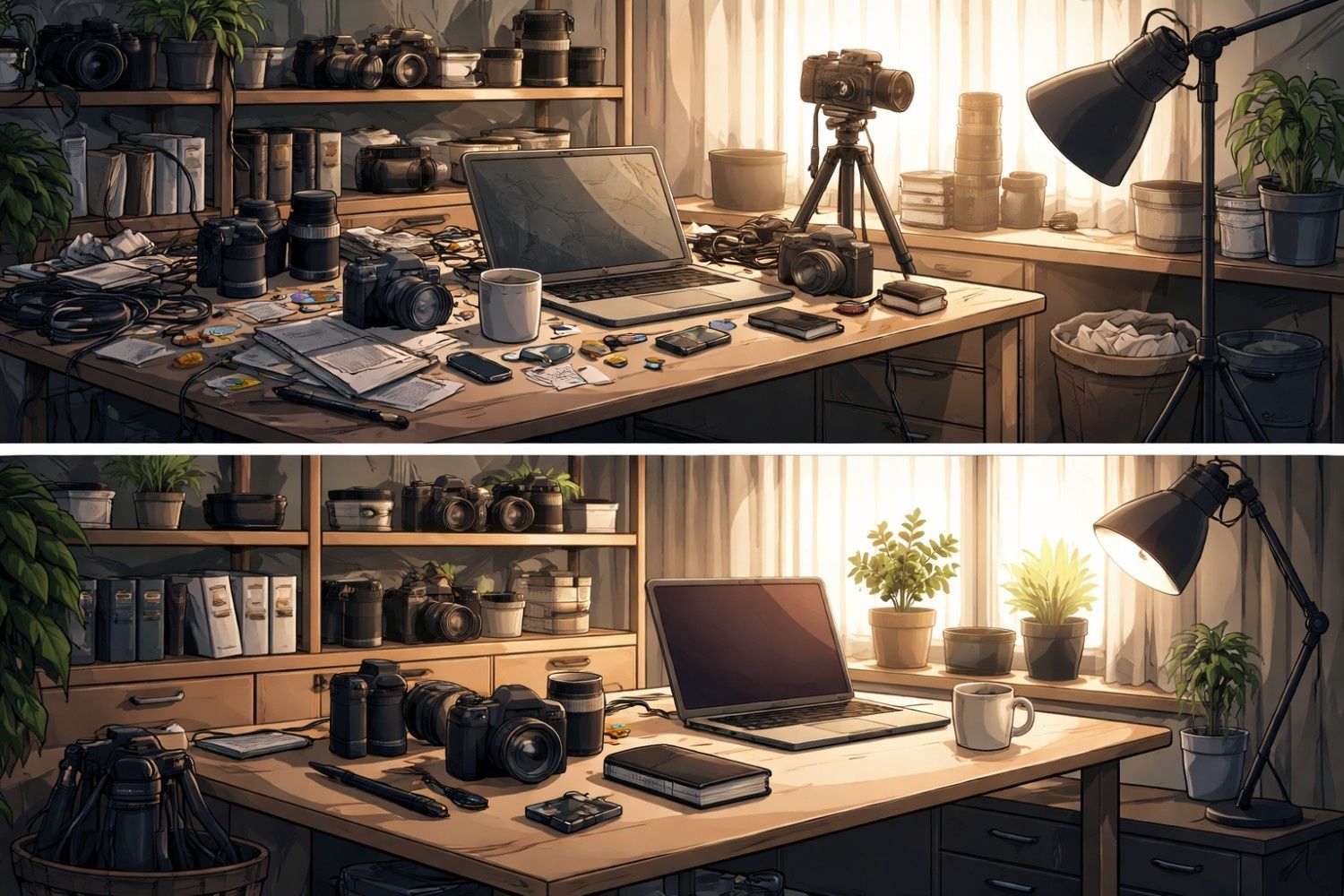
What you save is more than time — you reclaim velocity, revenue, and reputation.
- Fewer admin hours: Automated shortlisting and instant delivery dissolve the largest post-event bottlenecks.
- Higher engagement: Guests sharing photos live creates social proof and immediate discovery for your brand or venue.
- Faster payments: Quick delivery and faster approvals mean faster invoicing and cash flow.
- More leads, organically: Every guest who registers or scans QR becomes a potential client — Kamero reports measurable increases in lead generation when event galleries are used as a touchpoint.
Quick math for photographers: If you run 4 weekend events a month and each event saves you 7 hours of admin via AI workflows (example from above), that’s 28 hours freed monthly — nearly a full workweek reclaimed to shoot, market, or rest.
And if you offer paid downloads or prints, the business upside grows further. That’s why sell event photos online face recognition models work best when discovery is instant—because the buyer sees their value immediately.
Who should care (quick list)
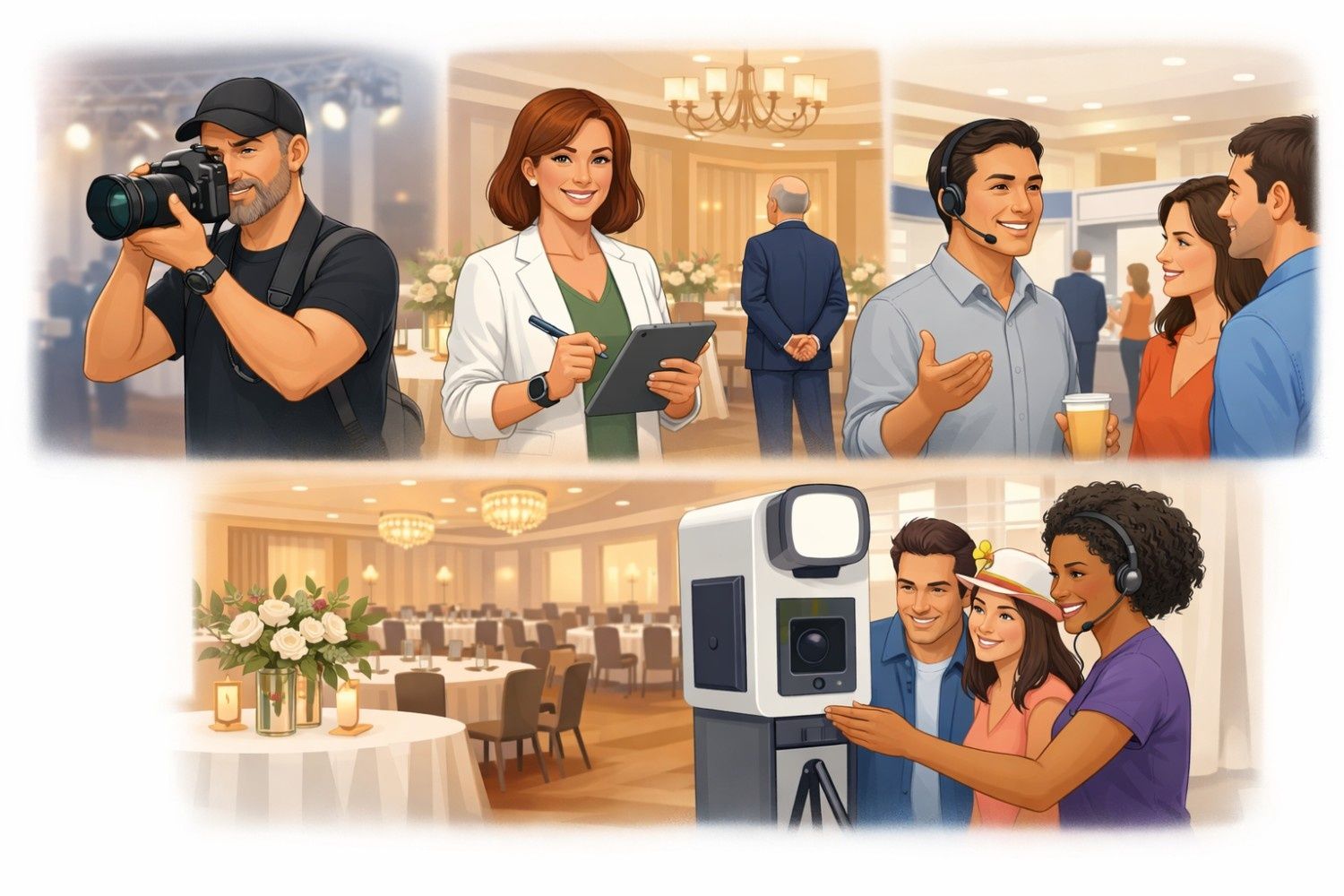
- Event Photographers — deliver faster, reduce follow-ups, and protect your brand.
- Event Planners — give clients real-time social proof and smoother post-event deliverables.
- Venues — amplify sponsor exposure and guest satisfaction.
- Corporate Exhibition Organizers — collect warm leads and make content live during the show.
- Photobooth Companies — turn each booth into a real-time social moment.
- Festival Teams — handle crowd-scale discovery without turning delivery into a support nightmare.
When your event is large enough, delivery becomes infrastructure. And infrastructure needs systems.
That’s why teams who scale don’t ask, “How do we share a link?” They ask, “What’s the best event photo distribution software for real-time delivery, discovery, and sharing?”
Want to see it in action?
Seeing a real-time workflow at a live event is the fastest way to understand the difference.
Watch the live workflow and see how a single selfie can turn a photo into a lead, a share, and a sale.
If you want to set this up for your own events, book a demo and we’ll walk you through it step-by-step.
About Tanuj Thakkar
Hi! I’m Tanuj Thakkar – a BCA graduate from St. Xavier's College, Ahmedabad, with an endless curiosity for people, ideas, and stories. I’m passionate about sales, marketing, and finding creative ways to connect with people. Nothing excites me more than understanding what makes someone tick and turning that into solutions that actually make a difference.
When I’m not diving into strategies or brainstorming ideas, you’ll probably find me exploring new places, geeking out on tech and innovation, or having conversations that spark fresh perspectives.