
For decades, the professional photography industry has been trapped in a linear growth model: you book a date, you shoot, you edit, and you deliver. While this "day rate" structure covers the bills, it fundamentally caps your earning potential. Your income is limited by the number of hours you can physically stand behind a lens.
However, the market shifted in early 2026. Clients and event guests no longer want to wait weeks for a link, nor do they want to sift through thousands of photos to find a single shot of themselves. This shift has created a massive opportunity for photographer monetization that goes far beyond the initial booking fee. To scale in this environment, you must transition from being a simple service provider to owning a sophisticated digital photo selling platform.
The Evolution of Photographer Monetization
Why the Traditional "Day Rate" Model is Capping Your Growth
The math of a traditional photography business is unforgiving. If you charge $2,000 per event and can realistically shoot 40 events a year, your ceiling is fixed. Furthermore, once you deliver that final gallery via a standard cloud link, your financial relationship with that event ends.
Thousands of dollars in potential revenue are currently sitting dormant on your hard drives. Every guest at a wedding, every runner at a marathon, and every attendee at a corporate gala is a potential customer. By failing to offer a frictionless way for these individuals to purchase high-resolution downloads or physical prints, you are effectively leaving money on the table.
The Rise of E-Commerce for Photographers
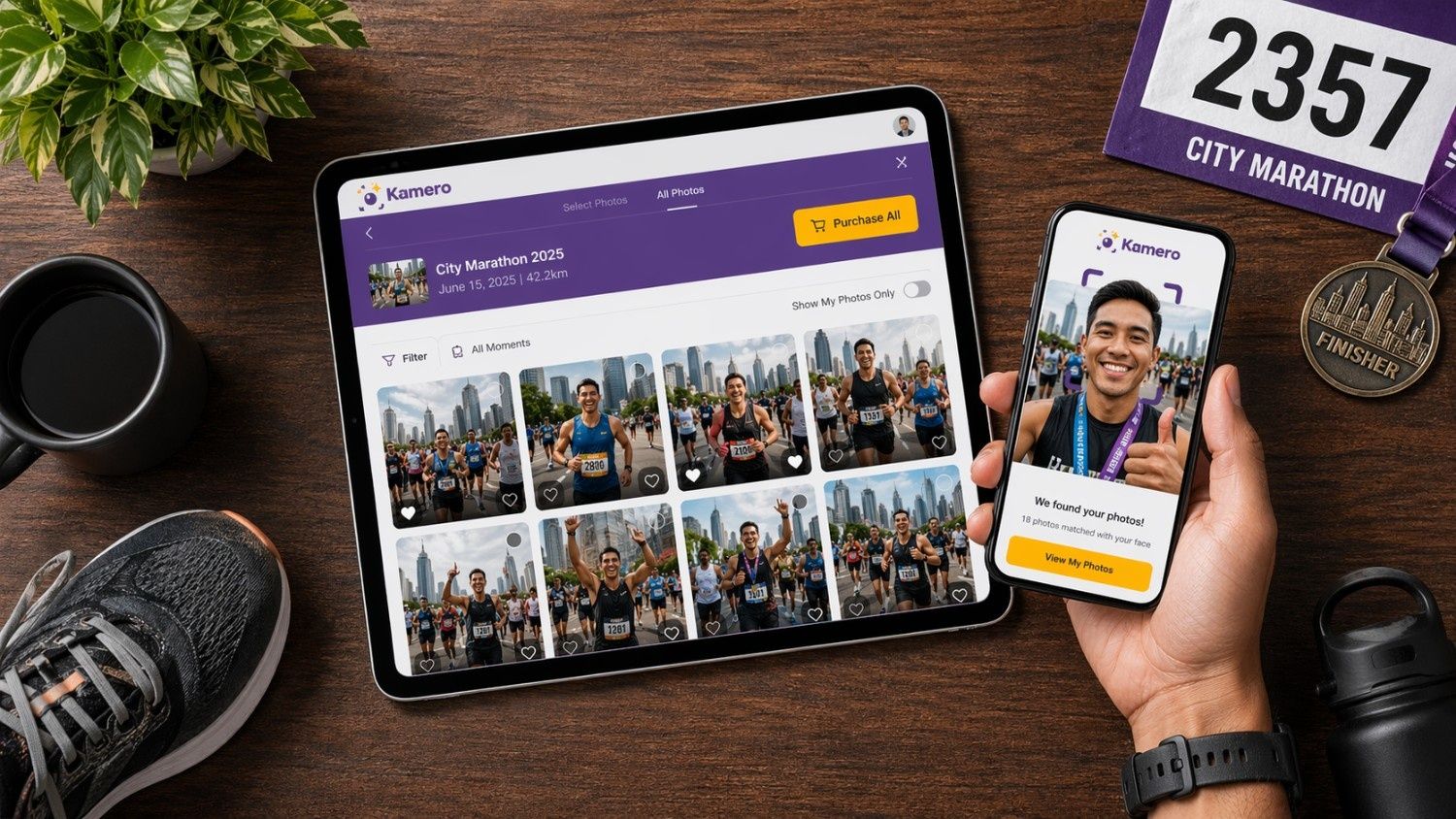
The modern era of e-commerce for photographers isn't about setting up a complex, manual Shopify store and uploading files one by one. It is about "Capture-to-Commerce" automation. In 2026, every gallery you deliver should function as a standalone, AI-powered storefront.
When you treat your galleries as a digital photo selling platform, the gallery itself does the selling. By utilizing AI to identify faces and serve personalized "Buy Now" prompts to guests, you turn a passive delivery tool into an active revenue engine that works while you sleep—or while you're busy shooting your next event.
The Competitor Ceiling: Why Basic Sharing Apps Kill Your Sales
Many photographers attempt to bridge the gap using basic AI sharing apps or consumer-grade cloud drives. While these tools are better than a generic folder, they often hit a "competitor ceiling" that actively sabotages your conversion rates.
- The Friction Problem: Most basic sharing apps force guests to download a native app or create an account just to view their photos. In an age of instant gratification, this friction leads to a 60–70% drop-off in engagement. If they can’t see the photo instantly, they won't buy it.
- The Branding Disconnect: Using a platform that features the software's logo more prominently than your own destroys professional trust. When a client sees a third-party checkout page, the perceived value of your work drops. It makes you look like a user of a tool rather than a premium service provider, forcing you to compete on price rather than quality.
- Zero Monetization Infrastructure: Many "fast" sharing apps were built for social sharing, not professional commerce. They lack the ability to securely gate high-resolution files, handle global UPI/Credit Card payments for international clients, or manage automated print fulfilment. They solve the delivery problem but ignore the revenue problem.
How Kamero Builds Your Digital Photo Selling Platform
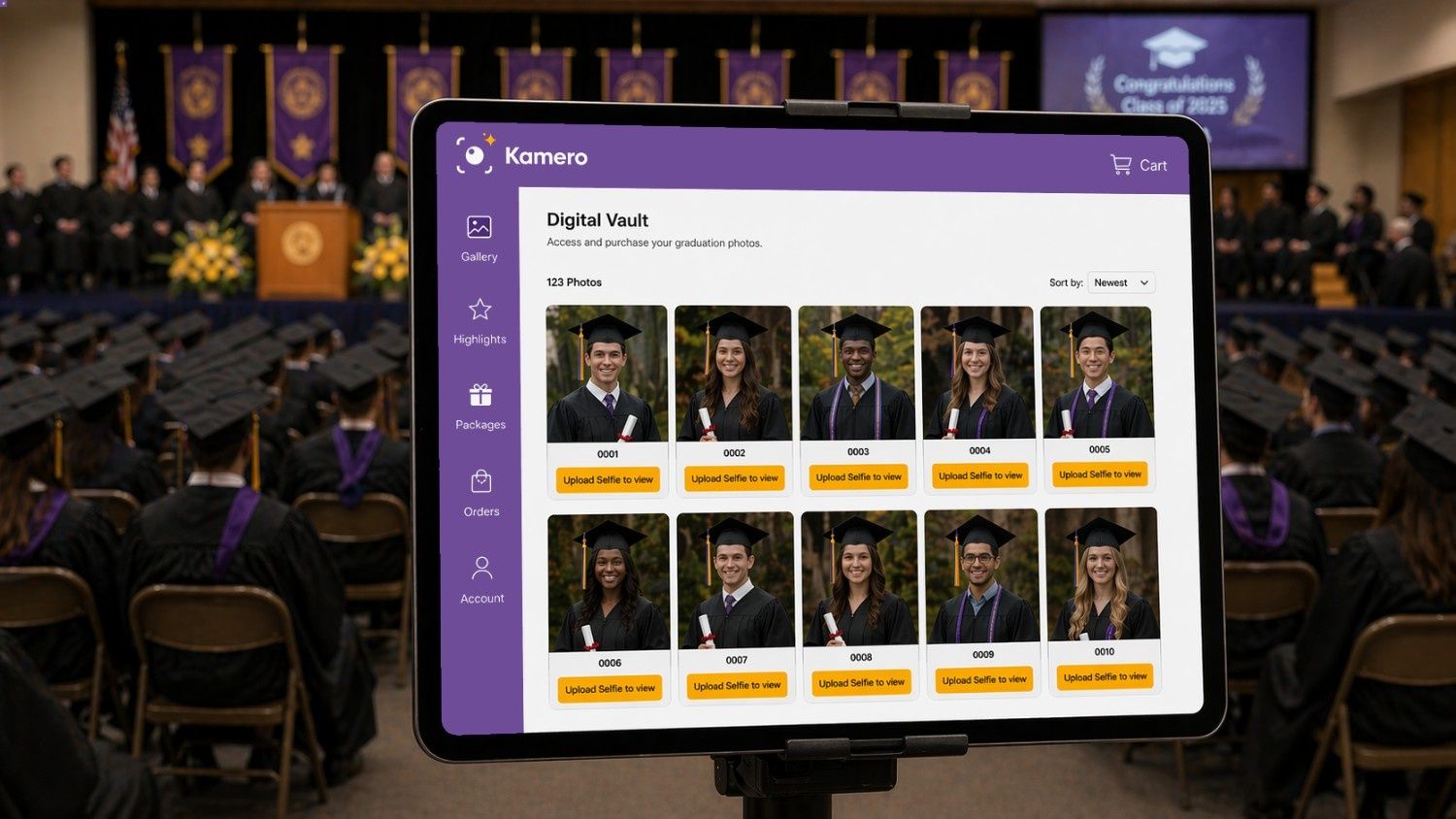
Kamero was engineered to shatter that ceiling. We don't just provide a gallery; we provide a high-conversion e-commerce ecosystem designed to maximize your photographer monetization.
Automated Face-Matching for Instant Guest Purchases
The core of our digital photo selling platform is precision AI. Instead of asking a guest to browse 2,000 photos from a wedding, Kamero uses selfie-based face-matching to curate a "Just You" gallery in seconds. This hyper-personalization acts as a targeted point-of-sale. When a guest sees a stunning, professional shot of themselves instantly, the "impulse buy" conversion rate skyrockets.
100% White-Label Branding for Premium E-Commerce
To maintain your premium positioning, Kamero offers full white labelling. Your logo, your brand colours, and your custom domain stay front and centre. This ensures that when a guest enters the store to sell event photos online, they are interacting with your brand, not ours. This consistency allows you to command higher prices for digital downloads and prints.
Flexible E-Commerce Aggregation: Digital & Print
Kamero handles the entire transaction journey. Whether you want to sell individual digital files, "All My Photos" bundles, or physical merchandise, our platform automates the payment collection and delivery. We support global and local payment gateways (from international Credit Cards to local UPI), ensuring that the transition from "viewer" to "buyer" happens in three clicks or less, regardless of where your client is located.
3 Strategies to Sell Event Photos Online in 2026
To maximize your results, you need a tactical approach to your storefront.
The Freemium Gallery Approach:
Deliver low-resolution, watermarked previews for free to encourage social sharing (which drives traffic). Secure the high-resolution, unwatermarked originals behind a payment gate. This allows the guests to "test-drive" the quality before committing to a purchase. The best part? Kamero's AI handles this watermarking automatically, meaning zero extra manual labour for you.
Monetizing High-Volume Events:
For marathons, college fests, or concerts, use AI search (Face + Bib recognition) to make discovery instant. In these environments, speed is the primary driver of sales. If a runner can buy their finish-line photo before they've even caught their breath, your volume will triple.
Post-Event Upsell Campaigns:
Use Kamero’s dashboard to identify "hot" galleries. Six months after a wedding, trigger a "limited time" discount on prints for extended family members. This turns your archive into a source of consistent, recurring revenue.
Conclusion: Launching Your Digital Storefront
The photographers who will thrive in 2026 are those who stop viewing themselves as "hired help" and start viewing themselves as media entrepreneurs. The technology to automate your sales and scale your income already exists—you simply have to deploy it.
Stop leaving money on the table. Transition your business from a manual delivery workflow to an automated revenue engine.
Start Your Digital Storefront for Free
Launch Your Storefront Stop trading time for money. Launch your automated photo store in 5 minutes and let AI handle your sales.
Explore Photo-Selling Modes
View Monetization Features See how Per-Photo and Full-Gallery pricing models work to maximize your ARPU.
Follow us on Instagram for daily tips on scaling your studio:@kamero.ai

About Mayank Oraon
Hi, I’m Mayank, an MBA student exploring the business world with a focus on operations, supply chain, and product strategy (aka the parts of a business that keep things from quietly falling apart).
I’m interested in understanding how systems actually run behind the scenes- and why they sometimes don’t. I also enjoy simplifying complex ideas - partly because it helps others, and partly because if I can’t explain it simply, I probably didn’t understand it in the first place (which is a humbling but effective feedback loop).