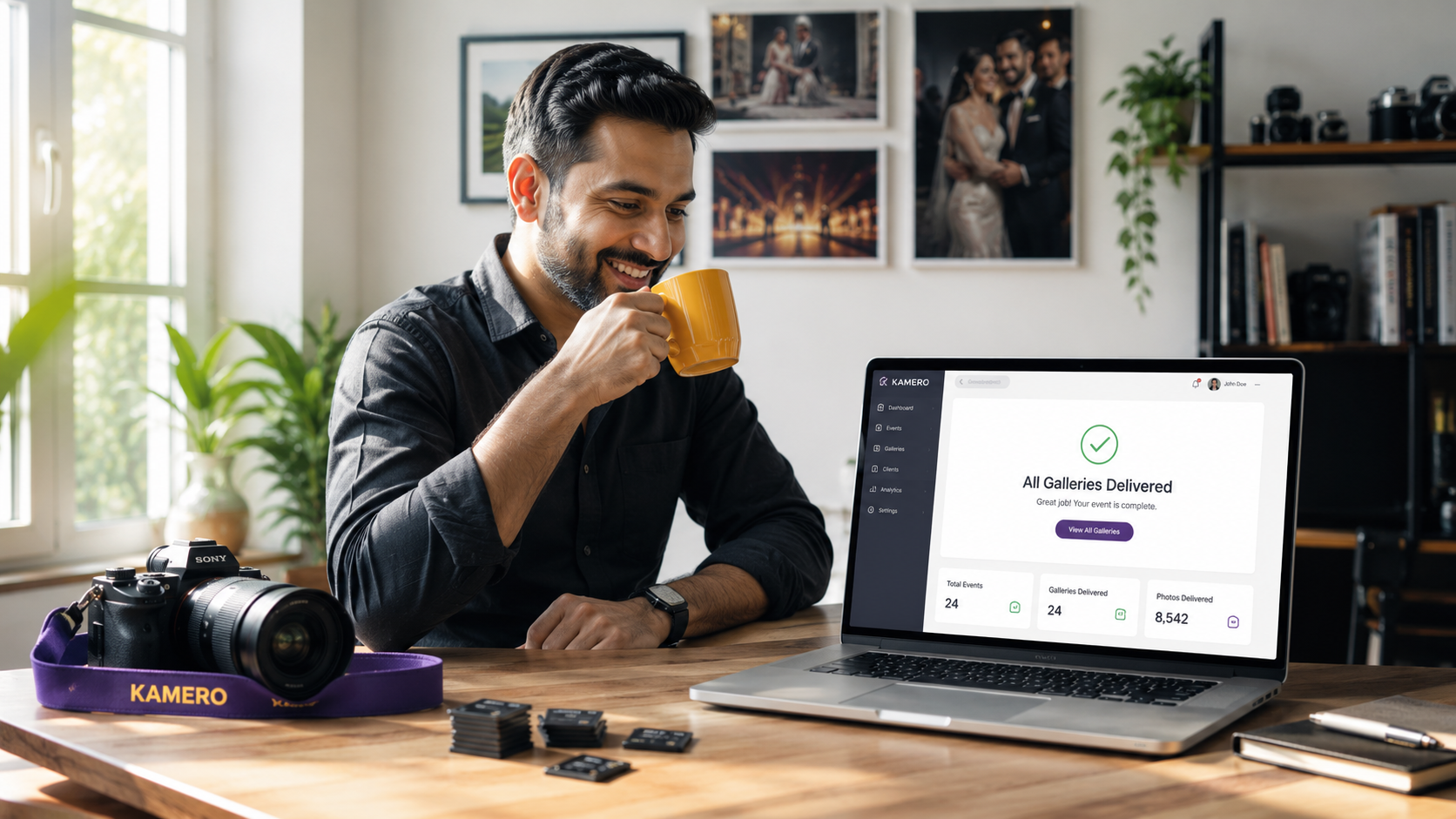
Introduction: Why Editing Backlogs Are Becoming a Growth Problem
Every wedding photographer knows the feeling.
A busy season ends, memory cards are full, hard drives are overflowing, and dozens of client projects are sitting in various stages of editing, culling, proofing, and delivery. What began as a successful booking season suddenly transforms into months of post-production work.
For many studios, the editing backlog isn't simply an operational inconvenience. It becomes a business constraint.
Delayed galleries create frustrated clients. Album approvals get pushed back. Final payments arrive later. New bookings become harder to manage because existing projects are still consuming time and resources.
The challenge is no longer taking great photographs.
The challenge is building an AI wedding workflow capable of handling increasing volumes without sacrificing quality, delivery speed, or profitability.
Studios that consistently deliver quickly have discovered a simple truth: eliminating backlogs requires system design, not longer workdays.
Understanding the Real Cause of Editing Backlogs
The Traditional Workflow Was Never Designed for Scale
Most photography workflows still follow a decades-old process.
Shoot the event. Transfer memory cards. Organize folders. Cull thousands of images. Edit selections. Upload galleries. Collect client feedback. Build albums. Deliver final assets.
This process works when event volume is low.
However, as studios grow, every stage becomes a bottleneck. A single wedding may generate thousands of images. Multiply that across multiple events per month and photographers quickly find themselves drowning in files.
The problem isn't necessarily editing.
It's the accumulation of administrative tasks surrounding editing.
Tool Bloat Creates Invisible Delays
Many photographers operate across multiple platforms.
One application handles storage. Another manages culling. A third hosts galleries. Additional tools support proofing, communication, payments, and branding.
Each software solves a specific problem.
Collectively, they create a fragmented production environment where photographers spend valuable time moving files between systems instead of delivering projects.
The result is slower turnaround times and growing operational fatigue.
Building an AI Wedding Workflow That Prevents Backlogs
Eliminate Delays Before They Start
Most backlogs begin during ingestion.
Traditionally, photographers wait until the wedding ends before transferring files, organizing folders, and beginning uploads. This creates an unavoidable delay between capture and production.
Modern workflows eliminate this gap entirely.
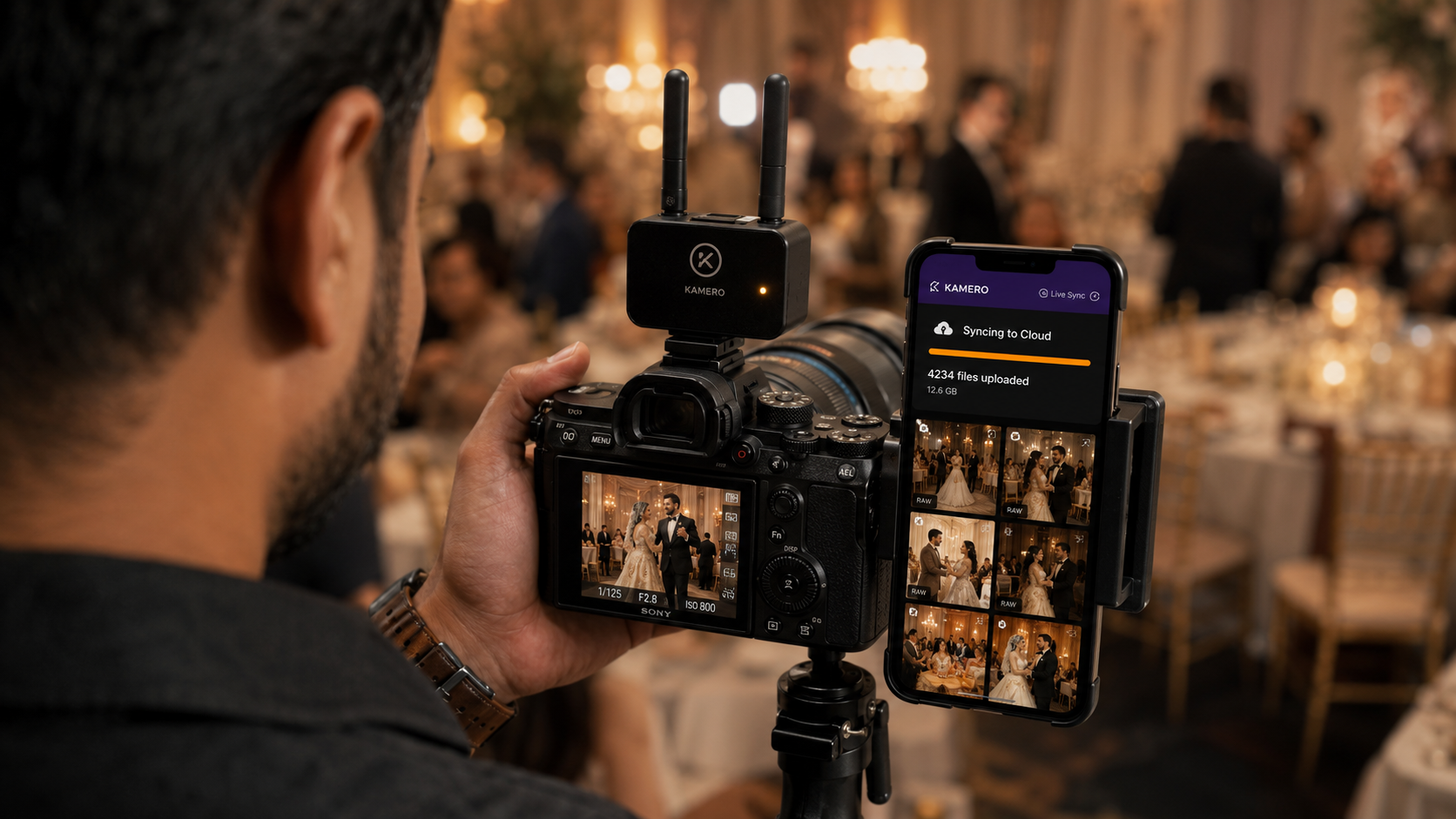
Real-time camera-to-cloud infrastructure allows media assets to begin entering the delivery ecosystem while the event is still taking place. Instead of creating a queue of work after every wedding, photographers distribute processing across the event itself.
By the time the wedding concludes, much of the organizational work is already complete.
Automate Repetitive Production Tasks
The second major cause of backlog is repetition.
Photographers repeatedly perform tasks that software can handle automatically:
- Sorting duplicate images
- Organizing event assets
- Managing folders
- Creating galleries
- Sharing delivery links
- Sending status updates
The most effective AI post-production tools focus on removing these repetitive processes rather than replacing creative decision-making.
Photographers remain in control of artistic choices while automation handles operational execution.
This distinction is critical.
The goal isn't replacing photographers.
The goal is to eliminate unnecessary work.
Accelerating Creative Enhancements
Modern AI workflows extend beyond organization.
Preset-driven enhancements and automated adjustment pipelines can dramatically reduce the time spent on repetitive corrections such as exposure balancing, color consistency, lighting adjustments, and basic retouching tasks.
Rather than editing every image individually, photographers establish a visual direction and allow systems to apply those standards across large batches.
This approach enables significantly faster photo processing without sacrificing creative consistency.
Removing Administrative Friction from Delivery
Personalized Discovery Replaces Gallery Chaos
Traditional galleries create a new problem after delivery.
Clients and guests must search through thousands of images to find their own photographs. This often generates a flood of support requests asking where specific images can be found.
Personalized discovery solves this challenge.
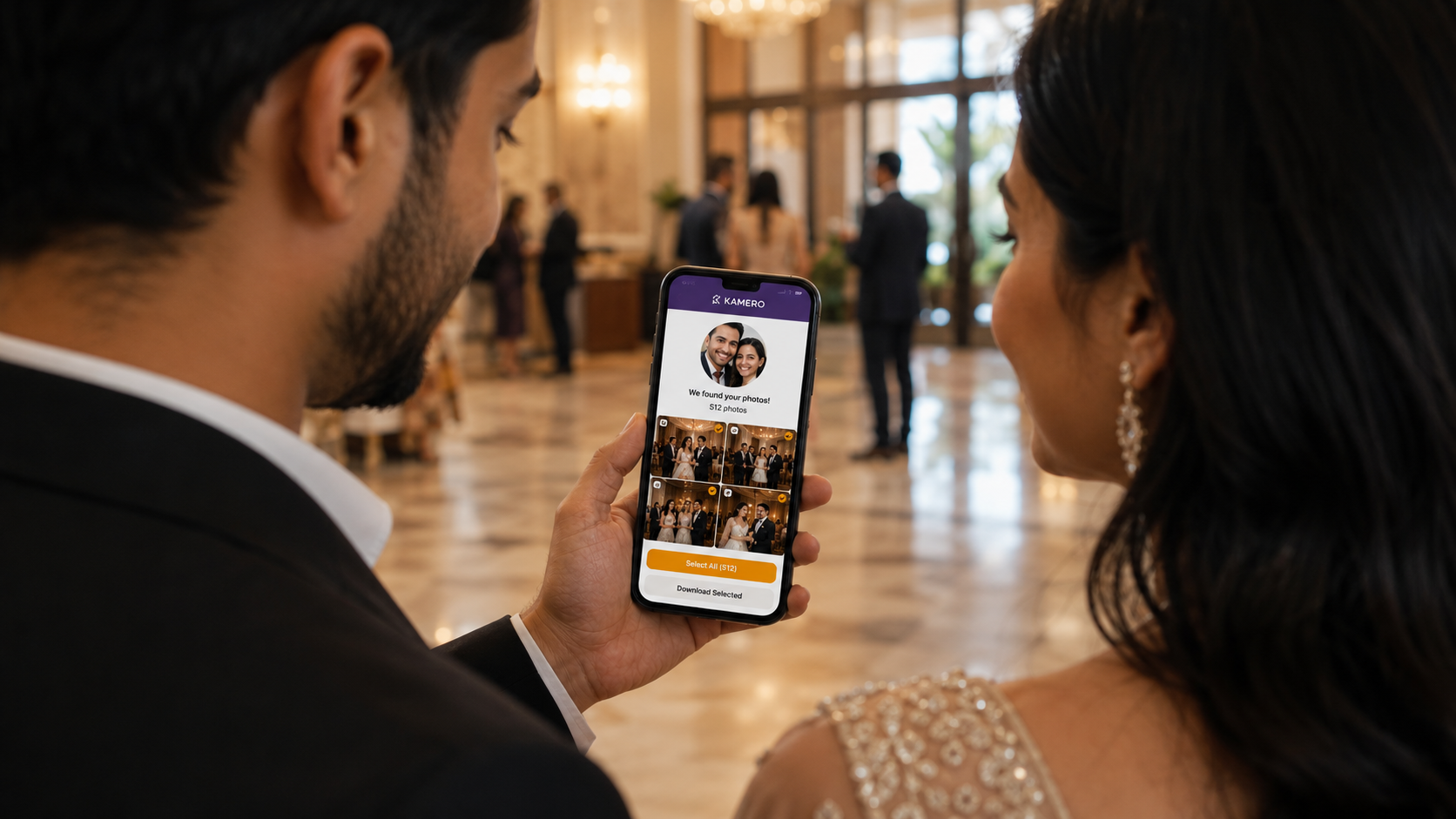
Instead of forcing viewers to browse endlessly, AI-powered matching systems can automatically surface relevant images through opt-in discovery experiences. Guests spend less time searching while photographers spend less time answering questions.
The outcome is a smoother experience for everyone involved.
Faster Selections Mean Faster Approvals
Album selection is often one of the longest stages of post-production.
Clients exchange screenshots, email references, and messaging threads while photographers attempt to track selections across multiple channels.
Integrated proofing systems simplify the process dramatically.
Clients can review, favorite, and approve photographs directly inside the gallery environment. Structured workflows reduce confusion while accelerating decision-making.
The faster clients choose images, the faster projects move toward completion.
The Kamero Advantage: Breaking the Backlog Cycle
One Platform Instead of Multiple Workflows
Many platforms focus on a single stage of the photography process.
Kamero was built to connect the entire journey.
From ingestion and delivery to discovery, proofing, branding, communication, and commerce, every stage operates within a unified ecosystem.
This removes the friction created by fragmented software stacks and creates a significantly faster production pipeline.
Real-Time Ingestion Changes Everything
Kam-Sync introduces a fundamentally different approach to event media management.
Using wireless FTP infrastructure, photographers can stream files directly from professional camera bodies into the cloud through local Wi-Fi or 5G networks. High-resolution assets up to 50 MB are ingested without sacrificing quality.
The advantage isn't simply speed.
The advantage is eliminating the traditional delay between shooting and production.
Work begins while the event is still happening.
Faster Proofing, Faster Decisions
The period immediately after an event is when client engagement is highest.
Traditional workflows often waste this window because galleries take days or weeks to become available.
Kamero allows photographers to capitalize on peak emotional engagement by enabling clients to begin interacting with content sooner. Proofing, selections, and approvals happen earlier, helping studios maintain momentum throughout the delivery cycle.
Turning Operational Speed Into Business Growth
Faster Deliveries Improve Cash Flow
Every delayed project delays revenue.
Final payments are frequently tied to approvals, album selections, or completed deliveries. When production slows, cash flow slows with it.
Studios that successfully beat editing backlog challenges often discover a financial benefit beyond operational efficiency.
Projects close faster.
Invoices get paid sooner.
Revenue becomes more predictable.
Galleries Become Marketing Assets
Modern delivery systems can also support growth.
Every wedding gallery introduces photographers to dozens or even hundreds of potential future clients. Friends, family members, and attendees all experience the photographer's work through the delivery platform.
A branded gallery environment transforms this audience into a marketing channel.
Rather than serving solely as delivery destinations, galleries become ongoing lead-generation assets.
Reduced Administration Creates More Capacity
The ultimate advantage of automation is capacity creation.
When photographers spend less time managing files, responding to inquiries, and coordinating approvals, they gain more time for activities that actually grow the business.
That time can be invested into marketing, networking, client relationships, and additional bookings.
The result is a more scalable studio operation without requiring proportional increases in staffing.
Conclusion: The Future of Wedding Photography Is Backlog-Free
Most editing backlogs are not caused by editing.
They are caused by inefficient workflows, fragmented software, delayed ingestion, and excessive administration.
Studios that continue relying on traditional production methods will find it increasingly difficult to maintain fast delivery standards as event volumes grow.
Studios that embrace automation gain a different advantage.
They process faster, deliver faster, get paid faster, and create a better client experience along the way.
The future of the photography business belongs to those who build systems capable of scaling alongside their creativity.
A true AI wedding workflow is not about replacing photographers.
It is about ensuring photographers never become trapped by their own success.
Ready to Build a Zero-Backlog Studio?
Book a Demo → Click here
Start Your Free Trial → Click here
Follow Kamero on Instagram → Click here

About Nidhi S
Hey there! I’m an MBA student with a keen interest in the evolving world of digital marketing and business strategy. I enjoy exploring how brands build their online presence and the creative process behind turning strategic goals into engaging stories.
When I’m not caught up in marketing trends, you’ll probably find me down a YouTube rabbit hole or binge-watching sitcoms. I’m a fan of good stories—whether they’re in a marketing campaign or a 20-minute TV episode—and I’m always looking for new perspectives to keep things interesting!