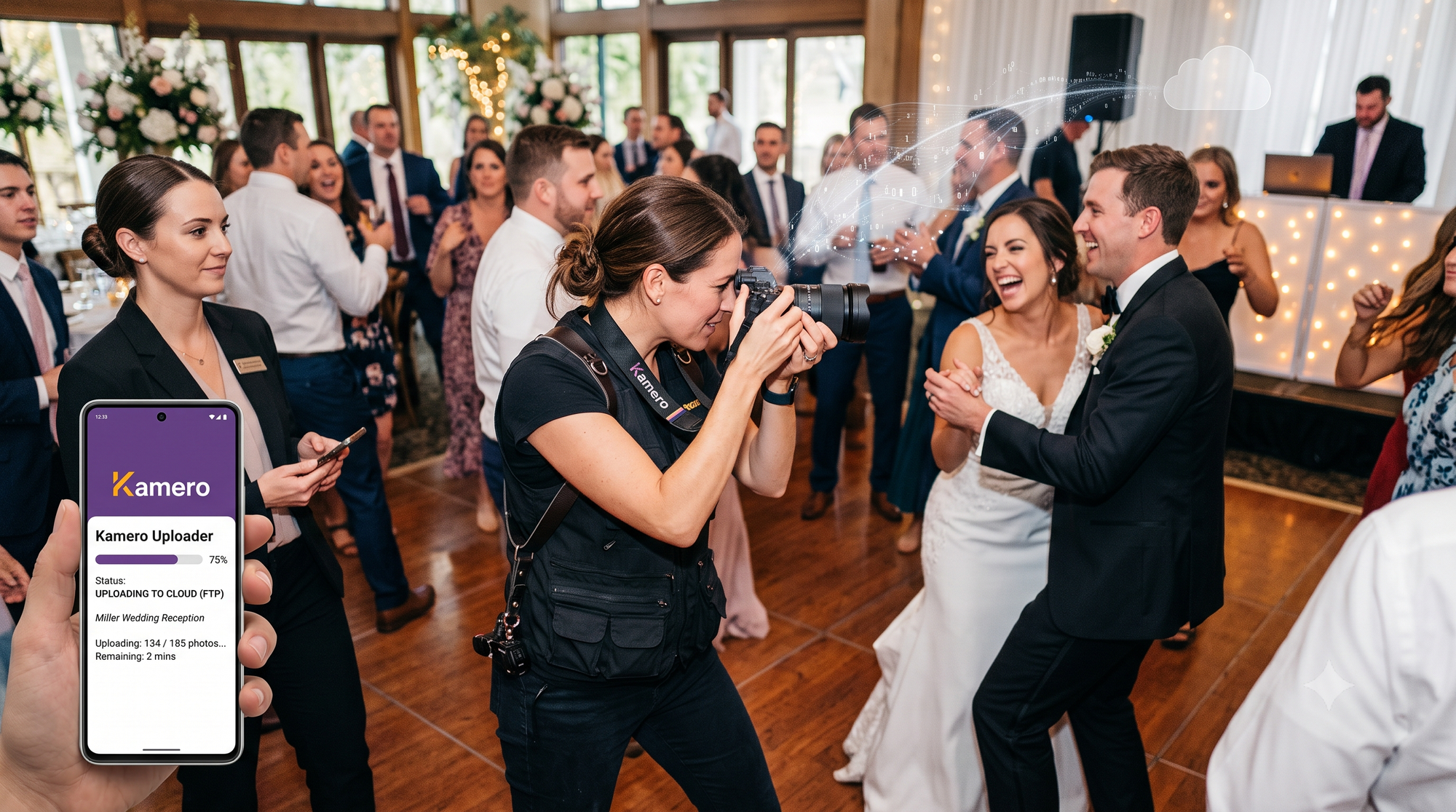
Introduction: The End of the SD Card Era
For decades, wedding photography followed the same workflow.
Shoot the event. Remove the memory card. Transfer files to a computer. Create backups. Upload galleries. Begin editing. Start client delivery.
The process became so common that most photographers accepted it as unavoidable.
The problem is that every step introduces delays.
A wedding may end at midnight, but production doesn't begin until files are manually transferred, organized, and uploaded. During busy seasons, these small delays compound into weeks of operational backlog.
Today's clients expect faster service. Studios want shorter delivery timelines. Photographers need systems that scale without increasing administrative workload.
This is why the industry is moving toward a cloud mirrorless workflow powered by direct camera-to-cloud connectivity.
Instead of waiting until the event ends, photographers can begin moving files into the delivery ecosystem while they are still shooting.
The result is faster production, quicker approvals, and a dramatically more efficient workflow.
Why Traditional Ingestion Workflows Create Delays
The Hidden Cost of Manual File Transfers
Most photographers think of editing as the biggest production bottleneck.
In reality, the workflow often slows down much earlier.
Memory cards must be collected, transferred, organized, backed up, and uploaded before post-production can even begin. Every event creates a queue of work waiting to enter the system.
This delay affects everything downstream.
Editing starts later. Galleries launch later. Album selections happen later. Payments arrive later.
The longer files remain trapped on local devices, the slower the business moves.
The Rise of Camera-to-Cloud Weddings
Modern mirrorless cameras increasingly support direct network connectivity.
This allows photographers to bypass traditional transfer workflows entirely.
In a camera-to-cloud weddings environment, images move directly from the camera into cloud infrastructure through wireless connections. Instead of creating a post-event upload process, the upload process becomes part of the event itself.
The benefit isn't simply convenience.
It's operational speed.
Studios can begin processing, organizing, and distributing content almost immediately after capture.
Understanding How Wireless Photo Transfer Actually Works
Why FTP Matters
Not all upload systems are created equally.
Many gallery platforms rely on browser-based uploads after the event concludes. While functional, these workflows still depend on photographers manually moving files through multiple steps.
FTP-based workflows operate differently.
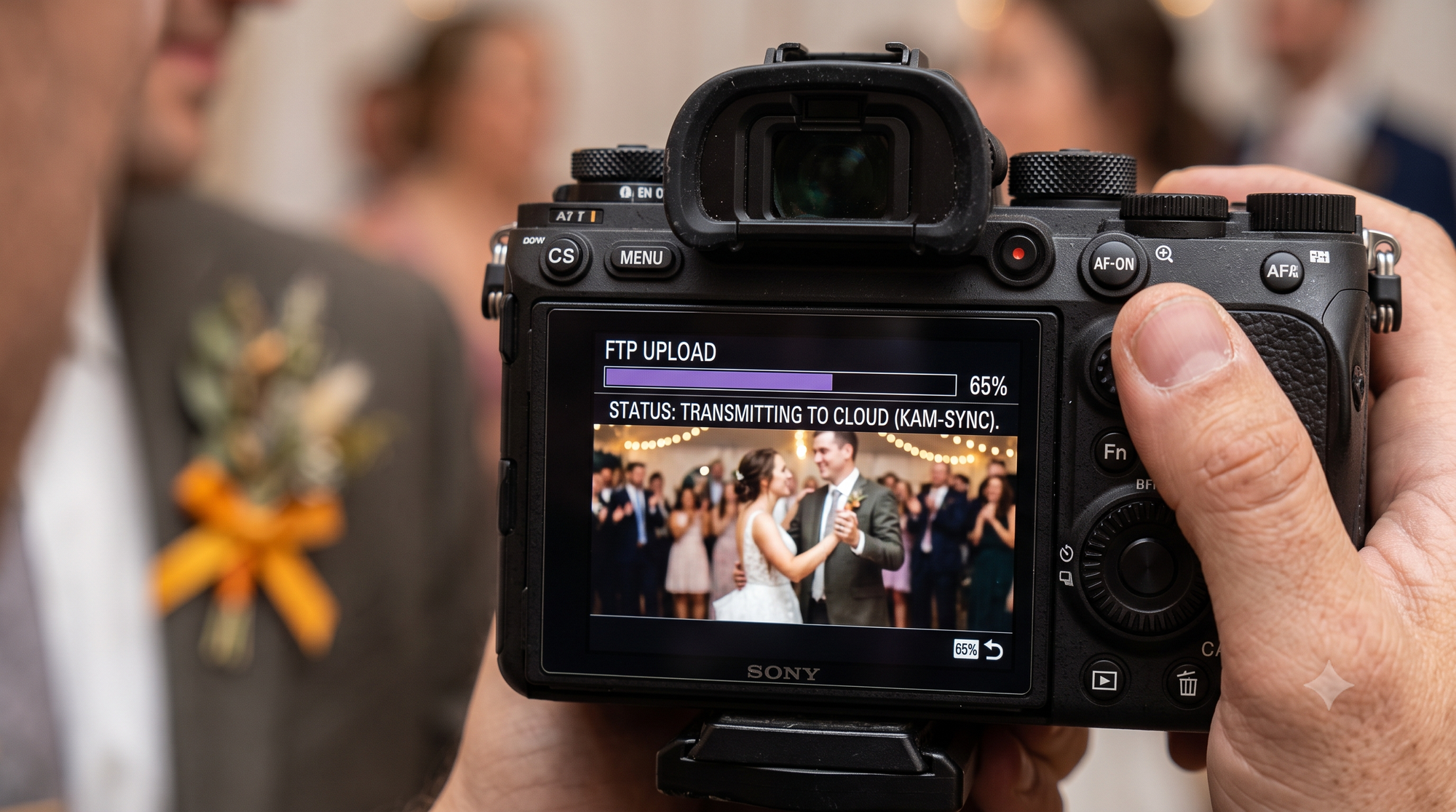
Modern mirrorless cameras contain native FTP capabilities that allow files to be transmitted directly from the camera body to a designated cloud destination. The process happens in the background while photographers continue shooting.
This creates a true wireless photo transfer workflow rather than a delayed upload process disguised as automation.
Building Reliable On-Ground Connectivity
One concern photographers often have is reliability.
Wedding venues are crowded environments filled with smartphones, Wi-Fi devices, and competing network traffic.
Modern camera-to-cloud systems address this challenge by leveraging local Wi-Fi infrastructure or dedicated 5G connectivity depending on venue conditions. Files can be transferred continuously without interrupting shooting performance.
More importantly, photographers no longer need to wait until returning home or reaching the studio before production begins.
The workflow stays active throughout the event.
How Real-Time Camera Upload Changes Studio Operations
Turning Captures Into Deliverables Faster
The biggest advantage of real-time camera upload systems is what happens after the files arrive.
Traditionally, every production task waits for ingestion to finish.
With continuous uploads, assets begin entering organizational workflows immediately. Galleries can be prepared sooner. Discovery systems can begin indexing content earlier. Teams gain access to media without waiting for manual transfers.
This dramatically reduces the time between capture and client interaction.
Shortening Proofing and Approval Cycles
Client engagement is highest immediately after an event.
Unfortunately, many studios lose this momentum because galleries take too long to become available.
When content enters the ecosystem faster, proofing workflows can begin sooner. Clients can review images earlier, select favorites more quickly, and move through album approval stages without long periods of inactivity.
Faster decisions create faster deliveries.
Faster deliveries create happier clients.
Eliminating Administrative Friction
A significant portion of studio workload comes from communication rather than photography.
Clients request updates. Guests ask for photos. Album selections require follow-ups. Delivery timelines generate questions.
Real-time workflows reduce much of this friction because content becomes available sooner and moves through the pipeline more efficiently.
The result is fewer delays and fewer status inquiries.
The Kamero Advantage: Built for Real-Time Media Operations
Direct FTP Integration Instead of Delayed Upload Queues
Most delivery platforms begin working after photographers upload files.
Kamero begins working during capture.
Kam-Sync leverages the native FTP capabilities built into modern mirrorless camera systems, allowing photographers to stream files directly into cloud infrastructure while events are still underway.
Rather than depending on delayed browser uploads, content enters the ecosystem continuously.
This fundamentally changes how studios manage production timelines.
Built for High-Resolution Event Photography
Modern wedding photographers are producing larger files than ever before.
High-resolution cameras create significant challenges for traditional upload workflows, particularly during large events involving multiple shooters.
Kamero supports the ingestion of original assets up to 50 MB while preserving image quality and maintaining workflow efficiency.
Studios gain the flexibility to work with professional-grade files without sacrificing delivery speed.
More Than Storage
Kam-Sync is not simply a transfer mechanism.
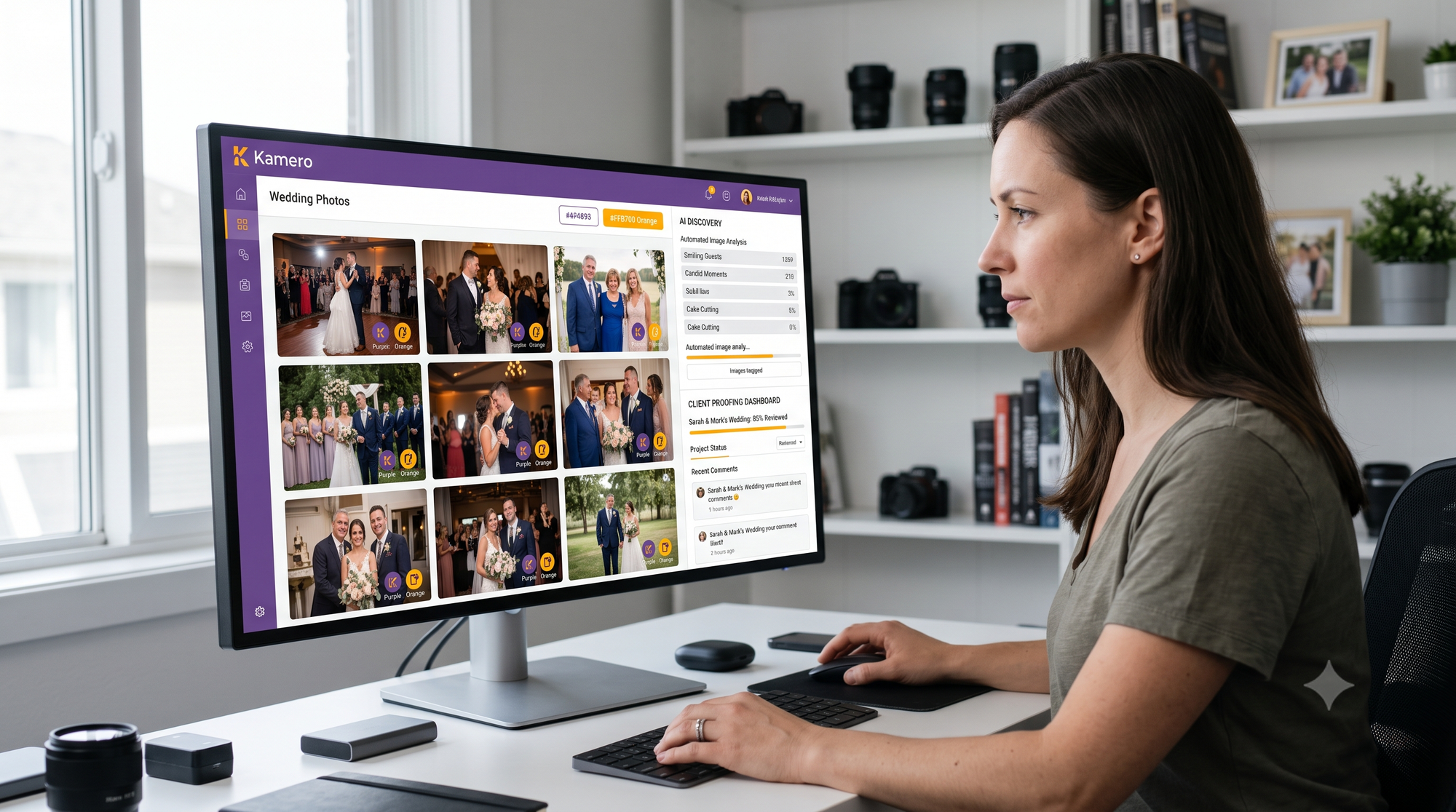
Once files enter the ecosystem, photographers gain access to proofing tools, AI-powered discovery, dynamic dual-logo watermarking, client delivery workflows, guest engagement systems, and integrated commerce features.
Rather than moving content through multiple disconnected platforms, photographers operate inside a unified environment.
The result is a significantly faster and more scalable production pipeline.
Turning Faster Logistics Into Revenue
Speed Creates Competitive Advantage
Clients increasingly evaluate photographers based on responsiveness and delivery speed.
While artistic quality remains essential, operational performance has become a key differentiator.
Studios capable of delivering previews quickly, initiating proofing earlier, and shortening production timelines create a stronger overall client experience.
Faster workflows become a competitive advantage.
Creating Revenue Beyond Delivery
Modern galleries are no longer simple delivery destinations.
Integrated commerce capabilities allow photographers to monetize engagement through digital downloads, print packages, and personalized collections.
Because galleries become available sooner, opportunities for purchasing and engagement also occur earlier in the customer journey.
The same infrastructure that accelerates delivery also supports revenue generation.
Galleries as Lead Generation Assets
Every wedding introduces photographers to future prospects.
Friends, family members, and attendees all interact with the gallery experience. A well-designed delivery ecosystem allows photographers to convert that engagement into long-term visibility and future inquiries.
Delivery becomes marketing.
The gallery becomes a business development tool.
Conclusion: The Future of Wedding Photography Is Camera-to-Cloud
The traditional workflow was built for a different era.
An era of slower internet connections, local storage systems, and long delivery expectations.
Today's photographers operate in a world where clients expect instant access, mobile-first experiences, and rapid communication.
Meeting those expectations requires more than working harder.
It requires better infrastructure.
A modern cloud mirrorless workflow eliminates unnecessary delays by allowing content to move directly from camera to cloud in real time. Studios gain faster production timelines, smoother client experiences, and greater operational scalability.
The question is no longer whether camera-to-cloud workflows will become standard.
The question is how quickly photographers will adopt them.
Ready to Upgrade to a Real-Time Workflow?
Book a Demo → Click here
Start Your Free Trial → Click here
Follow Kamero on Instagram → Click here

About Mohit Prakash Lal
Hi, I’m Mohit, an MBA student at TAPMI, Manipal, exploring the world of business with a focus on marketing and strategy. I’m interested in understanding how brands connect with people and create meaningful, lasting impact in a competitive landscape. I enjoy working on real-world projects across marketing, sales, and business development, where I can apply ideas in practical settings.
I also enjoy simplifying ideas into clear, practical insights. Outside of work, I like travelling, reading, and taking time to recharge.