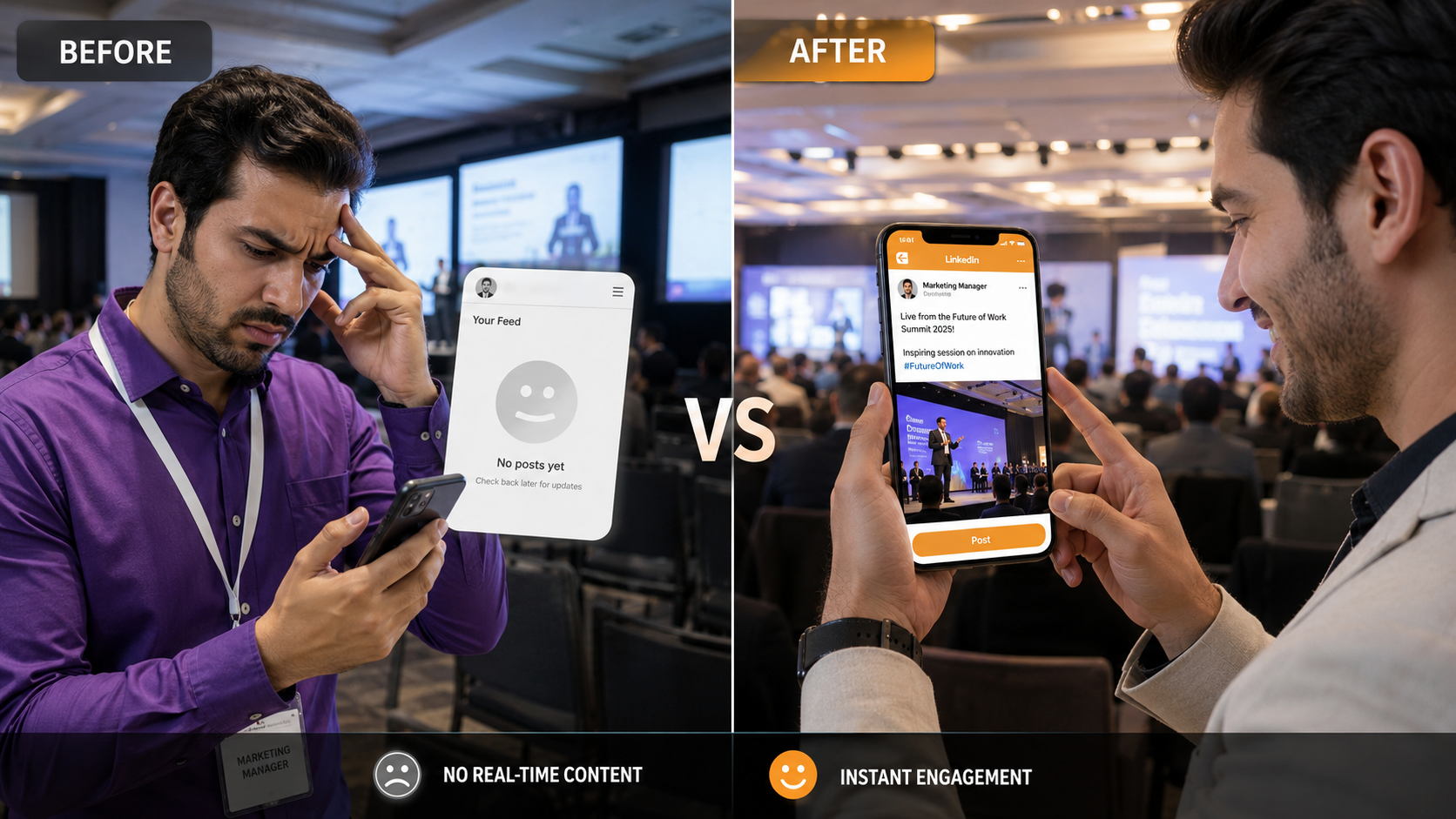
Introduction: The Hidden Cost of Delayed Event Content
Corporate events are no longer isolated brand moments. They are content-generation engines that fuel demand generation, account-based marketing (ABM), public relations, social media engagement, executive branding, partner communications, and customer nurturing campaigns.
Yet many organizations still operate with a significant blind spot.
They invest months planning conferences, summits, product launches, leadership retreats, and customer events, only to wait weeks before visual assets become available. By the time event photographs are sorted, approved, and distributed, the audience's attention has shifted elsewhere.
This is the modern post-event slump.
The challenge is not capturing content. Most events generate thousands of high-quality images. The challenge is transforming those images into usable marketing assets quickly enough to maintain momentum.
Organizations that deploy immediate B2B marketing photos during and immediately after an event can extend engagement, accelerate campaign launches, and maintain continuous prospect interaction. Those relying on traditional delivery timelines often watch valuable opportunities disappear during the crucial 48-hour period following an event.
The Post-Event Slump: Where Marketing Momentum Gets Lost
Why the First 48 Hours Matter
The hours immediately following an event represent the highest engagement period of the entire campaign lifecycle.
Attendees are sharing experiences. Speakers are posting highlights. Sponsors are tracking visibility. Media outlets are looking for visual assets. Sales teams are following up on conversations. Marketing teams are planning nurture campaigns.
This is when excitement is highest and audience recall is strongest.
Unfortunately, many organizations operate on a completely different timeline. Photographs remain trapped in memory cards, local drives, editing queues, or fragmented approval processes.
By the time assets are delivered, the market has moved on.
The result is lost engagement, reduced reach, weaker PR performance, and slower campaign execution.
The Hidden Cost of Delayed Asset Delivery
The impact extends beyond marketing metrics.
Delayed content often stalls account-based marketing programs, delays sales follow-ups, weakens social media engagement, and limits the effectiveness of post-event nurturing initiatives.
For enterprise organizations, these delays create a chain reaction across multiple departments.
Marketing teams wait for visuals.
PR teams delay announcements.
Sales teams lose contextual follow-up opportunities.
Sponsors miss peak visibility windows.
What appears to be a simple content delivery problem quickly becomes a revenue acceleration problem.
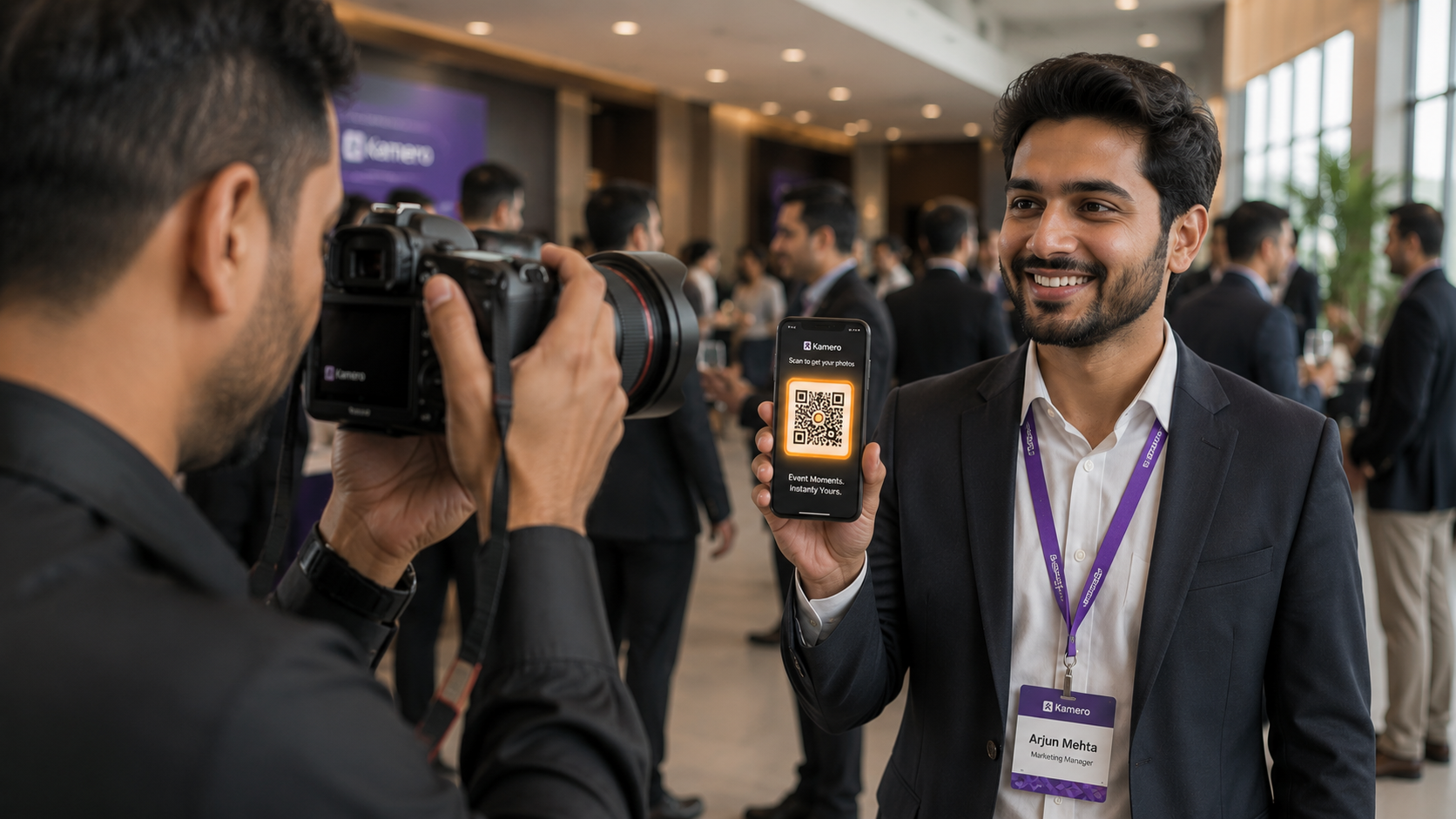
Building a Real-Time Event Content Infrastructure
Moving Beyond Traditional Event Workflows
Legacy event media workflows were designed for archival purposes.
Modern event marketing requires operational speed.
Traditional processes involve collecting memory cards, transferring files to local systems, manually sorting assets, reviewing content, applying branding, and then distributing files through multiple channels.
Each stage introduces delays.
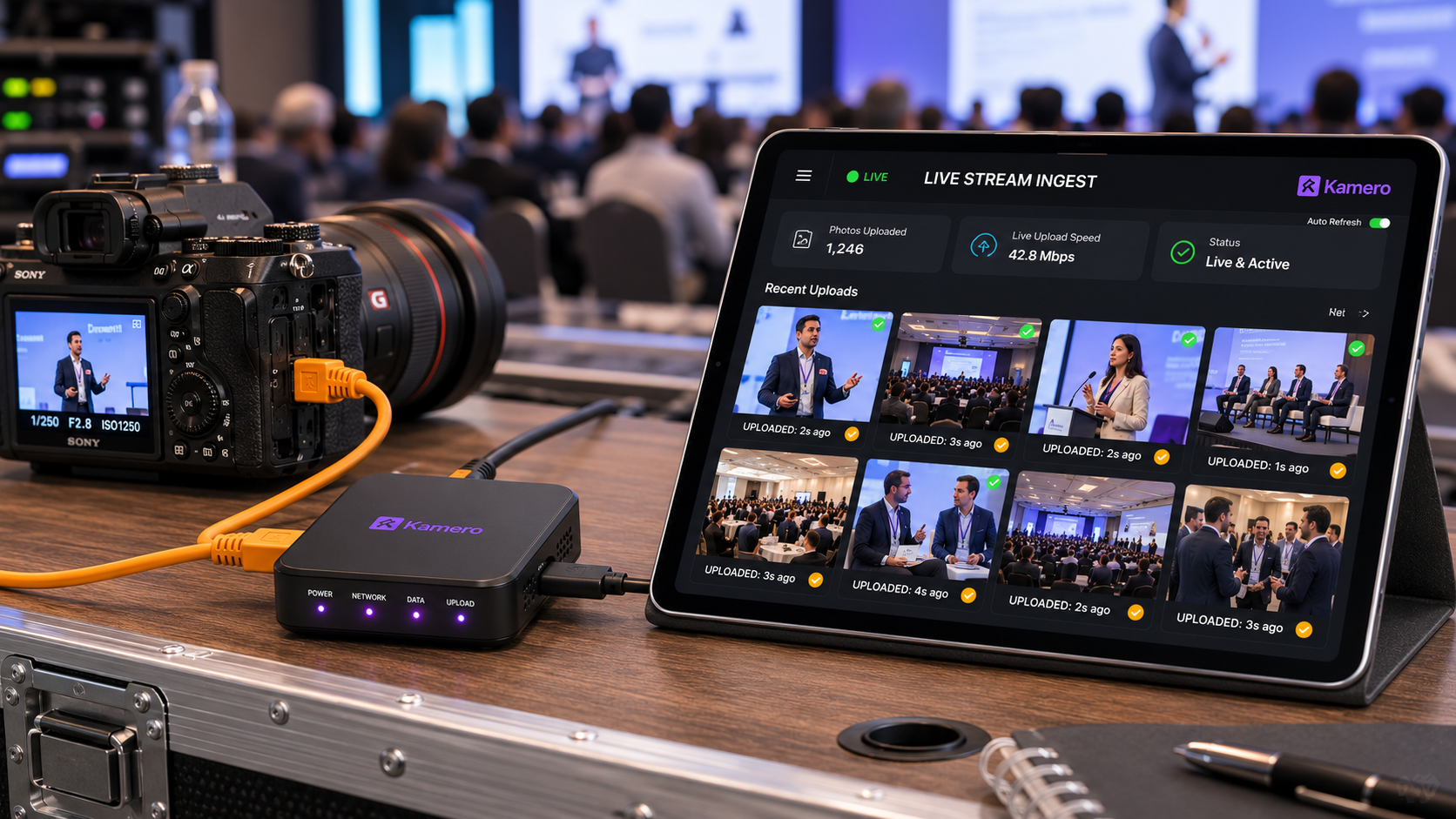
Real-time event infrastructure removes these bottlenecks by enabling content to move directly from capture devices into centralized cloud environments.
Instead of waiting days or weeks for content to become available, marketing teams can begin activating assets while the event is still taking place.
Governance Without Sacrificing Speed
Enterprise teams cannot compromise governance for velocity.
Every image may require brand compliance checks, sponsor approvals, executive reviews, or legal validation before publication.
This is where structured workflows become essential.
Modern event media systems combine speed with governance through role-based permissions, maker-checker approvals, centralized asset management, and automated routing structures.
The result is faster content distribution without sacrificing security, compliance, or brand integrity.
Turning Event Photos Into Immediate Marketing Assets
Accelerating Social, PR, and Executive Communications
The most successful event marketing programs treat content as a live asset rather than a post-event deliverable.
When visual assets are available immediately, marketing teams can create social media campaigns while conversations are still active.
PR teams can distribute press-ready materials during keynote sessions.
Executives can publish thought leadership content while their presentations are still being discussed.
Sponsors can activate branded campaigns before audience attention fades.
This transforms event content from documentation into active marketing infrastructure.
Activating Attendees as Amplification Channels
Attendees represent one of the most underutilized marketing resources at corporate events.
Every attendee has the potential to amplify event messaging through social sharing, professional networking, and peer recommendations.
However, amplification only happens when content is easily accessible.
Providing personalized access to event photos allows participants to engage with content immediately rather than waiting for generic galleries or delayed file transfers.
This creates a multiplier effect where attendees become active distribution channels for event content.
The result is broader reach, stronger engagement, and increased brand visibility without additional advertising spend.
Why Enterprise Teams Need More Than a Consumer Gallery
The Problem with Traditional Sharing Platforms
Many event teams still rely on tools originally designed for consumer photo sharing.
While these platforms may work for small gatherings, enterprise environments demand significantly more sophistication.
Corporate events involve multiple stakeholders, sponsors, agencies, executives, attendees, compliance teams, and communications departments.
They require governance, branding controls, approval workflows, security standards, and operational scalability.
Consumer-focused solutions often struggle to support these requirements effectively.
The Kamero Advantage
Kamero was designed specifically to solve enterprise-scale media challenges.
Through Kam-Sync, photographers can stream content directly from camera systems into centralized cloud environments using hardware-level FTP workflows.
This eliminates delays associated with browser-based uploads and manual transfer processes.
High-resolution assets up to 50 MB can be ingested without compromising quality, allowing marketing teams to work with publication-ready content immediately.
At the same time, organisations retain complete control through role-based permissions, maker-checker workflows, dynamic dual-logo watermarking, and enterprise-grade governance controls.
Unlike traditional gallery platforms, Kamero transforms media management into a strategic marketing function.
Instead of storing files, organizations activate campaigns.

About Mohit Prakash Lal
Hi, I’m Mohit, an MBA student at TAPMI, Manipal, exploring the world of business with a focus on marketing and strategy. I’m interested in understanding how brands connect with people and create meaningful, lasting impact in a competitive landscape. I enjoy working on real-world projects across marketing, sales, and business development, where I can apply ideas in practical settings.
I also enjoy simplifying ideas into clear, practical insights. Outside of work, I like travelling, reading, and taking time to recharge.