Introduction: The Hidden Growth Engine in Event Photography
For decades, the event and wedding photography industry operated under a linear, low-touch delivery model. A studio captured an event, spent weeks in post-production manually culling and color-grading raw files, and ultimately emailed a static cloud storage directory or desktop web gallery link to the primary hiring client. While the couple or corporate event host received their high-resolution assets, the hundreds or thousands of attendees present at the venue were left completely out of the loop. By the time photos trickled down to guests weeks later, the intense emotional resonance of the event had faded, completely destroying the window for organic brand engagement.
This delayed delivery workflow represents a massive structural vulnerability for modern studios. Traditional word-of-mouth growth—relying entirely on client referrals—is slow, unpredictable, and difficult to scale. In an era dominated by mobile-first content consumption and instant digital gratification, static galleries fail to capitalize on the real-time attention of event participants.
To achieve sustainable, compounding business growth, progressive event photographers, wedding planners, venues, and brand activation agencies are pivoting to a new operational paradigm: Viral Loop Marketing. By replacing passive, delayed file distribution with interactive, mobile-first delivery architectures, studios can convert every attendee from a passive subject into an active distribution node for their brand.
Decoding the Viral Loop in Event and Wedding Photography
A viral loop is an architectural growth mechanism designed to encourage users to continuously invite or expose new users to a product or service through their natural usage patterns. When applied to event media distribution, a viral loop transforms a single service contract into an automated client acquisition engine.
The Psychological Mechanics of Guest Engagement
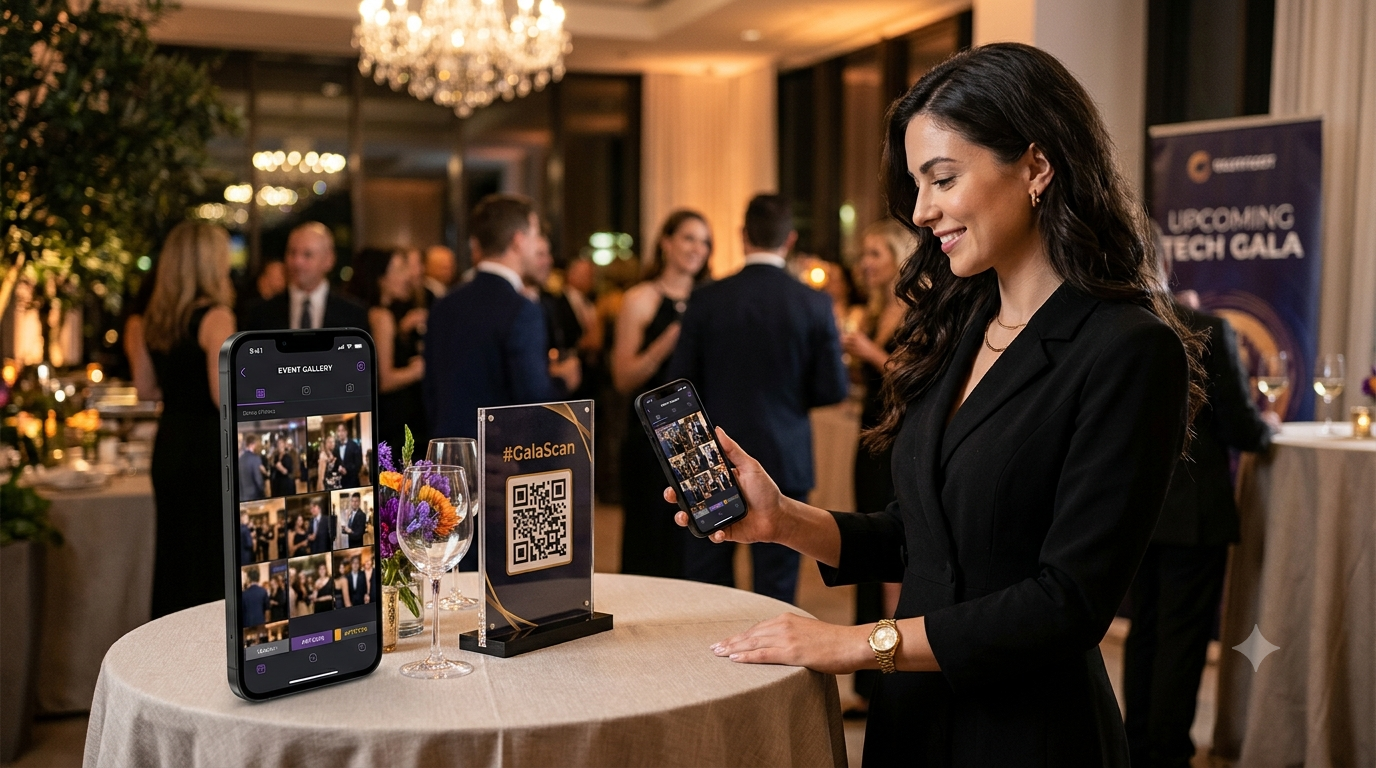
The core driver of the photography viral loop is instant gratification paired with personal relevance. When an attendee receives a notification or scans an on-ground QR code during an ongoing event and instantly sees professional, publication-grade portraits of themselves, a high-dopamine psychological trigger is activated. Unlike casual smartphone selfies, professional photography carries high perceived value. When attendees receive immediate access to high-quality images while still immersed in the emotional atmosphere of an event, their inclination to post to social feeds, share in group chats, and tag their peers reaches its absolute peak.
The Friction Bottlenecks of Legacy Media Delivery
Conversely, friction is the single greatest destroyer of viral growth. Legacy photo delivery workflows introduce severe operational friction at every stage of the user journey:
- Massive File Archives: Forcing mobile users to download multi-gigabyte ZIP files or navigate complex desktop-oriented cloud folders.
- Manual Searching: Mandating that guests manually scroll through thousands of unindexed images to locate two or three pictures of themselves.
- Delayed Processing Timelines: Delivering assets weeks after the event has passed, when social context and emotional momentum have vanished.
- Complex Onboarding: Requiring cumbersome account registrations, password creations, or app installations before viewing content.
When media retrieval requires more than two or three taps on a mobile screen, guest engagement drops sharply. To build an effective viral marketing engine, studios must eliminate technical friction entirely between the camera shutter and the guest’s mobile screen.
The Power of Shareable Smart Link Photo Software
Modern, high-velocity event delivery relies on specialized shareable smart link photo software to bridge the physical-to-digital divide. Rather than distributing generic URL links that route users to static, unstructured media dumps, smart link platforms create dynamic, user-aware access portals tailored to individual guests.
Instant On-Ground Onboarding via QR Codes and Dynamic Links
Using branded QR code standees deployed strategically across event venues—such as reception tables, entrance arches, stage screens, or exhibitor booths—photographers enable friction-free guest onboarding. A guest simply scans the QR code with their mobile device camera, opening an interactive web gallery or native app interface instantly without manual software setup.
These dynamic smart links serve as intelligent routing hubs:
- Contextual Access: Automatically routing guests to their specific event instance, sub-folder, or personalized highlight reel.
- Real-Time Data Ingestion: Serving newly captured images continuously as the photographer shoots, keeping engagement active throughout the multi-hour duration of a wedding or conference.
- Cross-Platform Compatibility: Delivering a uniform, ultra-fast experience across iOS, Android, and mobile web browsers without performance degradation.
By collapsing the time delay from days down to seconds, shareable smart link photo software captures attendees at the peak moment of brand interest, driving instant social sharing and viral link dissemination across external peer networks.
Maximizing Event Brand Recall Through Interactive Apps
Brand recall is a critical performance indicator for corporate event sponsors, brand activation agencies, wedding planners, and professional studios alike. However, traditional offline branding methods—such as physical backdrop banners or intrusive, ugly image watermarks—often fail to resonate digitally or ruin the artistic integrity of the photography. Deploying an increase event brand recall app framework solves this challenge by embedding brand touchpoints directly into the digital media consumption experience.
The Role of Dynamic Dual-Logo Watermarking
Dynamic watermarking allows photographers and event organizers to apply crisp, customizable brand overlays across all uploaded assets automatically. Crucially, advanced platforms support dual-logo configurations:
- Primary Brand Anchor: Showcasing the professional photography studio's logo, establishing technical authority and service attribution.
- Secondary Event/Sponsor Anchor: Incorporating the wedding couple's custom monogram, the corporate sponsor’s brandmark, or the host institution’s logo.
Because these watermarks are rendered dynamically on top of high-resolution images, administrators maintain post-upload control. Watermark size, opacity, position, and visibility can be toggled on or off instantly across thousands of photos without re-rendering or re-uploading original source files. Every time a guest downloads a portrait or posts an image to Instagram Stories, both brand identities receive high-visibility exposure across organic social networks.
High-Frequency Touchpoints: Push Notifications and Native Messaging
Interactive event apps extend brand recall far beyond the physical event duration through automated, contextual communication channels:
- Upload Notifications: Automated app notifications and direct messaging updates alert guests whenever new batches of images featuring their face are indexed and published.
- Album Shortlisting & Proofing: For weddings and portraits, clients shortlist their favorite shots for physical album creation directly inside the mobile app interface. This streamlined interaction replaces tedious email exchanges, shortening approval windows and accelerating studio payment cycles.
- Embedded Lead Capture & Business Profiles: Branded galleries feature interactive studio profiles, hosting integrated social media handles, portfolio links, inquiry forms, and direct WhatsApp contact channels. A gallery viewer interested in hiring the photographer can submit a booking inquiry directly from the photo-viewing screen.
Competitive Analysis: How Kamero Redefines Event Media Infrastructure
To understand why Kamero leads the global transition toward viral, AI-driven event media delivery, it is essential to evaluate the current market landscape across both regional and international platforms.
Deconstructing the Competition
1. Global Legacy Platforms (Pixieset, SmugMug)
Global portfolio incumbents excel at hosting beautifully styled, desktop-oriented portfolio galleries for fine-art portraiture and wedding showcases. However, their systems were architected before the rise of real-time event media consumption. They lack native camera-to-cloud hardware integration, offer no live facial recognition indexing for guests, and require photographers to juggle a fragmented multi-tool stack (combining separate software for raw ingestion, proofing, client messaging, and gallery delivery). This creates high operational costs and slow turnaround times.
2. Regional AI Alternatives (Samaro.ai, Kwikpic, Fotoowl, Memzo, Cerebrare)
Regional competitors have introduced basic AI face-matching utilities to speed up photo searching. However, they frequently operate as narrow, single-feature utilities rather than end-to-end enterprise platforms. They suffer from several critical shortcomings:
- Branding Bleed: They often force heavy platform branding onto the gallery interface, diluting the photographer's brand identity.
- Lack of In-Gallery Monetization: They lack sophisticated, multi-tier e-commerce checkout mechanisms (such as automated "All My Photos" bundles based on facial search results).
- No Live Ingestion Pipeline: They require post-event manual uploads, preventing live on-ground guest engagement during the event.
The Kamero Architectural Edge: Real-Time Engine for Viral Growth
Kamero eliminates the trade-offs of legacy platforms by delivering a complete, enterprise-grade event media platform designed for maximum operational speed, brand control, and viral monetization.
1. Kam-Sync (Real-Time Camera-to-Cloud FTP)
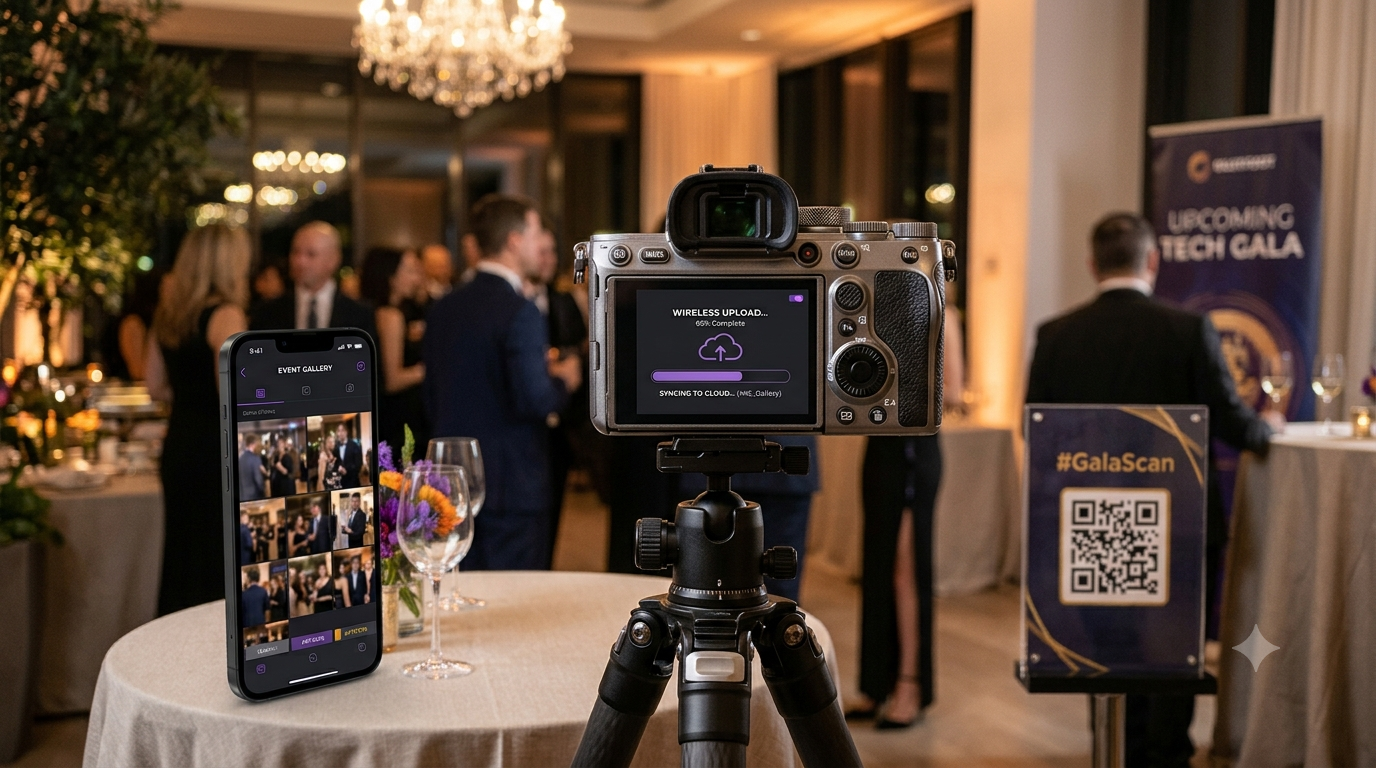
Kam-Sync transforms event delivery by linking professional DSLR and mirrorless camera bodies directly to the cloud via camera Wi-Fi or cellular hot-spotting. As the photographer captures images on the venue floor, Kam-Sync automatically streams full-resolution JPEG or RAW files (up to 50 MB per file) directly into the event processing queue in real time without physical cables or manual card swapping.
2. Event-Scoped Vector AI Face Matching
Kamero utilizes a privacy-first, vector-based facial recognition engine. Unlike intrusive public social media scraping algorithms, Kamero’s AI operates strictly within the isolated boundary of the specific event instance. Attendees take a quick selfie to generate an encrypted mathematical facial vector. The engine scans thousands of event photos in milliseconds, delivering a personalized gallery feed of every shot featuring that guest. Non-facial recognition fallbacks—such as bib/keyword search for marathons and traditional folder tree browsing—ensure complete flexibility for privacy-sensitive environments.
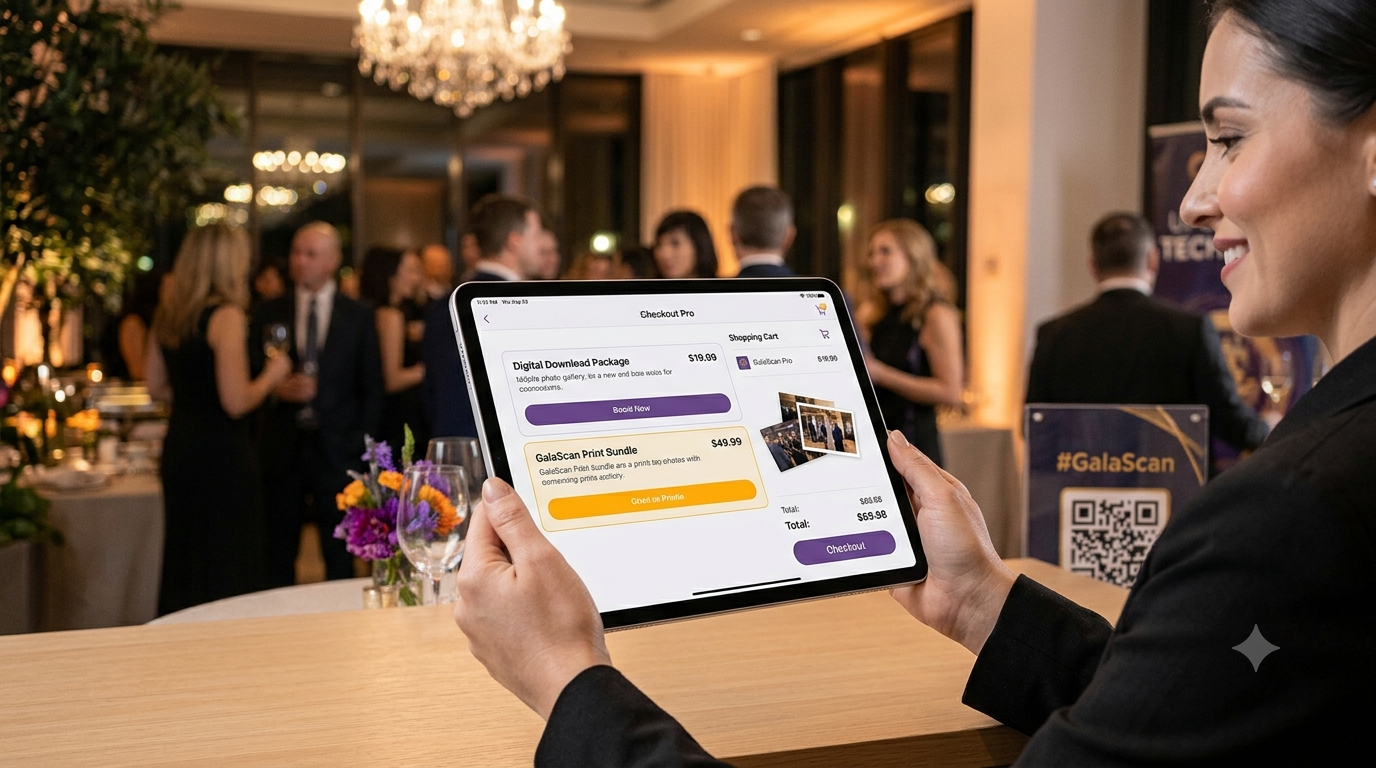
3. Native In-Gallery Monetization (Sell Photo Stores)
Kamero converts gallery traffic directly into high-margin revenue. Photographers, sports organizers, and school administrators can activate flexible commerce options inside the viewing experience:
- Per Photo Digital Sales: Charging individual download fees for high-resolution images.
- "All My Photos" AI Bundles: Utilizing facial recognition to automatically aggregate every photo containing a specific guest and selling the complete personal package in a single checkout transaction.
- Physical Print SKUs & Bundles: Offering automated print ordering, print album shortlisting, and promotional coupon codes directly within the native app experience.
4. Flexible Packaging: Eliminating Ad-Hoc Friction
A primary barrier for studios adopting advanced event technology is rigid monthly subscription pricing that punishes seasonal business fluctuations. Kamero solves this by offering dual pricing structures:
- Pay-Per-Event (PPE): Ad-hoc pricing tailored for solo freelancers and emerging studios who want to pay only when hosting active client events.
- Annual Subscription Plans: Predictable, high-volume operational plans sized for high-capacity multi-studio networks, school chains, and enterprise agencies.
Strategic Implementation Framework for Modern Studios
To deploy a high-performing viral loop marketing photography strategy using Kamero, studios should execute the following five-stage implementation framework:
Stage 1: Pre-Event Configuration and Brand Setup
- Create the event instance in the Kamero Admin Console and organize custom folder hierarchies (e.g., "Keynote," "Red Carpet," "Wedding Ceremony")[cite: 2].
- Upload the primary studio branding assets alongside corporate sponsor or couple monograms into the dynamic watermarking engine[cite: 2]. Select preferred watermark sizing, opacity, and anchor positions[cite: 2].
- Configure Kam-Sync wireless FTP profiles on professional camera bodies to point directly to the dedicated event cloud bucket[cite: 2].
Stage 2: Deploying On-Ground Onboarding
- Generate high-resolution, branded QR code artwork directly inside Kamero's asset generator[cite: 2].
- Print and position QR standees at high-traffic venue locations: entrance reception desks, dining tables, partner exhibition booths, and main stage screens[cite: 2].
- Inform event hosts, emcees, or organizers to announce the instant photo portal during live stage presentations.
Stage 3: Live Ingestion and AI Indexing
- Begin shooting the event. Images stream wirelessly in the background via Kam-Sync over venue Wi-Fi or cellular 5G connections directly to Kamero’s cloud infrastructure[cite: 2].
- As assets arrive, the vector AI engine extracts facial embeddings automatically, creating searchable personal galleries for attendees in seconds[cite: 2].
Stage 4: Automated Guest Engagement
- Guests scan on-ground QR codes, upload a quick selfie, and immediately view their personal photo stream[cite: 2].
- As new photos are uploaded throughout the event, automated push notifications and native messaging alerts prompt guests to return to the app to view fresh uploads[cite: 2].
- Guests download high-resolution, watermarked assets directly to mobile camera rolls and post them instantly to Instagram, LinkedIn, or group chats.
Stage 5: In-Gallery Monetization and Lead Capture
- Activate integrated e-commerce features for commercial, sports, or festival events, offering one-tap digital downloads or complete "All My Photos" AI photo bundles[cite: 2].
- Use dynamic business profiles embedded within every gallery view to display studio portfolios, list upcoming service packages, and collect inbound booking inquiries from gallery visitors[cite: 2].
Conclusion & Actionable Growth Blueprint
The traditional model of delivering event media through slow, static cloud storage links is no longer viable for studios seeking high-margin growth. In a competitive market, sustainable advantage belongs to photography businesses that combine professional artistry with automated, modern delivery systems.
By using shareable smart link photo software, deploying an increase event brand recall app framework, and leveraging the power of viral loop marketing photography, studios turn passive event delivery into an automated growth channel[cite: 2]. Kamero provides the complete infrastructure required to run this modern workflow—unifying real-time camera-to-cloud ingestion (Kam-Sync), vector-based AI face matching, dynamic brand controls, and in-gallery commerce into a single platform[cite: 2].
Transform Your Studio Workflow Today
It is time to replace fragmented tools, eliminate manual administrative burdens, and turn every event guest into a active promoter for your brand.
- Sign Up on Kamero to launch your risk-free trial event and explore instant AI delivery.
- Book a Personalized Demo with our technical strategy team to configure live Kam-Sync camera-to-cloud pipelines and custom white-label mobile applications for your studio[cite: 2, 3].
- Follow Us on Instagram @Kamero.in to discover daily workflow insights, platform feature spotlights, and real-world case studies from leading global event studios.
About Pavani Nagar
Hey there! Pavani Nagar, a Digital Marketing Manager who enjoys working on content, social media, and figuring out what makes people pay attention. I like trying new ideas, learning along the way, and keeping things simple.