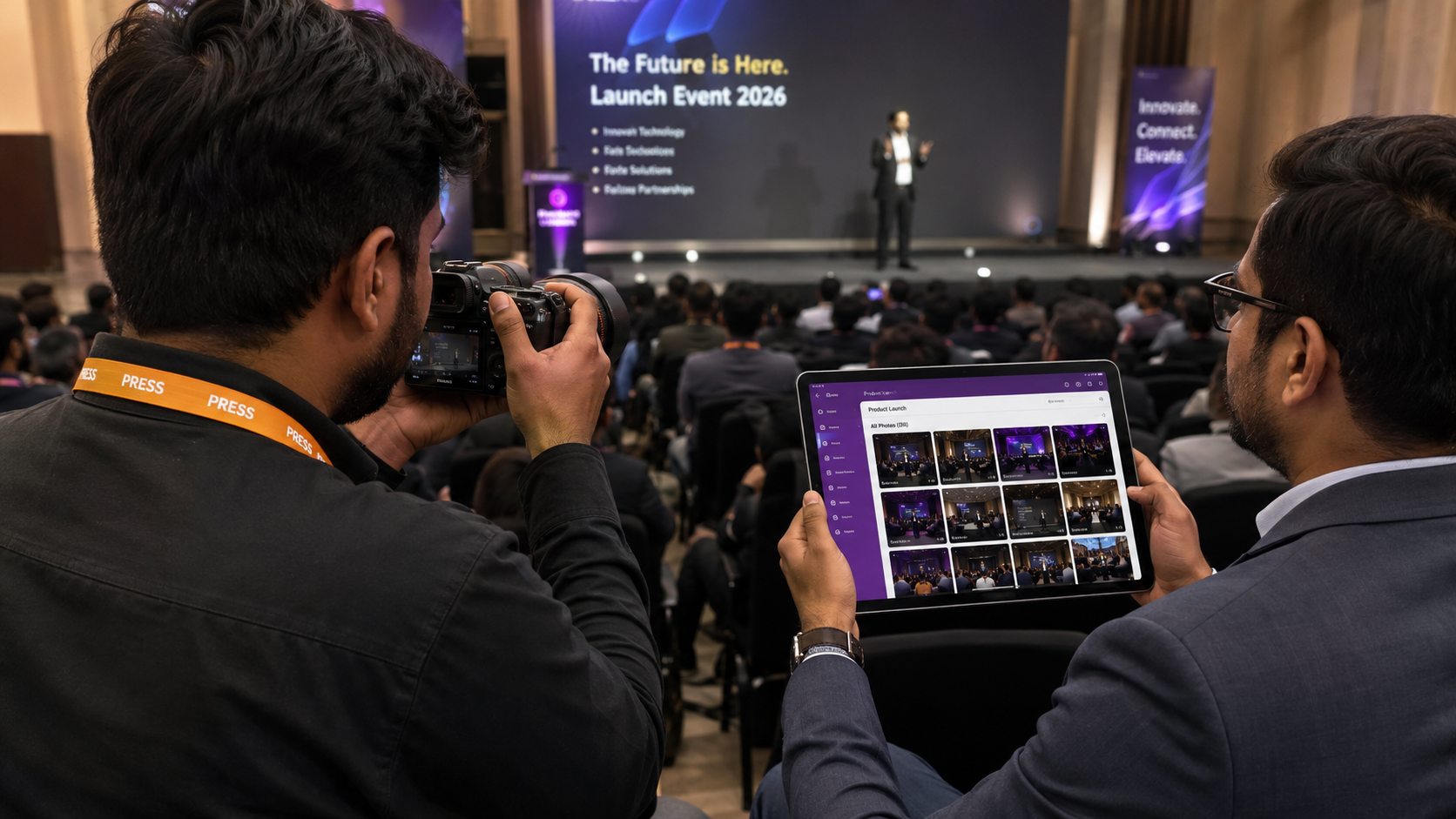
Introduction: Why Corporate Communications Is Becoming a Speed Game
The success of a corporate event is no longer determined solely by attendance, speaker quality, or venue execution.
Increasingly, success is measured by how quickly organizations can transform event moments into shareable media assets.
A keynote announcement, product launch, executive interview, investor meeting, or brand activation generates its highest engagement value while the event is still happening. Journalists are publishing stories, attendees are posting updates, and social media conversations are actively evolving.
Unfortunately, most organizations still operate with media workflows built for a slower era.
Photos are captured throughout the day, manually transferred after the event, sorted by internal teams, and distributed hours or even days later. By the time approved images reach communications teams, much of the opportunity has already passed.
This is why forward-thinking enterprises are investing in a live PR photo dashboard that transforms media delivery from a post-event process into a real-time communications capability.
The goal is simple: make approved visual assets available instantly to the people who need them most.
The Problem with Traditional Corporate Media Distribution
Why Delayed Assets Reduce PR Impact
Corporate communications operates on tight timelines.
A journalist covering a conference keynote may need images within minutes. Social media teams require visuals while audiences are actively engaged. Executives often want approved content ready for LinkedIn and media outreach before the session has even ended.
Traditional workflows struggle to support this reality.
The typical process involves collecting memory cards, transferring files, creating folders, uploading assets, reviewing images, and manually distributing links across multiple channels.
Each step introduces delays.
What begins as a technical workflow issue quickly becomes a communications problem.
When assets arrive too late, organizations lose visibility, media momentum, and audience attention.
The Shift Toward Real-Time Media Operations
Modern communications teams are increasingly treating event media as a live operational asset rather than an archived record.
A real-time PR gallery allows stakeholders to access approved content as it becomes available. Instead of waiting for the event to conclude, communications teams can begin publishing, sharing, and amplifying content immediately.
This shift fundamentally changes how organizations approach corporate events.
The event itself becomes a live content engine.
Building a Modern Corporate Photo Dashboard
Creating a Single Source of Truth
Large events involve multiple stakeholders.
PR teams, marketing departments, agencies, photographers, sponsors, executives, and internal communications teams often require access to different assets at different times.
Without a centralized system, information becomes fragmented.
Files get duplicated. Multiple versions circulate. Teams waste time searching for approved assets.
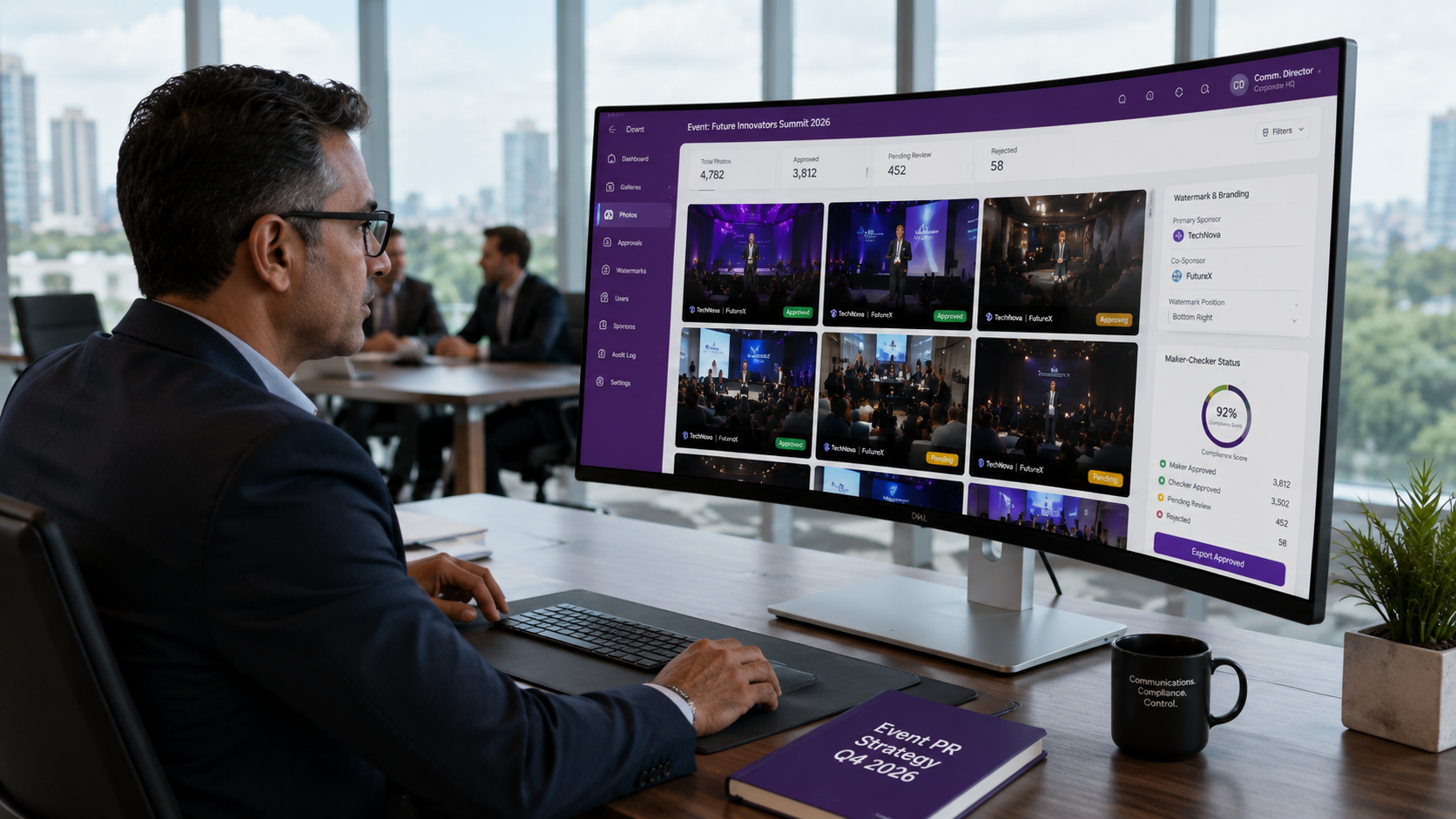
A modern corporate photo dashboard solves this problem by creating a single source of truth.
All approved content lives within one environment, allowing stakeholders to access the assets they need without navigating multiple storage systems or messaging threads.
This not only improves efficiency but also reduces the risk of incorrect or outdated content being distributed publicly.
Governance Matters as Much as Speed
Enterprise media distribution requires more than rapid access.
Organizations must also manage compliance, approvals, and brand safety.
Sensitive announcements, executive photographs, sponsor assets, and embargoed materials often require strict controls before publication.
Modern media dashboards address this through role-based permissions, approval workflows, and maker-checker review systems that allow organizations to move quickly without sacrificing governance.
For enterprise communications teams, this balance between speed and control is essential.
Engineering Real-Time Media Delivery
From Camera to Dashboard in Minutes
The biggest bottleneck in traditional event photography is ingestion.
Photos remain trapped on memory cards until photographers manually transfer files after the event.
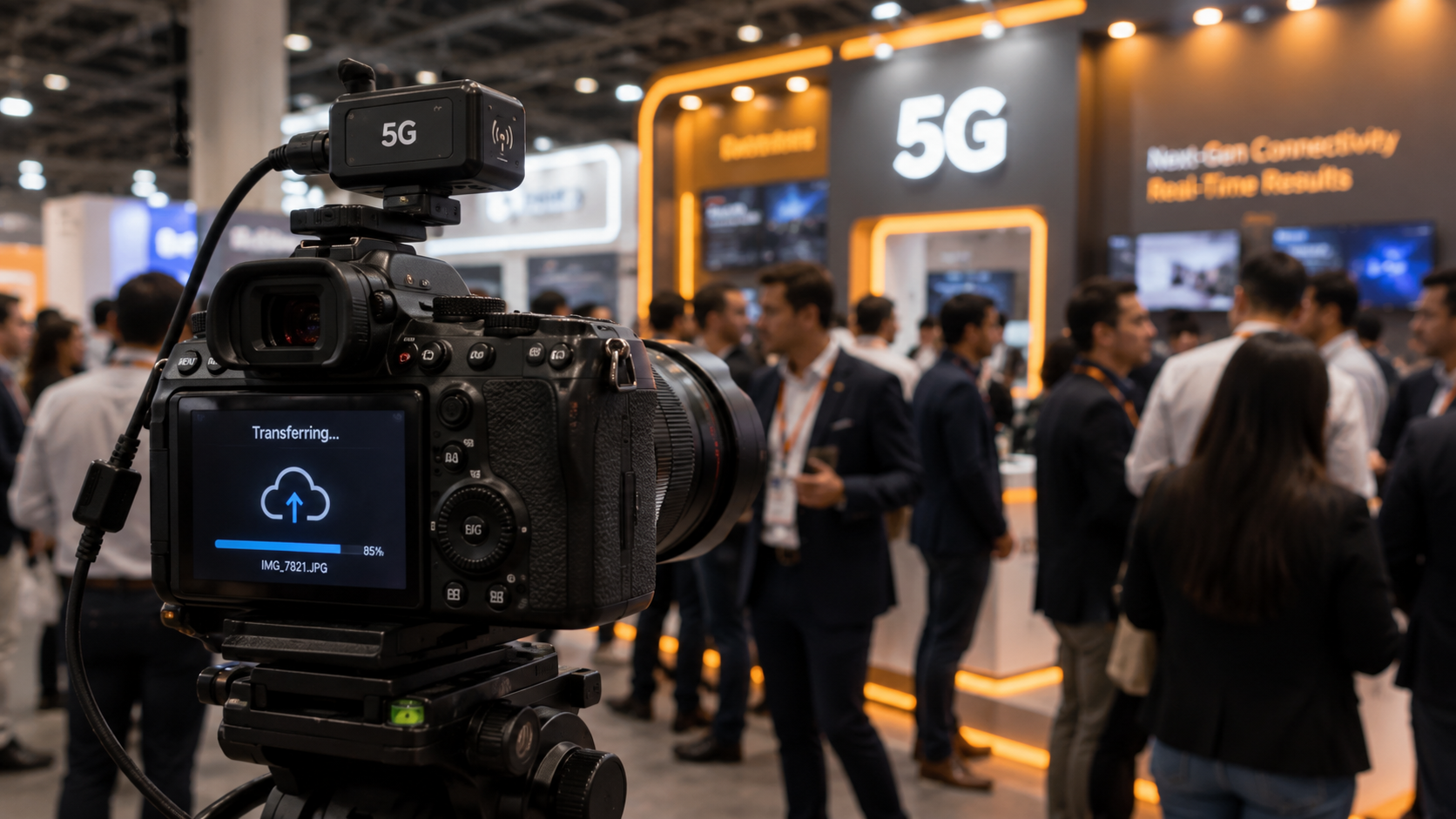
Modern camera-to-cloud workflows eliminate this delay.
Using Kam-Sync, photographers can stream images directly from professional camera systems into cloud infrastructure over local Wi-Fi or 5G networks. High-resolution assets can enter the media pipeline while sessions are still taking place.
This dramatically reduces the time between capture and availability.
The result is a truly live media workflow rather than a delayed upload process.
Delivering Enterprise Event Media at Scale
Large conferences and brand activations can generate thousands of images across multiple photographers and locations.
Managing this volume manually is unrealistic.
Automated folder structures, metadata mapping, and intelligent organization systems ensure assets remain structured and accessible even as media volume grows.
For communications teams, this means spending less time organizing files and more time using them strategically.
Simplifying Access for Stakeholders
One of the most overlooked challenges in event media management is stakeholder access.
Executives want their keynote photos. Speakers want session highlights. VIP guests want personalized content. Media representatives need approved visuals immediately.
AI-powered discovery systems can help automate this process by enabling individuals to access relevant content without requiring direct assistance from event organizers.
The outcome is faster delivery and significantly reduced administrative workload.
The Kamero Advantage: Built for Enterprise Communications
Real-Time Infrastructure Instead of Consumer Galleries
Many gallery platforms were originally designed for photographers.
Enterprise communications teams have very different requirements.
Kamero combines real-time media ingestion, centralized asset management, governance controls, stakeholder delivery, and communications workflows within a single environment.
Through Kam-Sync, teams can continuously stream files up to 50 MB directly into the dashboard while events are in progress.
This creates a live media infrastructure rather than a static storage repository.
Stronger Brand and Sponsor Control
Corporate events frequently involve multiple stakeholders.
Sponsors, event organizers, agencies, and brands all need visibility within shared assets.
Kamero enables dynamic dual-logo branding, allowing organizations to maintain sponsor obligations while preserving brand consistency across distributed media.
Unlike static watermark systems, branding can be adjusted dynamically as requirements evolve.
This flexibility becomes particularly valuable for large-scale conferences and sponsored activations.
Enterprise Security and Compliance
Security remains a non-negotiable requirement for corporate communications.
Kamero supports enterprise-grade controls through encrypted infrastructure, configurable retention policies, approval workflows, and compliance-aligned operating practices.
For organizations operating under GDPR, DPDP, or internal governance requirements, these capabilities provide confidence that sensitive assets remain protected throughout the media lifecycle.
Turning Media Operations into Business Value
Reducing Operational Complexity
Many organizations rely on separate systems for storage, distribution, approvals, communications, and reporting.
This fragmented approach increases costs and slows execution.
A unified dashboard consolidates these workflows into a single operational environment, reducing tool sprawl and simplifying event management.
The result is lower overhead and greater efficiency.
Supporting Lead Generation and Partnerships
Event media should not stop delivering value after the event ends.
Branded galleries can serve as engagement platforms that capture partner interest, audience interactions, and business opportunities.
Interactive profiles, inquiry forms, and registration mechanisms allow organizations to transform media engagement into measurable commercial outcomes.
For conferences, exhibitions, and brand activations, this extends the value of every event investment.
Creating Long-Term Communications Assets
Corporate media libraries often become difficult to access after the event concludes.
A centralized dashboard changes this dynamic.
Photography, keynote content, executive imagery, and event assets remain searchable and accessible for future campaigns, investor communications, recruitment initiatives, and marketing activities.
The event may last a day.
The content can continue creating value for years.
Conclusion: The Future of Corporate Event Media Is Real-Time
Corporate communications is increasingly defined by speed.
The organizations that generate the greatest visibility are not necessarily those producing more content. They are the ones capable of distributing the right content at the right moment.
A live PR photo dashboard transforms event media from a reactive workflow into a strategic communications asset.
It enables faster media access, stronger governance, improved stakeholder experiences, and greater business impact from every event.
As corporate events become more content-driven, real-time media infrastructure will become a competitive advantage rather than a luxury.
Ready to Build Your Real-Time PR Media Hub?
Book a Demo → Click Here
Start Your Free Trial → Click Here
Follow Kamero on Instagram → Click Here
About Mohit Prakash Lal
Hi, I’m Mohit, an MBA student at TAPMI, Manipal, exploring the world of business with a focus on marketing and strategy. I’m interested in understanding how brands connect with people and create meaningful, lasting impact in a competitive landscape. I enjoy working on real-world projects across marketing, sales, and business development, where I can apply ideas in practical settings.
I also enjoy simplifying ideas into clear, practical insights. Outside of work, I like travelling, reading, and taking time to recharge.