Introduction: Why Speed Has Become the New Currency of Corporate PR
Corporate events no longer compete for attention over weeks.
They compete over hours.
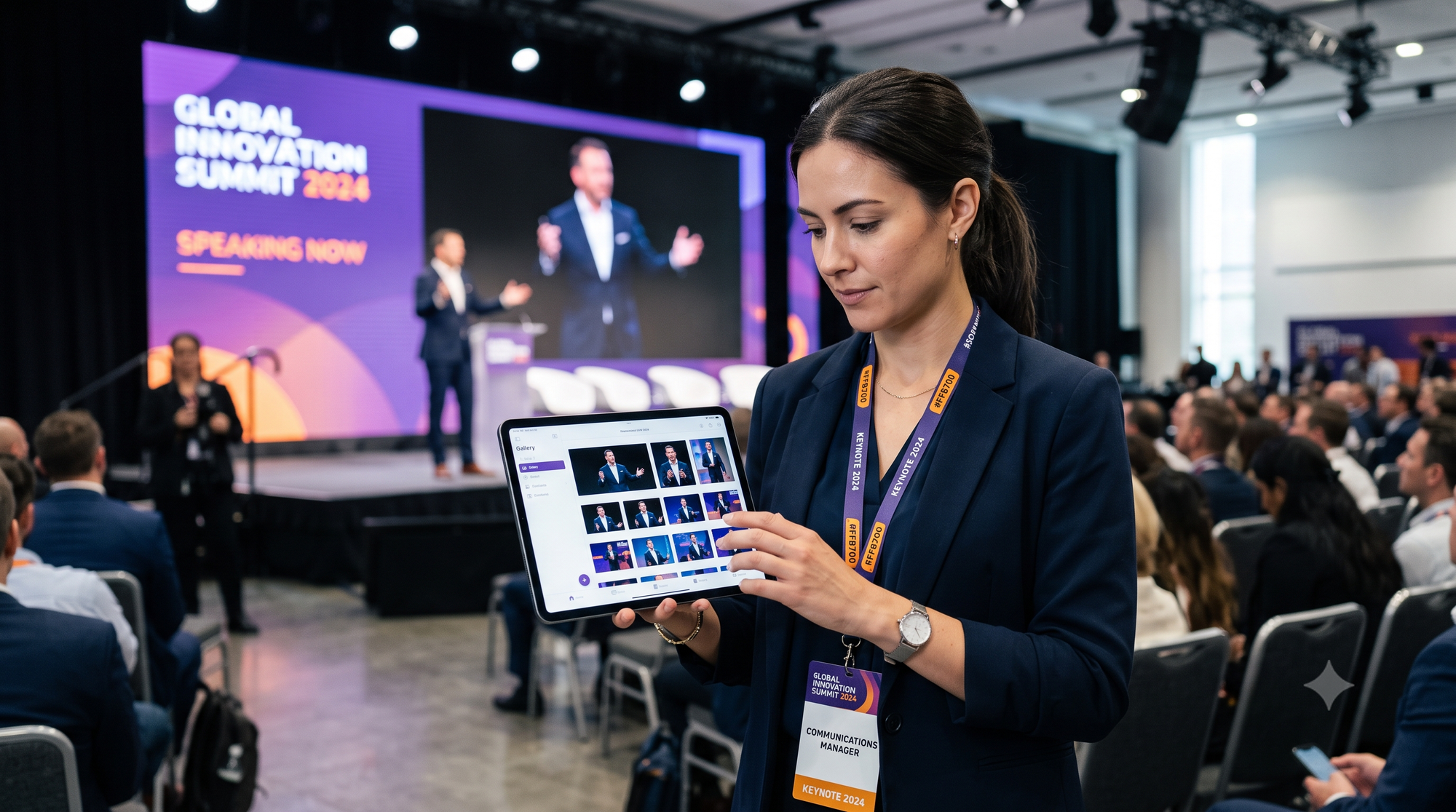
Whether it's a product launch, leadership summit, industry conference, partner event, investor gathering, or brand activation, the window for generating visibility is becoming increasingly compressed. Social media updates happen in real time. Journalists publish stories within hours. Attendees post content while sessions are still underway.
In this environment, delayed media delivery creates a significant disadvantage.
Photos that arrive days later may still be useful for internal documentation, but they often miss the most valuable period for audience engagement, earned media, and brand amplification.
This is why same-day corporate photos are rapidly becoming a core component of modern communications strategy.
The organizations that win attention are no longer those with the best event coverage.
They are the ones capable of distributing that coverage while the conversation is still happening.
The Problem with Traditional Event Photo Delivery
Why Corporate Events Lose Momentum After They End
Most corporate photography workflows were designed for a slower media environment.
Photographers capture content throughout the event. Files are transferred after the event concludes. Teams sort images, review assets, and upload galleries before distribution begins.
While this process may be operationally familiar, it introduces delays at exactly the wrong time.
By the time approved images reach marketing teams, attendees have moved on, journalists have published stories, and social conversations have shifted elsewhere.
The event may have been successful, but much of its communications value has already been lost.
The Rise of Real-Time Event Communications
Modern corporate communications teams operate differently.
Marketing departments need content immediately. PR teams require approved visuals for press outreach. Executives want professional images available while key announcements are still generating attention.
This shift has created demand for instant PR event delivery systems that move media from capture to distribution without lengthy delays.
Instead of treating photography as a post-event activity, organizations are increasingly treating media delivery as part of the live event experience itself.
Building a Real-Time Corporate Media Pipeline
Camera-to-Cloud Changes Everything
The biggest bottleneck in event photography is often ingestion.
Traditionally, images remain trapped inside memory cards until photographers manually transfer and upload files after the event.
Modern camera-to-cloud workflows eliminate this delay.
Through wireless connectivity, images can move directly from professional camera systems into cloud infrastructure while the event is still underway. Rather than waiting hours for uploads to begin, content enters the media ecosystem immediately after capture.
This creates a fundamentally different workflow.
The event becomes live. The media becomes live. The communications strategy becomes live.
Organizing Assets at Enterprise Scale
Speed alone is not enough.
Corporate teams also require organization, compliance, and control.
Large events often involve multiple photographers, multiple stakeholders, and thousands of images. Without proper structure, rapid delivery can create confusion instead of efficiency.
Modern event platforms solve this challenge through automated organization systems, metadata mapping, role-based access controls, and approval workflows that help teams maintain governance while accelerating distribution.
The result is faster access without sacrificing operational control.
Maximizing Earned Media Through Real-Time Sharing
Delivering Content While Attention Is Highest
The first few hours after a keynote, product launch, or announcement represent the most valuable engagement period of the event.
Journalists are writing stories.
Attendees are posting content.
Industry conversations are active.
Providing stakeholders with immediate access to social media event photos allows organizations to capitalize on this momentum instead of chasing it later.
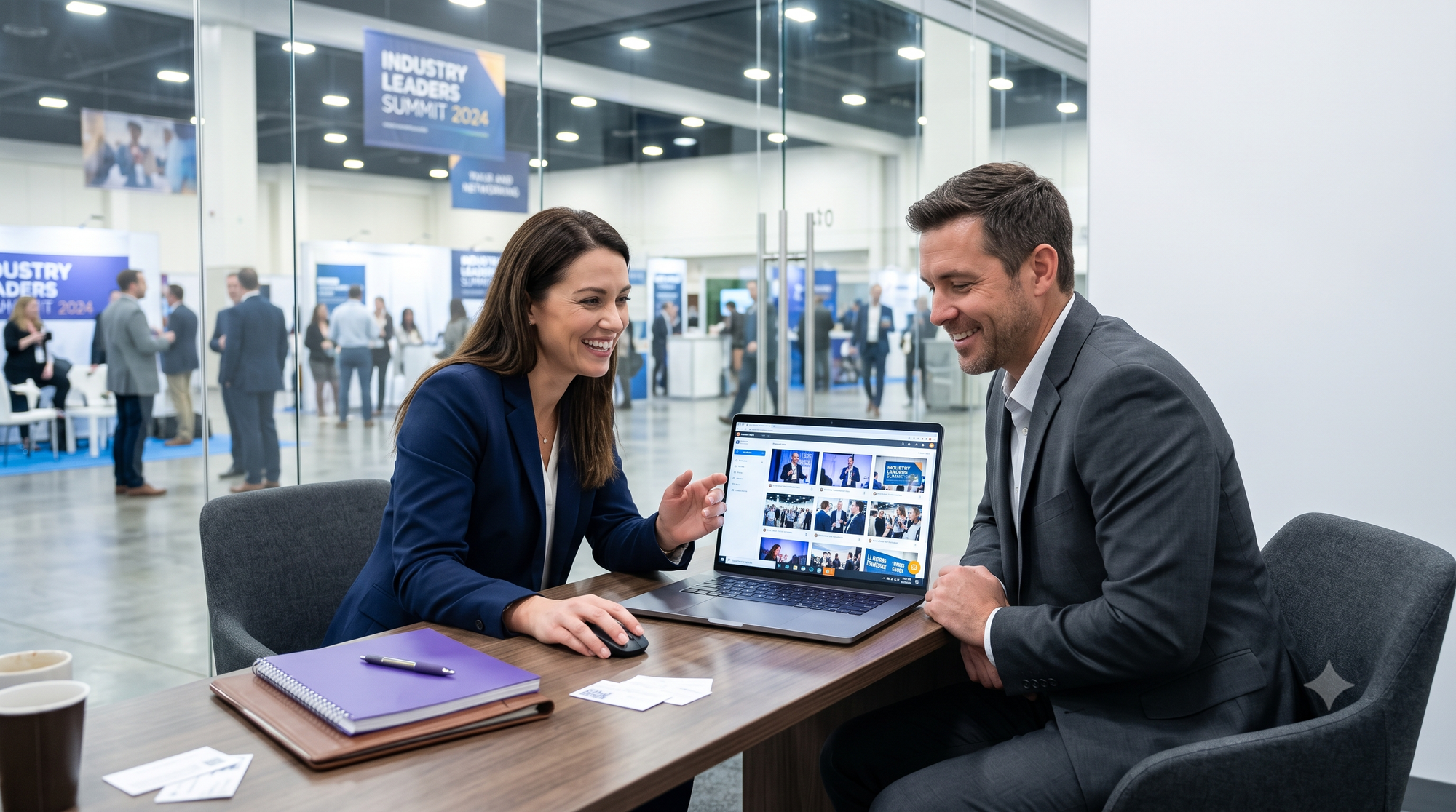
PR teams can distribute approved assets to media outlets. Marketing teams can publish branded content. Speakers can share professional photographs with their networks.
Every stakeholder becomes part of the amplification engine.
Creating Personalized Experiences for Attendees
Large events create another challenge.
How do thousands of attendees find the photos that matter to them?
AI-powered discovery workflows provide a scalable answer.
Through privacy-focused, event-specific matching systems, attendees can discover relevant event photos without searching through massive galleries manually. Instead of creating more work for organizers, the platform creates a self-service experience for participants.
The easier access becomes, the greater the sharing activity.
The Kamero Advantage: Enterprise Infrastructure for Real-Time PR
Built for Corporate Media Velocity
Most consumer gallery platforms were designed for storage.
Kamero was designed for distribution.
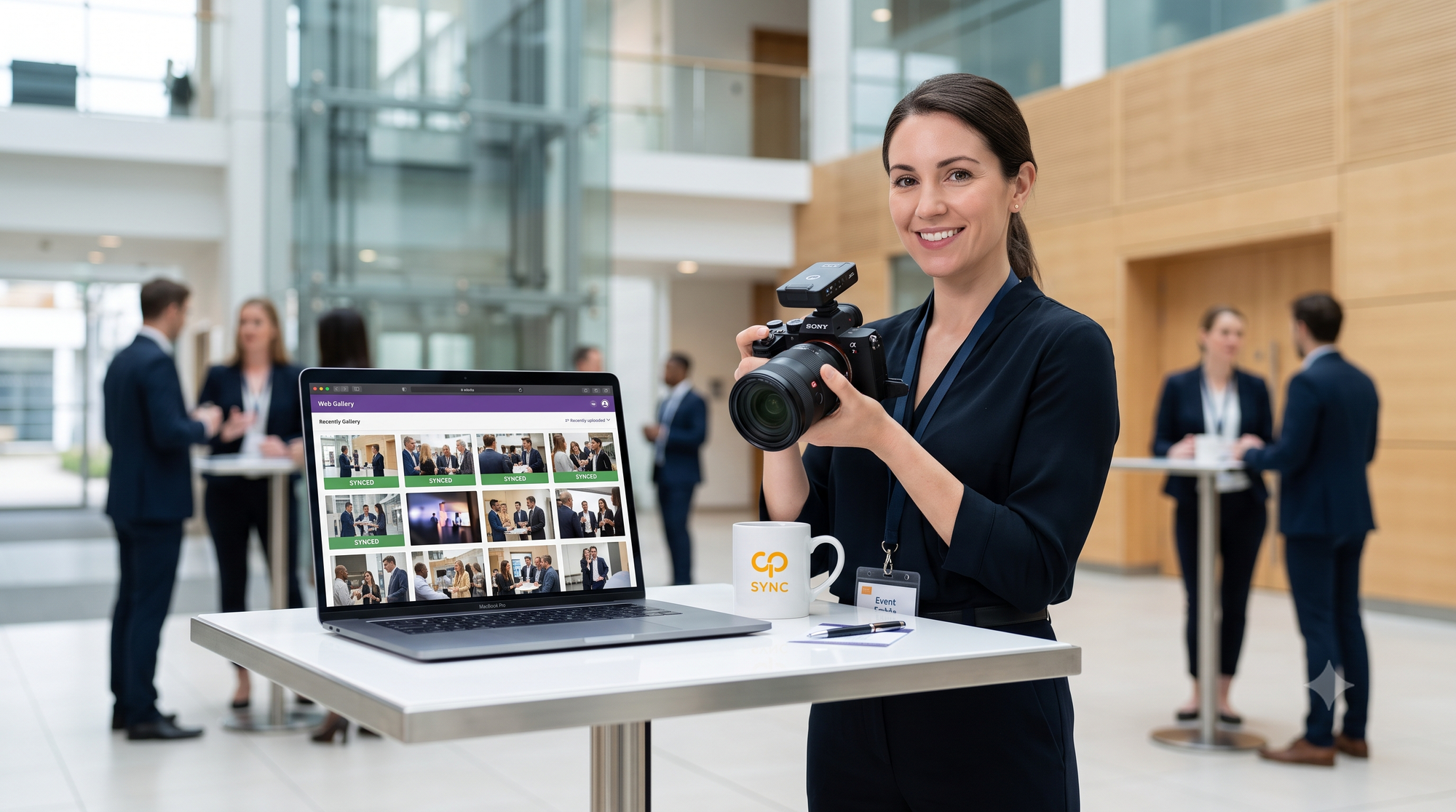
Kam-Sync enables photographers to stream high-resolution assets directly from professional camera bodies into cloud infrastructure using local Wi-Fi or 5G connectivity. Files up to 50 MB can be transferred while maintaining image quality and workflow efficiency.
For communications teams, this means content becomes available while events are still unfolding.
The delay between capture and distribution shrinks dramatically.
Enterprise Control Without Enterprise Complexity
Corporate events require more than speed.
They require governance.
Kamero combines real-time delivery with enterprise-ready controls, including role-based access management, approval workflows, dynamic branding controls, and secure asset distribution.
Organizations gain the ability to move quickly without losing oversight.
This balance is particularly important for public-facing events involving sponsors, partners, media representatives, and executive stakeholders.
Stronger Branding Across Every Shared Asset
Every shared image represents an opportunity for brand exposure.
Kamero's dynamic branding infrastructure allows organizations to apply and adjust sponsor logos, event branding, and corporate identities across media assets without disrupting workflow speed.
This creates consistency across every shared photograph while ensuring sponsors and partners receive appropriate visibility.
For events with multiple stakeholders, this becomes a significant operational advantage.
Turning Event Media Into a Business Asset
Reducing Agency and Operational Overhead
Many organizations rely on multiple tools to manage event media.
Storage platforms, sharing systems, watermarking utilities, lead capture tools, and communication platforms often operate independently.
This creates additional costs and operational complexity.
A unified system reduces tool sprawl while simplifying media operations. Teams spend less time coordinating software and more time executing communications strategies.
The outcome is lower overhead and greater efficiency.
Converting Engagement Into Lead Generation
The most effective event media platforms do more than distribute photos.
They create measurable business outcomes.
Interactive profiles, branded experiences, and registration mechanisms allow organizations to transform gallery traffic into lead-generation opportunities. Every attendee interaction becomes a potential source of valuable engagement data.
For conferences, exhibitions, and brand activations, this extends the value of the event far beyond the event itself.
Supporting Long-Term Marketing Initiatives
Real-time delivery creates immediate visibility.
However, the data generated by event engagement can continue creating value long after the event concludes.
Registration information, attendee interactions, and content engagement metrics help marketing teams build remarketing campaigns, nurture leads, and improve future event strategies.
The same infrastructure that supports live distribution also supports long-term growth.
Conclusion: The Future of Corporate PR Is Real-Time
The traditional event media workflow was built for a slower communications environment.
Today's audiences expect immediacy.
Journalists expect access. Attendees expect content. Marketing teams expect assets while campaigns are still active.
Organizations that continue relying on delayed delivery workflows will increasingly struggle to maximize the value of their events.
The future belongs to brands capable of capturing, organizing, and distributing content while the conversation is still happening.
That is the real power of live corporate event sharing.
It transforms event photography from documentation into a strategic communications asset.
Ready to Modernize Your Event Media Strategy?
Book a Demo → Click here
Start Your Free Trial → Click here
Follow Kamero on Instagram → Click here

About Nidhi S
Hey there! I’m an MBA student with a keen interest in the evolving world of digital marketing and business strategy. I enjoy exploring how brands build their online presence and the creative process behind turning strategic goals into engaging stories.
When I’m not caught up in marketing trends, you’ll probably find me down a YouTube rabbit hole or binge-watching sitcoms. I’m a fan of good stories—whether they’re in a marketing campaign or a 20-minute TV episode—and I’m always looking for new perspectives to keep things interesting!