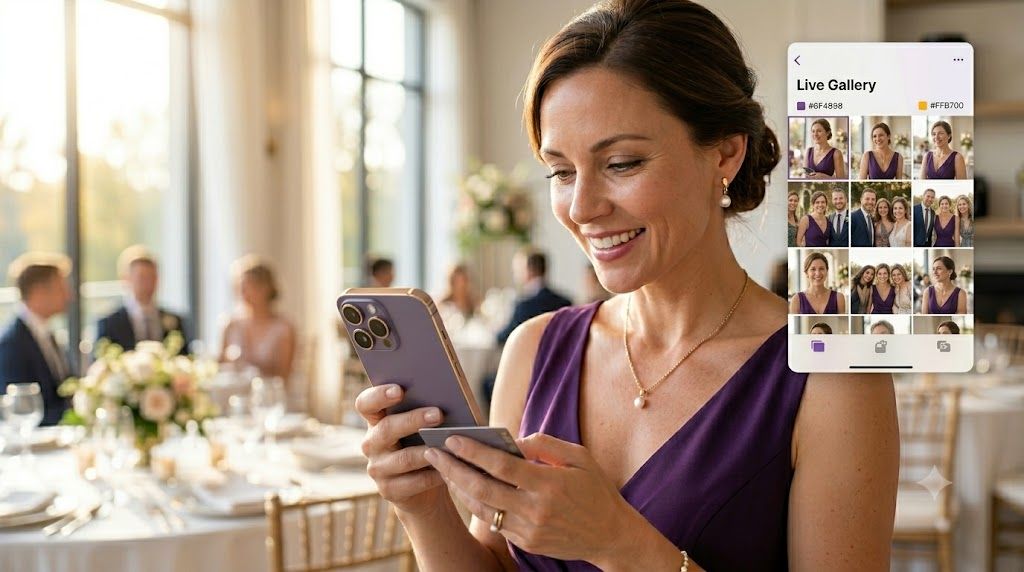
Wedding photographers have spent years perfecting how they capture moments. Far less attention has been given to how those moments are delivered.
The traditional post-event workflow remains surprisingly inefficient. After spending days capturing, editing, and organizing photographs, photographers typically distribute a gallery link containing hundreds or thousands of images and expect guests to find their own photos.
Technically, the job is complete. Practically, the guest experience is often frustrating.
Most attendees have neither the patience nor the time to browse through massive galleries searching for a handful of relevant images. As image counts increase, discovery becomes increasingly difficult. The result is lower engagement, fewer downloads, and missed opportunities for photographers to maximize the value of their work.
The problem becomes even more visible when viewed through the lens of modern consumer behavior.
The first twenty-four hours after a wedding represent the highest engagement period. Guests are discussing the event, sharing memories, updating social media, and actively looking for photographs. Yet many galleries arrive days or weeks later, long after the moment has passed.
This gap between demand and delivery has created the need for an entirely new approach to photo distribution.
The Rise of Zero-Touch Gallery Delivery
The next evolution of wedding photography is not simply faster editing or larger galleries.
It is zero-touch gallery delivery.
Rather than asking guests to search through thousands of images manually, zero-touch systems automatically connect individuals with the photographs that matter most to them.
The concept is simple but transformative. Instead of delivering a gallery and hoping guests engage with it, photographers create a workflow where relevant images are discovered, organized, and surfaced automatically.
This changes the role of the gallery itself.
Traditional galleries function as digital storage destinations. Zero-touch galleries function as personalized experiences. Every guest receives a curated view based on their participation in the event, dramatically reducing the friction that has historically limited engagement.
For photographers, this creates operational advantages as well. Fewer support requests, fewer complaints about missing photos, and fewer hours spent helping guests navigate large collections.
The result is a workflow that benefits everyone involved.
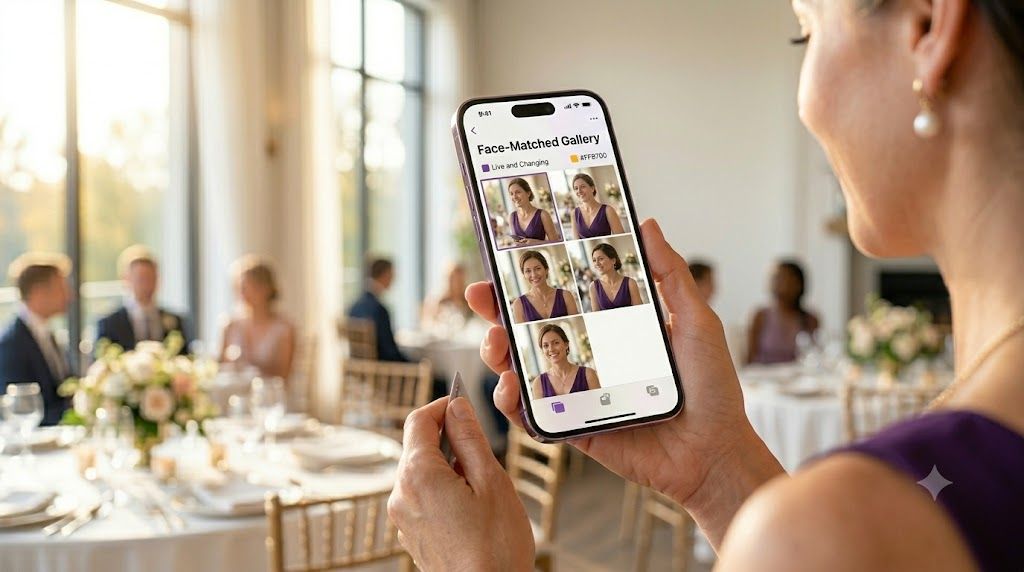
How AI Face Matching Powers Personalized Guest Experiences
At the center of this transformation is AI face matching weddings technology.
While facial recognition often generates misconceptions, modern event-focused systems operate very differently from the public data scraping models frequently discussed in broader technology conversations.
Modern facial recognition photo sharing systems rely on event-scoped architecture. Guests voluntarily register through a selfie or onboarding process, creating a mathematical reference point that can be used exclusively within the event environment.
Rather than comparing images against internet-scale databases, the matching process remains restricted to photographs captured during the specific event.
This approach delivers two critical benefits.
The first is privacy. Guests maintain greater control over how their information is used because matching is limited to the event itself.
The second is convenience.
Instead of scrolling through thousands of images, guests receive access to photographs that are immediately relevant to them. What once required manual searching becomes an almost instantaneous experience.
Onboarding is equally important.
Successful systems make participation effortless through QR codes, smart links, and simple registration flows distributed throughout the venue. When registration requires only a few seconds, adoption rates increase significantly, creating a more complete guest experience.
From Camera to Guest: Building an Automated Delivery Workflow
The promise of automated guest delivery extends beyond image discovery.
The most effective systems begin working long before the gallery is published.
Modern camera-to-cloud workflows allow photographs to move directly into cloud environments while the event is still taking place. Rather than waiting until photographers return to the studio, images can begin moving through delivery pipelines in near real time.
This eliminates one of the largest bottlenecks in wedding photography: the delay between capture and processing.
By distributing work throughout the event rather than concentrating it afterward, photographers reduce administrative workload while accelerating delivery timelines.
Automation also improves downstream workflows.
Album proofing becomes faster because photographs are already organized and indexed. Clients spend less time searching through galleries and more time selecting images for final products. Approval cycles shorten, communication becomes simpler, and payment timelines often improve as a result.
The objective is not simply speed.
The objective is removing friction from every stage of the customer journey.
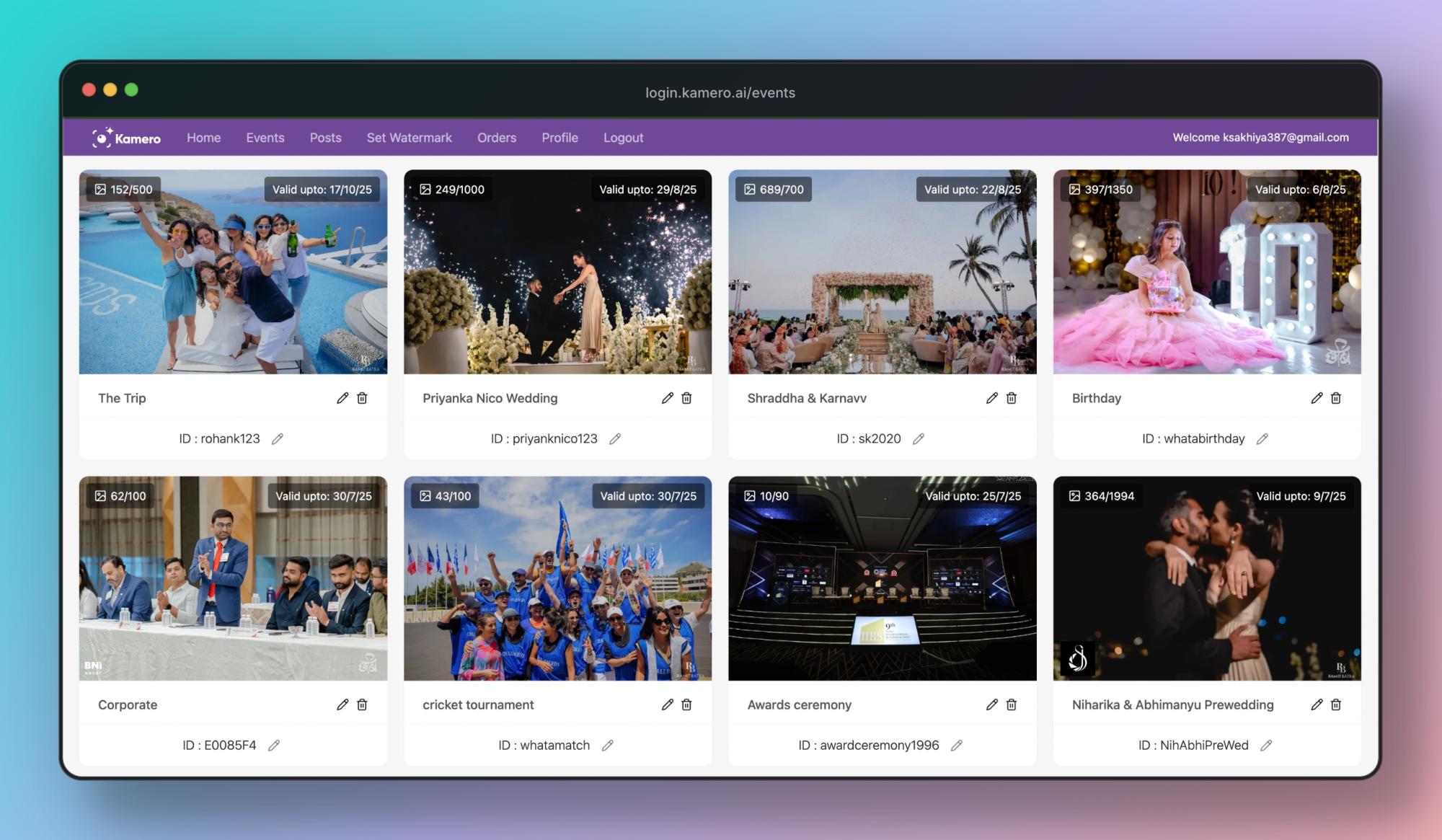
Why Kamero's Mobile-First Infrastructure Creates an Advantage
Many photography platforms support gallery hosting. Far fewer are designed around modern event operations.
This distinction becomes increasingly important as guest expectations continue evolving.
Platforms such as Pixieset, SmugMug, and many domestic alternatives primarily focus on presenting content through browser-based experiences. Kamero approaches the challenge differently by combining delivery, discovery, engagement, and commerce within a native ecosystem.
Kam-Sync enables true camera-to-cloud workflows, allowing photographers to move content directly from cameras using Wi-Fi and 5G-enabled infrastructure. Images can begin entering delivery pipelines while events remain active.
The platform also supports high-resolution assets up to 50 MB without compromising image quality, an increasingly important requirement as camera technology advances.
Beyond delivery, Kamero introduces capabilities designed specifically for event businesses. Dynamic watermark controls, dual-logo branding options, AI-powered guest discovery, and integrated WhatsApp communication workflows create a more complete experience than traditional gallery systems.
Perhaps most importantly, the platform operates across native mobile environments.
While many gallery providers simply adapt websites for smaller screens, Kamero delivers dedicated mobile experiences that improve engagement, increase open rates, and create stronger interactions between photographers and guests.
Turning Guest Galleries into Revenue and Lead Generation Engines
The business impact of automated delivery extends far beyond operational efficiency.
Every guest who interacts with a gallery represents a potential future customer.
Traditional galleries often fail to capitalize on this opportunity because they focus exclusively on distribution. Modern galleries can serve as engagement platforms, sales channels, and lead-generation engines simultaneously.
Personalized galleries encourage more frequent visits, longer browsing sessions, and stronger overall engagement. These behaviors naturally create more opportunities for digital downloads, print sales, and premium gallery packages.
Flexible pricing models such as per-photo purchases, personalized "All My Photos" bundles, and full-event collections create multiple paths to monetization without increasing administrative workload.
The marketing benefits are equally significant.
Branded business profiles, inquiry forms, and integrated communication channels help photographers convert guest attention into future bookings. Instead of disappearing once delivery is complete, photographers remain visible throughout the post-event experience.
The gallery becomes more than a delivery tool.
It becomes a growth asset.
Conclusion: The Future of Wedding Photo Distribution
The future of wedding photography will not be defined solely by the quality of images captured.
It will be defined by how efficiently those images reach the people who care about them.
As event volumes continue increasing and guest expectations continue evolving, manual gallery distribution becomes increasingly difficult to justify. The photographers who thrive over the next decade will be the ones who embrace automation, personalization, and intelligent delivery systems.
Zero-touch gallery delivery, automated guest delivery, and AI face matching weddings are not simply technological upgrades. They represent a fundamental shift in how wedding memories are shared.
The result is better guest experiences, faster workflows, stronger engagement, and more scalable photography businesses.
Ready to Build a Zero-Touch Delivery Experience?
Stop relying on massive gallery links and manual photo discovery. Create a workflow that automatically connects guests with the moments that matter most.
• Book a Demo and See Kamero's AI-powered delivery ecosystem in action
• Start Your Free Trial for Experience automated guest delivery firsthand
• Follow Us on Instagram to Stay updated on photography technology and workflow innovations
About Nidhi S
Hey there! I’m an MBA student with a keen interest in the evolving world of digital marketing and business strategy. I enjoy exploring how brands build their online presence and the creative process behind turning strategic goals into engaging stories.
When I’m not caught up in marketing trends, you’ll probably find me down a YouTube rabbit hole or binge-watching sitcoms. I’m a fan of good stories—whether they’re in a marketing campaign or a 20-minute TV episode—and I’m always looking for new perspectives to keep things interesting!