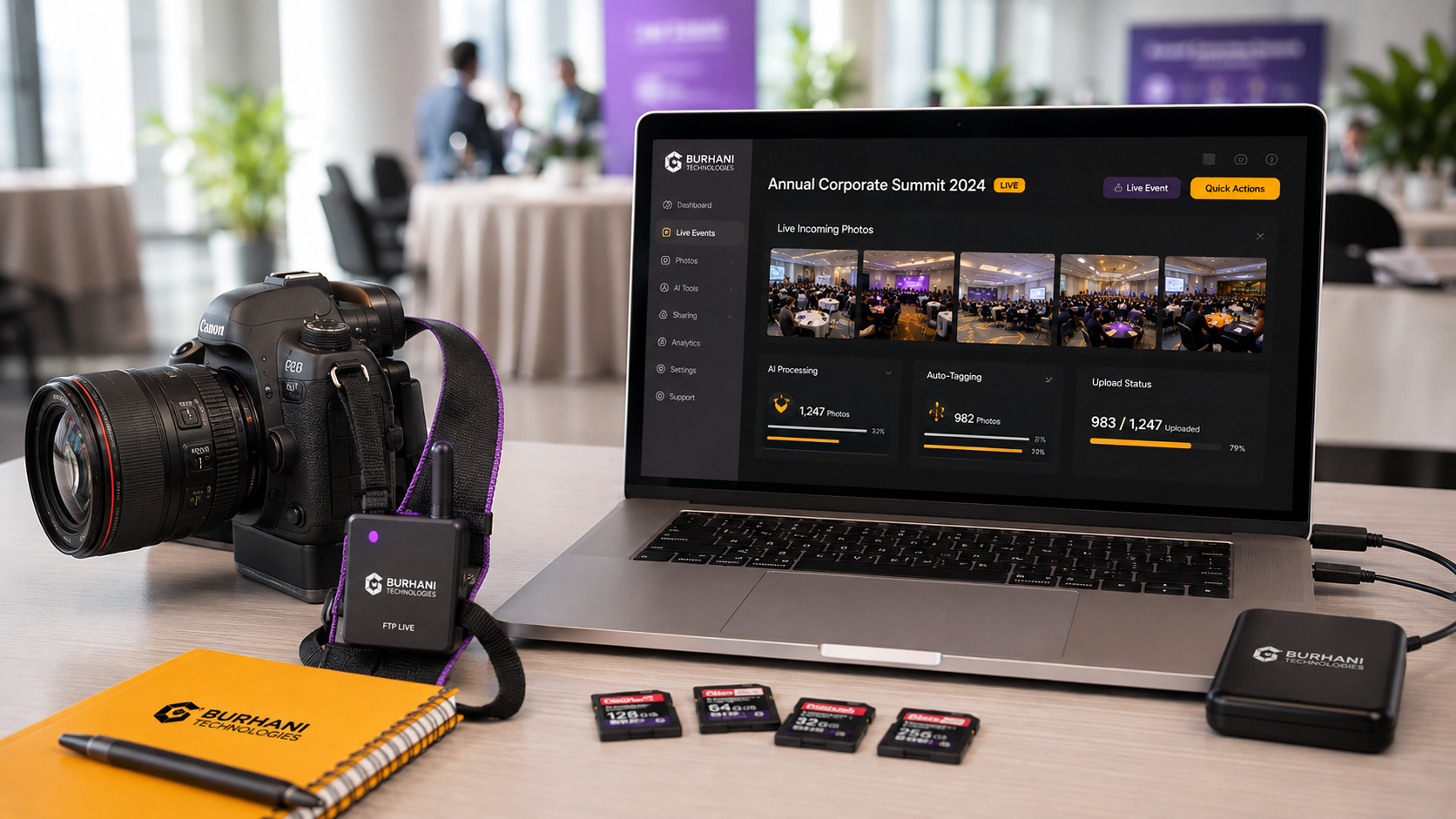
Introduction: The High-Velocity Press Cycle and the Reality of Live PR Delivery
Modern corporate communications operate on compressed timelines. Product launches, investor meetings, leadership summits, industry conferences, and brand activations generate moments that are most valuable while they are happening—not days later.
Yet many organizations continue to manage event photography using workflows that were designed for a different era. Images are captured, stored on memory cards, manually transferred to laptops, sorted by production teams, and eventually distributed through email chains or cloud storage links. By the time assets reach communications teams, the strongest opportunity for media exposure has often passed.
The challenge is not content creation. It is content velocity.
Organizations that can move visual assets from the point of capture to stakeholders in real time gain a significant advantage in earned media, social engagement, executive communications, and brand visibility. This shift has given rise to a new operational model: the enterprise media desk.
The Speed-to-Market Mandate in Contemporary Brand Communications
The value of event content declines rapidly after it is created.
The Cost of Delayed Media Delivery
A keynote announcement, executive interview, partnership signing, or product reveal generates peak attention during the event itself. Journalists, social media teams, marketing departments, and communications leaders all require immediate access to visual assets to support ongoing coverage.
When photography remains trapped in post-event workflows, organizations lose momentum. Media opportunities shrink, social engagement falls, and internal teams struggle to maintain campaign velocity.
The Hidden Risk of Fragmented Workflows
Traditional delivery methods also create operational complexity.
Files move through memory cards, messaging apps, email attachments, shared drives, and multiple approval layers before reaching their final audience. Every additional handoff introduces delays, increases administrative effort, and creates opportunities for version control issues or unauthorized sharing.
For enterprise organizations, these inefficiencies become increasingly difficult to manage as event scale grows.
Transitioning to an Enterprise Media Desk Framework
The enterprise media desk represents a shift from manual media handling to continuous media operations.
What Camera-to-Cloud FTP Really Means
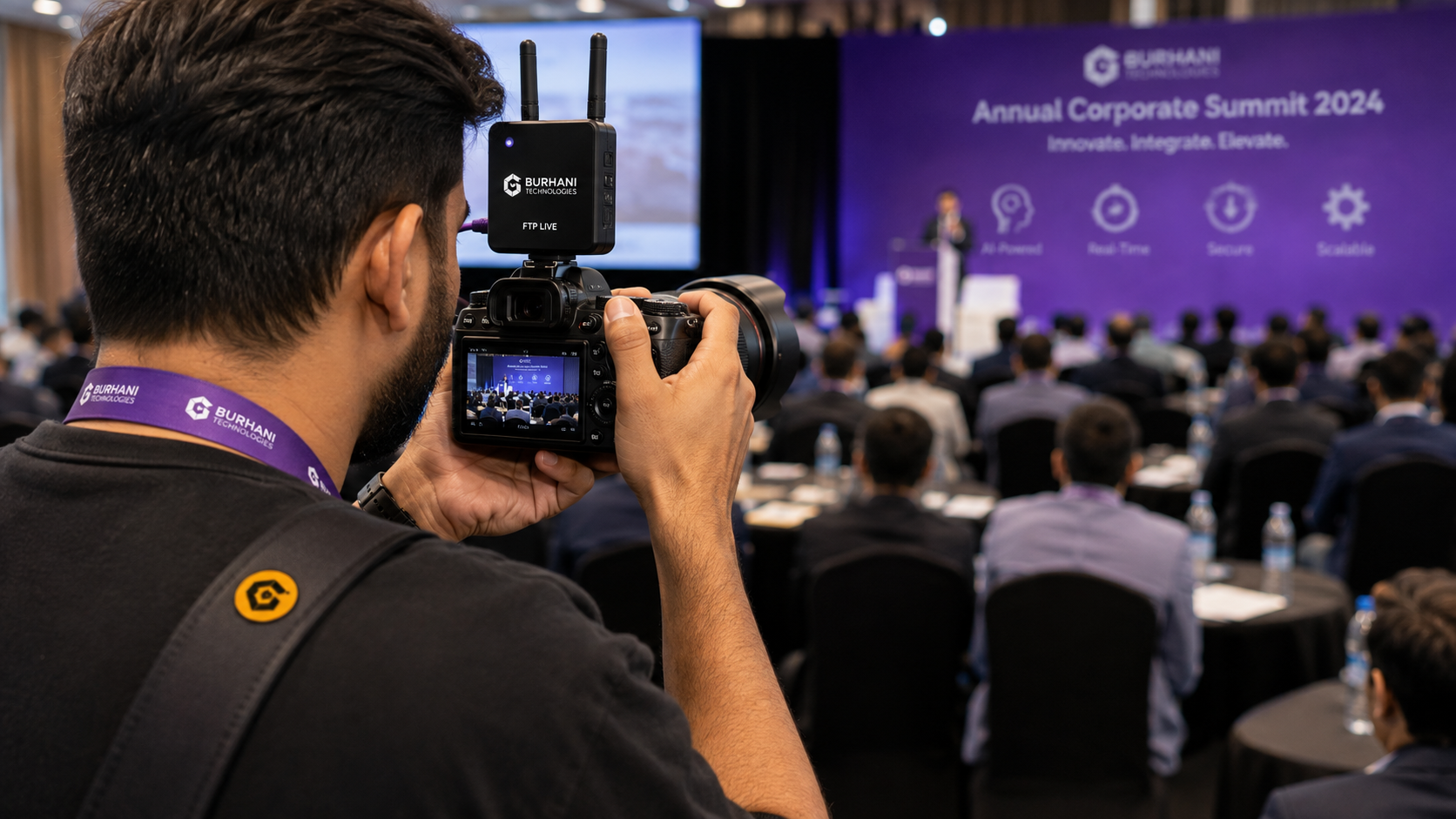
Camera-to-cloud workflows allow images to move directly from professional cameras into centralized cloud environments as they are captured. Instead of waiting until an event concludes, communications teams gain access to assets while activity is still unfolding.
This transforms photography from a post-event deliverable into a live communications resource.
From Physical Transfers to Centralized Operations
Modern event teams increasingly require infrastructure that supports distributed operations. PR agencies, marketing teams, executives, and external media partners may all need access to content simultaneously.
Centralized cloud-based workflows provide a single operational environment where assets can be reviewed, approved, organized, and distributed without relying on physical transfers or fragmented delivery channels.
The Mechanics of Wireless Enterprise Photo Transfer
The effectiveness of real-time media operations depends on how efficiently assets move from the camera to the cloud.
Direct Hardware-Level Syncing vs. Manual Upload Workflows
Many traditional platforms still depend on browser-based uploads that begin only after photographers manually transfer files from memory cards.
Camera-integrated FTP workflows eliminate this delay by enabling continuous uploads directly from the capture device. As images are created, they become available to authorized teams without requiring additional handling.
The result is faster delivery, reduced operational friction, and significantly improved responsiveness for communications teams.
Managing High-Volume Event Environments
Corporate events often take place in challenging network environments where hundreds or thousands of attendees share the same infrastructure.
Reliable media delivery requires workflows capable of operating efficiently across venue Wi-Fi networks, dedicated connections, and mobile data environments while maintaining consistent performance throughout the event lifecycle.
Delivering High-Resolution Media Without Slowing Operations
Enterprise communications teams require assets suitable for both digital and print use.
Balancing Speed and Quality
Modern workflows must support immediate visibility without compromising file quality. Preview images can be delivered rapidly for communications and social media purposes while full-resolution assets continue processing in the background.
This allows teams to act quickly while preserving access to original-quality media for future requirements.
Maintaining Reliability During Peak Activity
Large conferences, product launches, and industry events often generate sudden bursts of content.
A successful enterprise media workflow must continue operating smoothly during these periods, ensuring that assets remain accessible even when multiple photographers are uploading simultaneously.
Streamlining Governance at the Capture Edge
Speed alone is not enough. Enterprise organizations must also maintain control.
The Importance of Approval Workflows
Not every image captured during an event should be immediately distributed.
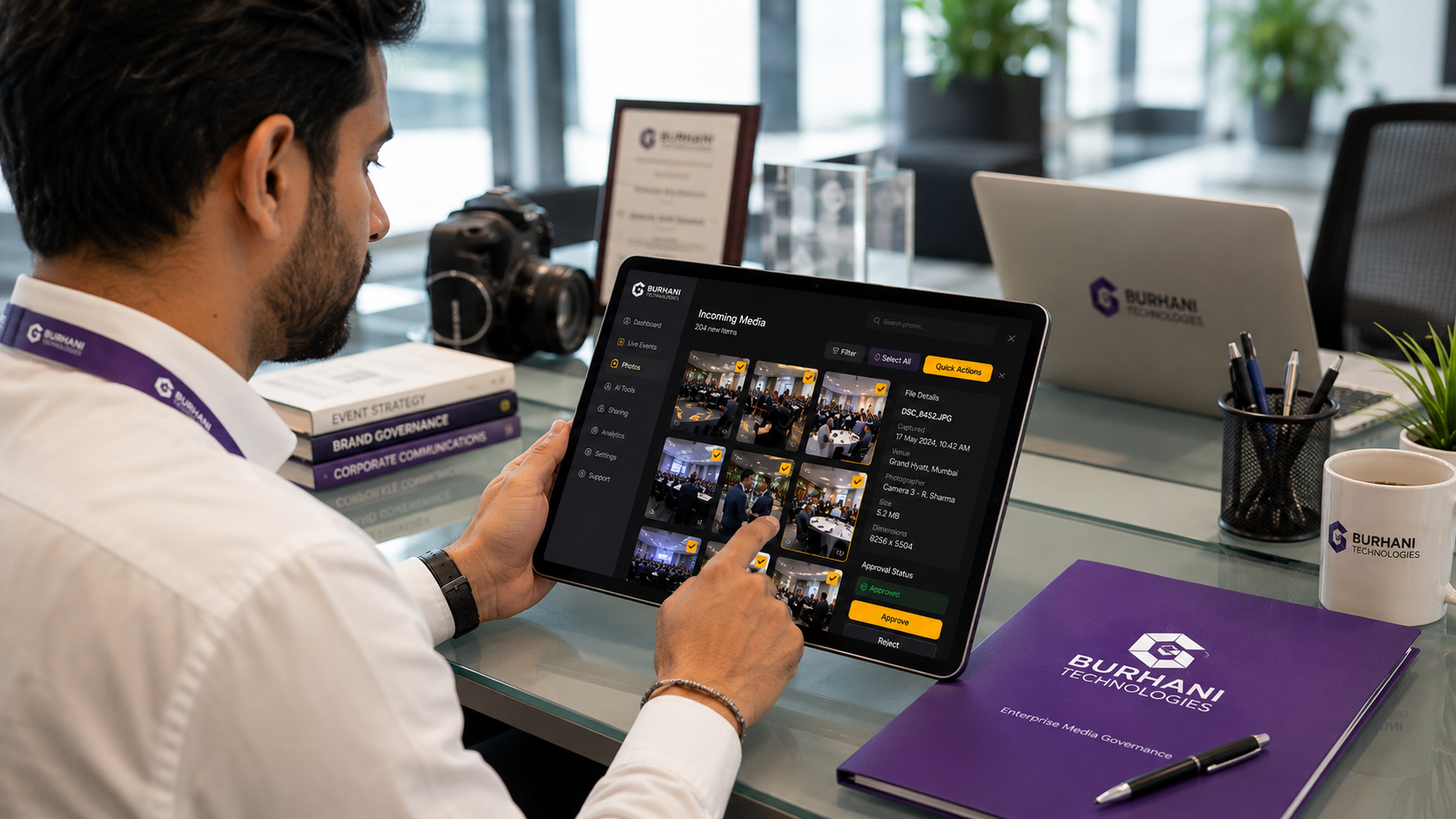
Communications teams often need to review assets for brand consistency, executive approvals, legal considerations, or embargo restrictions. Structured approval workflows ensure organizations maintain governance without sacrificing speed.
Role-Based Access and Operational Control
Different stakeholders require different levels of access.
Photographers, marketing teams, agency partners, executives, and media personnel all interact with event content differently. Role-based permissions help ensure that assets are distributed appropriately while reducing administrative overhead.
Dynamic Asset Branding and Distribution Readiness
Brand consistency remains a critical component of enterprise communications.
Automating Visual Brand Standards
As event content moves through the organization, branding requirements often vary across stakeholders, sponsors, campaigns, and distribution channels.
Cloud-based workflows make it possible to apply branding elements dynamically without requiring teams to manually process every asset individually.
Supporting Multi-Stakeholder Events
Large-scale conferences and brand activations frequently involve multiple sponsors and partner organizations. Flexible branding controls help communications teams adapt assets to different audiences while maintaining consistency across the event ecosystem.
The Kamero Advantage: Building a Real-Time Enterprise Media Desk
Many event platforms focus primarily on storage and post-event delivery. Kamero approaches the challenge differently by treating media as a live operational asset.
Through Kam-Sync, images can move directly from compatible camera systems into centralized cloud environments without waiting for manual uploads. Communications teams gain immediate access to content while governance controls help ensure that distribution remains structured and secure.
Features such as approval workflows, role-based access controls, dynamic watermarking, white-label environments, and integrated communication channels allow organizations to manage media operations from a single platform rather than coordinating across multiple disconnected tools.
For enterprises managing high-volume events, the result is a faster and more controlled path from capture to publication.
Operational ROI: Converting Live Content Production Into Brand Equity
The value of real-time media workflows extends beyond convenience.
Compressing Time-to-Deliver Metrics
Faster access to content allows organizations to participate in active news cycles rather than reacting after they have passed.
PR teams can distribute assets while discussions are still happening, increasing the likelihood of media coverage and audience engagement.
Reducing Operational Complexity
Consolidating ingestion, approvals, branding, storage, and distribution into a unified workflow reduces the need for multiple software platforms and manual coordination processes.
This creates efficiencies for both internal teams and external partners.
Turning Content into Business Opportunities
Well-managed media environments can also support broader business objectives.
Branded experiences, lead capture opportunities, stakeholder engagement programs, and post-event nurturing initiatives all become easier to execute when content is centralized and immediately accessible.
Conclusion: The Future of Enterprise Media Operations
As communications cycles continue to accelerate, traditional event photography workflows are becoming increasingly unsuited to enterprise requirements.
Organizations that can move assets directly from capture to distribution gain advantages in speed, governance, media visibility, and operational efficiency. Camera-to-cloud workflows are no longer simply a convenience feature; they are becoming foundational infrastructure for modern communications teams.
The enterprise media desk represents the next evolution of event content operations, enabling organizations to transform visual assets from static files into real-time communication tools that support brand growth, stakeholder engagement, and business outcomes.
Ready to Modernize Your Event Media Operations?
Book a Demo: Discover how real-time camera-to-cloud workflows can help your team move from capture to publication in minutes, not days.
Start Your Free Trial: Experience faster media delivery, centralized approvals, and enterprise-grade event content management from a single platform.
Follow Kamero on Instagram: See how leading brands, agencies, and communications teams are using real-time media workflows to stay ahead of the news cycle.

About Nidhi S
Hey there! I’m an MBA student with a keen interest in the evolving world of digital marketing and business strategy. I enjoy exploring how brands build their online presence and the creative process behind turning strategic goals into engaging stories.
When I’m not caught up in marketing trends, you’ll probably find me down a YouTube rabbit hole or binge-watching sitcoms. I’m a fan of good stories—whether they’re in a marketing campaign or a 20-minute TV episode—and I’m always looking for new perspectives to keep things interesting!