
Introduction: The Operational Tax of Unstructured Enterprise Media Libraries
Modern enterprises create more visual content than ever before. Corporate conferences, leadership summits, customer events, product launches, partner meetings, and internal activations generate thousands of images across multiple teams, vendors, and locations. Yet while organizations have become highly efficient at creating content, many still struggle to organize it.
The challenge is no longer storage. Cloud storage is inexpensive and widely available. The challenge is discoverability.
Marketing teams frequently spend hours searching for event photos, identifying approved versions, locating assets from previous campaigns, or tracking files across disconnected drives and sharing links. As media volumes grow, these small inefficiencies compound into a significant operational burden that slows campaign execution, delays stakeholder communication, and reduces the long-term value of enterprise content investments.
This is where smart asset management becomes critical. By combining AI-powered metadata generation, automated organization, and structured governance, enterprises can transform media libraries from passive storage repositories into active business resources that support faster decision-making, campaign execution, and content distribution.
Deconstructing the Visual Asset Bottleneck in Large-Scale Organizations
Most enterprise media challenges begin long before a file reaches its final destination. A single corporate event may involve photographers, videographers, agency partners, internal marketing teams, PR representatives, and production vendors. Each group contributes assets using different naming conventions, folder structures, and delivery methods.
The Operational Variable Fragmentation Penalty
When assets enter the organization from multiple sources without a standardized framework, fragmentation becomes inevitable. Files are duplicated, folders are inconsistently named, and important assets become buried within large repositories. Teams spend more time locating content than using it.
The impact extends beyond inconvenience. Delayed access to visual assets slows campaign launches, social media publishing, executive communications, and post-event reporting. For organizations operating across multiple markets and business units, the cost of fragmented media management can become substantial.
The Asset Deficit
One of the most overlooked costs in enterprise marketing is the time spent searching for assets that already exist. Marketing managers often request new content because locating older content is more difficult than recreating it.
Over time, organizations accumulate thousands of photos distributed across cloud drives, agency portals, internal servers, and personal storage systems. Without proper indexing, these assets become increasingly difficult to retrieve, reducing their overall business value and creating unnecessary operational overhead.
Transitioning Toward Intelligent Media Governance
Traditional media libraries were designed around storage. Modern enterprise libraries must be designed around accessibility, governance, and usability.
Defining Smart Asset Management
Smart asset management introduces intelligence into the organization process itself. Rather than relying on manual folder creation and human tagging, AI systems automatically classify, organize, and structure content as it enters the platform.
The result is a library where assets are searchable by event, speaker, campaign, location, attendee, business unit, or timeline without requiring extensive manual intervention.
Migrating from Repositories to Metadata Frameworks
Metadata transforms media from static files into searchable business assets.
Instead of browsing through folders, users can locate relevant content using contextual information attached automatically during ingestion. This allows organizations to move beyond traditional archives and create dynamic content environments that support marketing, communications, PR, and stakeholder engagement teams.
Technical Architecture: Engineering an Automated Corporate Media Library
The foundation of intelligent media management lies in how assets are processed at the moment they enter the system.
Automated Metadata Tagging and Intelligent Classification
AI-powered metadata tagging enables platforms to automatically identify relationships between assets and the events that generate them.
Instead of manually entering keywords, teams can establish structured rules that classify content based on event information, session schedules, timelines, attendee groups, or predefined business categories. This dramatically reduces administrative workload while improving consistency across the library.
Building Searchable Enterprise Media Systems
As metadata accumulates, organizations gain the ability to retrieve content using natural business criteria rather than file names.
A communications manager searching for keynote photos from a conference six months ago should not need to remember folder structures. Metadata-driven systems make assets immediately discoverable through contextual search, improving productivity across departments.
Event-Scoped Organization and Secure Data Separation
Large organizations often manage multiple events simultaneously. Maintaining clear separation between projects becomes increasingly important as content volumes scale.
Event-scoped organizational frameworks help ensure assets remain associated with the correct campaigns, attendees, and stakeholders while simplifying governance and access management requirements.
Automated Grouping at Scale
Instead of manually organizing thousands of files after an event, AI-driven systems can automatically create structured hierarchies based on event logic. This allows organizations to maintain clean, navigable libraries even when handling extremely large media volumes.
Real-Time Organization for Multi-Shooter Operations
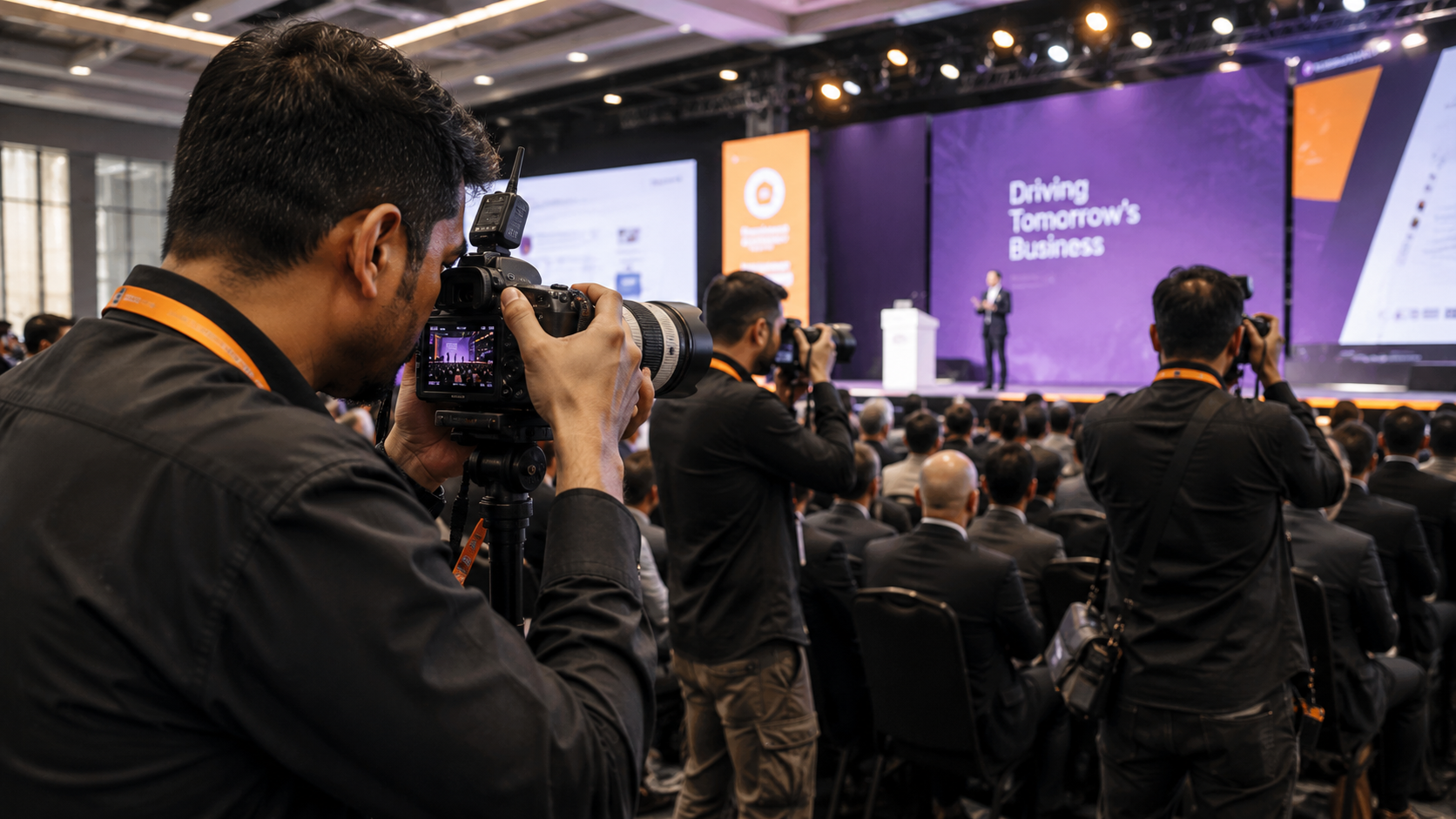
Large-scale corporate events rarely rely on a single photographer. Enterprise conferences frequently involve multiple teams covering keynotes, breakout sessions, networking areas, sponsor activations, and executive meetings simultaneously.
Dynamic Folder Structures and Real-Time Metadata Mapping
Modern enterprise workflows require organization to occur in parallel with content creation.
Rather than sorting files after an event concludes, intelligent systems can automatically route assets into predefined structures based on event tracks, speaker sessions, attendee categories, or organizational priorities. This reduces post-event administration while accelerating asset availability.
Coordinating Parallel Capture Streams
When multiple photographers contribute content simultaneously, maintaining consistency becomes a significant challenge.
Centralized ingestion systems help unify these parallel streams into a single operational framework, ensuring that teams can access a complete and organized media library without extensive manual intervention.
High-Fidelity Enterprise File Processing
Enterprise environments often require original-resolution assets for PR, publishing, print production, and corporate communications.
Handling large files efficiently is therefore critical. Modern cloud-native workflows allow organizations to process and organize high-resolution assets while maintaining performance and accessibility across distributed teams.
Maintaining Performance During Peak Demand
Large conferences and enterprise activations frequently generate sudden spikes in upload activity. Systems must be designed to manage these periods without creating delays that impact downstream marketing workflows.
Efficient infrastructure ensures that asset organization continues uninterrupted even during periods of heavy activity.
The Kamero Advantage: From Storage to Intelligent Media Operations
Many traditional storage solutions focus primarily on file retention. Kamero approaches the challenge differently by combining real-time ingestion, automated organization, governance controls, and enterprise-scale media delivery into a single workflow.
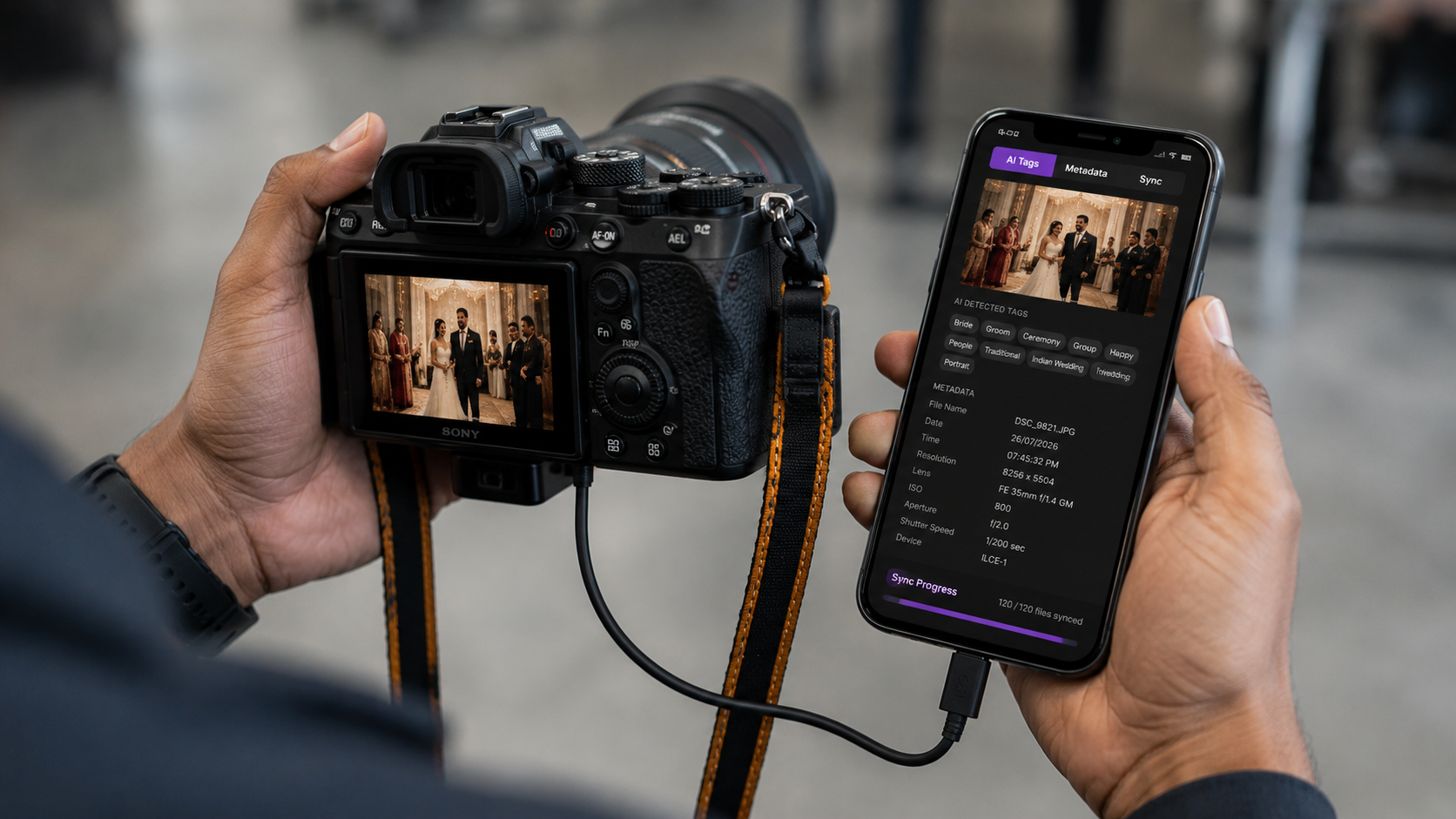
Through Kam-Sync, media can move directly from camera systems into centralized cloud environments, reducing manual handling and accelerating availability. Automated metadata generation helps structure content as it enters the platform, while governance features support controlled access and approval workflows.
For enterprise teams managing large volumes of event content, this creates a significantly more organized and operationally efficient media environment than traditional storage-first approaches.
The result is not simply a better archive. It is a more effective media operations framework.
Strategic and Financial ROI: Turning Media Archives into Campaign Assets
The business value of organized media extends far beyond storage efficiency.
Reducing Operational Overhead
Organizations that automate media organization spend less time searching for assets, recreating content libraries, managing duplicate files, and coordinating across multiple systems.
Consolidating storage, organization, delivery, and governance functions into a unified environment can significantly reduce administrative workload while improving team productivity.
Accelerating Campaign Execution
The faster content becomes available, the faster organizations can act on it.
Instantly organized libraries enable marketing teams to launch campaigns more quickly, support real-time communications, accelerate press outreach, and strengthen post-event engagement efforts.
For enterprise organizations operating in competitive markets, faster access to content often translates directly into faster business outcomes.
Supporting Long-Term Content Value
One of the greatest advantages of structured media libraries is that assets remain useful long after the event ends.
Content can be reused for future campaigns, ABM initiatives, investor presentations, internal communications, recruitment marketing, and thought-leadership programs. Instead of disappearing into forgotten folders, assets become part of a continuously accessible business resource.
Conclusion: Future-Proofing Enterprise Photo Organization
As enterprise media volumes continue to grow, traditional storage-centric approaches are becoming increasingly unsustainable. Organizations that rely on manual organization, disconnected repositories, and inconsistent governance processes will struggle to keep pace with modern content demands.
Smart asset management represents a shift from storing content to operationalizing it. By combining automated metadata tagging, intelligent organization, real-time ingestion, and structured governance, enterprises can create media environments that support faster campaigns, stronger collaboration, and greater long-term asset value.
The future of enterprise media management belongs to organizations that treat content not as a collection of files, but as a strategic business asset.
Ready to Modernize Your Media Operations?
Book a Demo: See how automated metadata tagging and real-time asset organization can transform thousands of event photos into a searchable, campaign-ready media library.
Start Your Free Trial: Experience faster asset discovery, streamlined governance, and enterprise-scale media organization from a single platform.
Follow Kamero on Instagram: Explore how leading brands, photographers, and event teams are building smarter media workflows for the modern content economy.

About Mohit Prakash Lal
Hi, I’m Mohit, an MBA student at TAPMI, Manipal, exploring the world of business with a focus on marketing and strategy. I’m interested in understanding how brands connect with people and create meaningful, lasting impact in a competitive landscape. I enjoy working on real-world projects across marketing, sales, and business development, where I can apply ideas in practical settings.
I also enjoy simplifying ideas into clear, practical insights. Outside of work, I like travelling, reading, and taking time to recharge.