For modern photography studios, production companies, and high-volume event organizers, post-production bottlenecks rarely stem from a lack of creative talent. They stem from fragmented technical operational models. A standard production team often navigates a disjointed software stack spanning four to seven disconnected applications: manual sorting software, standalone culling utilities, batch-processing desktop presets, cloud drives for proofs, digital download storefronts, and third-party communication tools to notify stakeholders.
This fragmented operational model creates severe business friction:
- Extended Time-to-Deliver (TTD): Clients wait weeks for wedding highlights or days for time-sensitive corporate assets.
- Manual Operational Overhead: High-cost creative talent spends billable hours on mechanical file management and client proof matching.
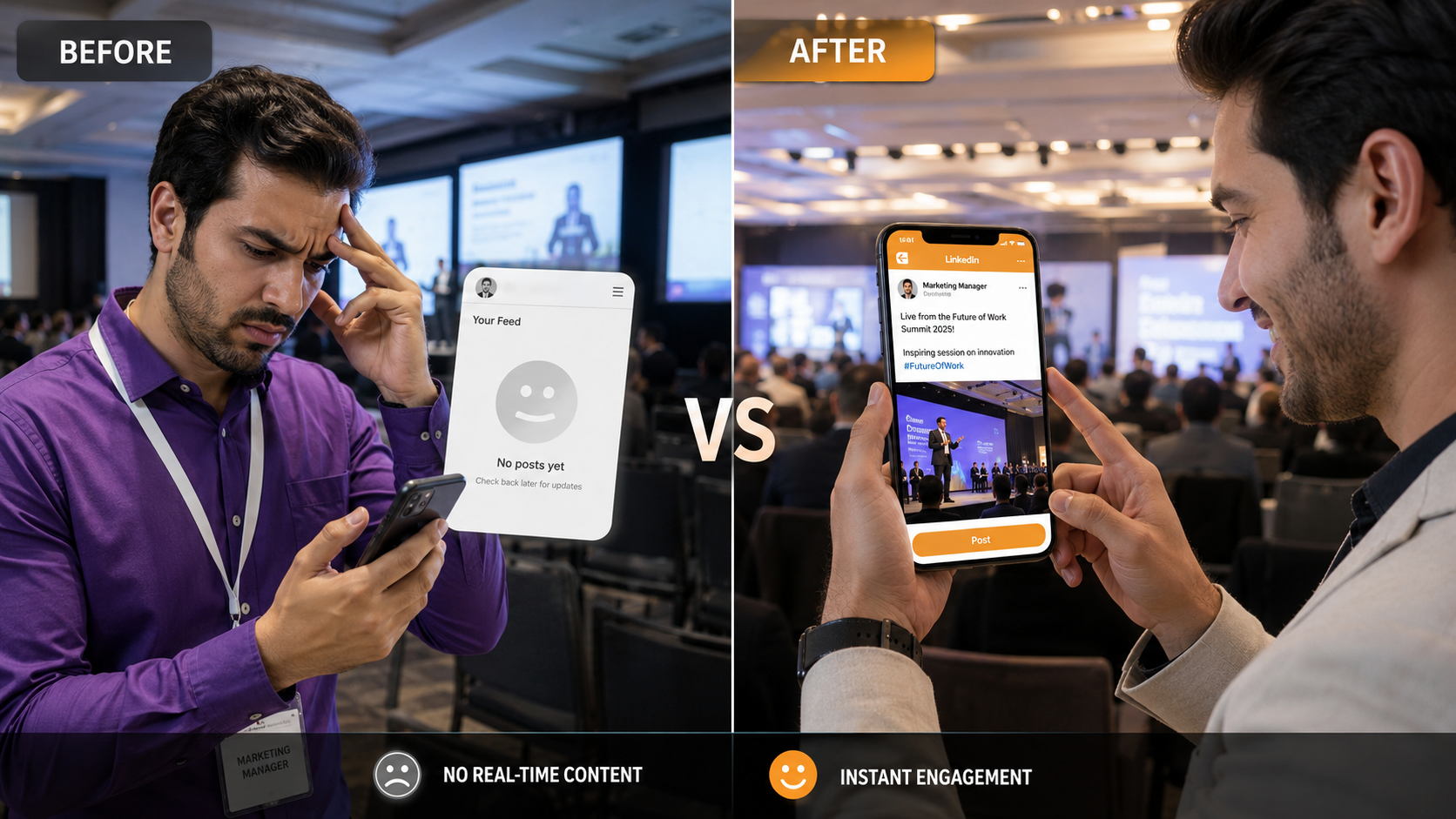
- Missed Engagement Real Estate: The critical window for organic social sharing and guest monetization closes within 24 to 48 hours post-event.
- Margin Erosion: Subscription overhead across unintegrated desktop applications and digital delivery sites compounds operational expenses.
Scaling an event photography operation into a predictable, high-margin media business requires replacing manual touchpoints with integrated infrastructure. Achieving this level of scale demands an extensible AI pipeline for studios that consolidates ingestion, algorithmic curation, real-time facial indexing, and native client monetization into an automated, single-pane architecture.
The Studio Production Bottleneck: Analyzing Multi-Tool Toolchain Sprawl
High-volume event capture environments—including multi-day corporate conferences, sports marathons, large-scale educational events, and destination weddings—routinely produce between 5,000 and 30,000 raw frames per event.
Under legacy operating models, ingestion and organization require physical SD card handoffs, manual directory structuring on local NAS drives, and labor-intensive manual image review. Photographers spend up to 40% of their billable lifecycle marking reject frames, cross-referencing blurred eyes or misfocused burst shots, and exporting subsets for client review.
This fractured toolchain introduces severe points of failure:
- Metadata Silos: Culling decisions made on local workstations do not dynamically feed delivery platforms.
- Delivery Friction: Exporting assets to generalist cloud storage links (e.g., Google Drive, Dropbox) shifts the burden of discovery onto the client, resulting in disengaged attendees and abandoned print galleries.
- Revenue Leakage: When delivery links lack native e-commerce infrastructure, studios forfeit the high impulse-purchase intent that peaks immediately after the event ends.
Solving these systemic inefficiencies requires a shift toward AI photography workflow automation.
Architectural Deep Dive: Modern AI Photography Workflow Automation
A modern event media platform unifies the entire capture-to-commerce lifecycle. By removing manual desktop intervention, the studio converts post-production from a cost center into a real-time distribution engine.
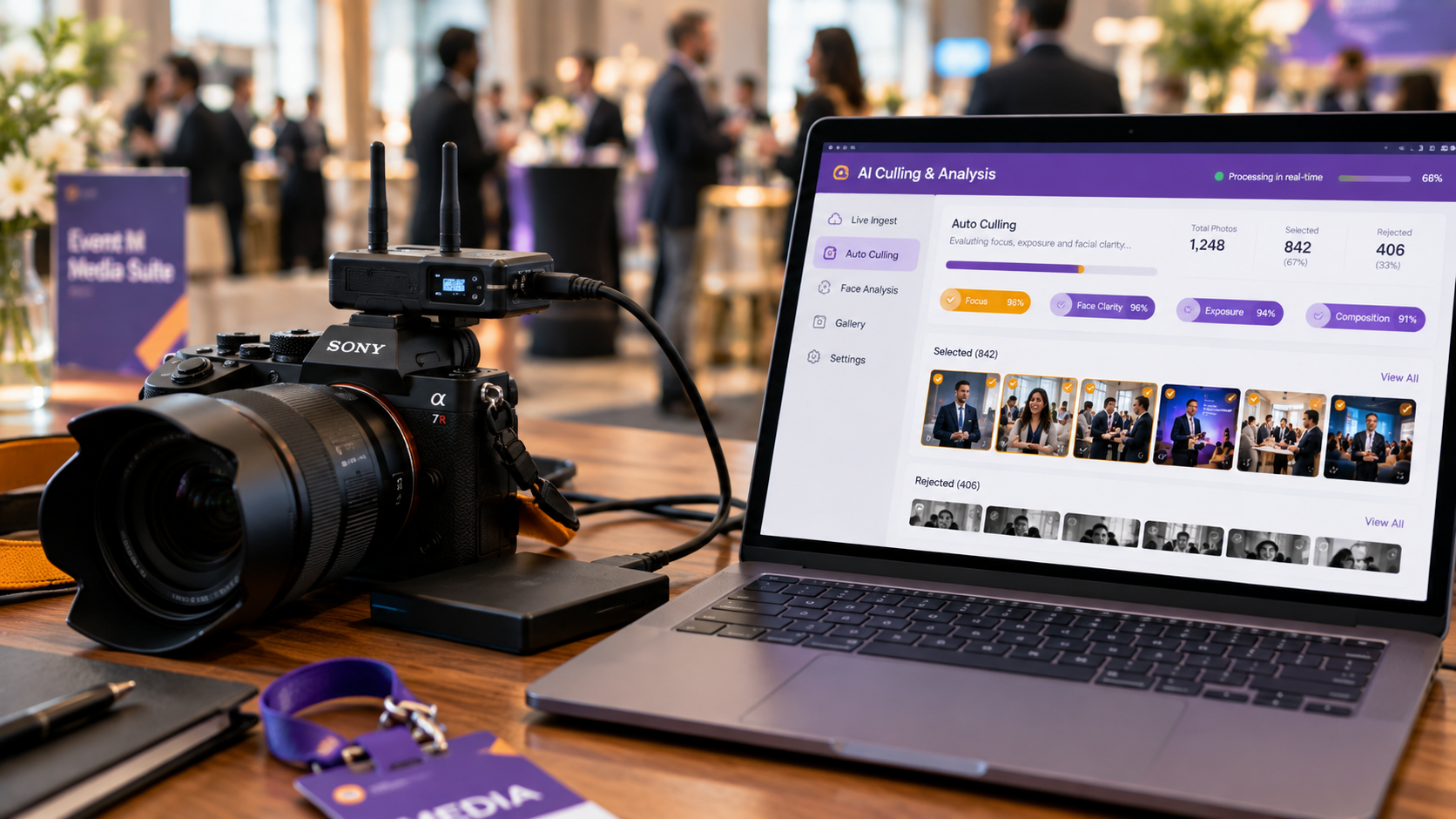
1. Ingestion at the Capture Edge: Live Camera-to-Cloud (Kam-Sync)
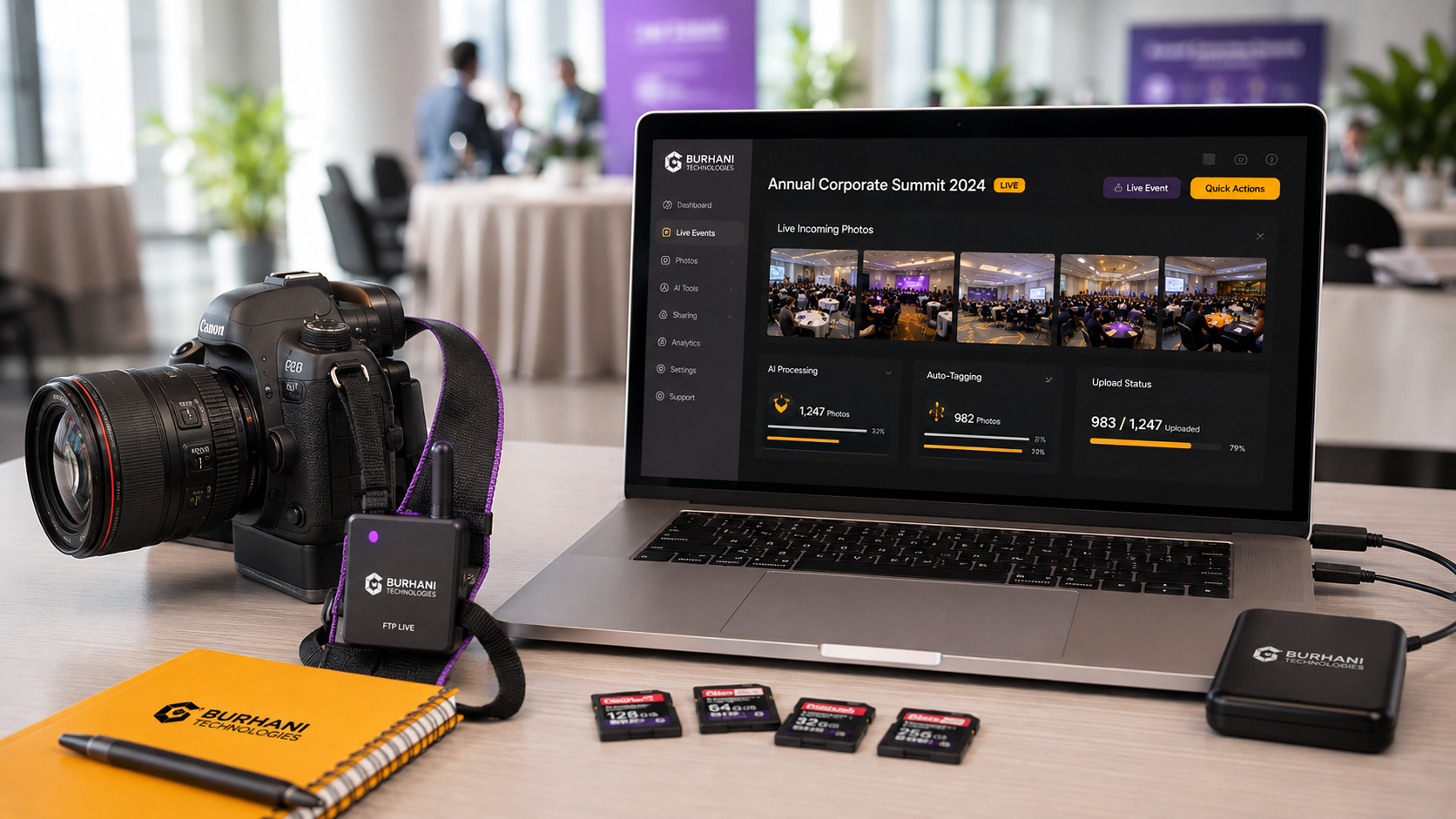
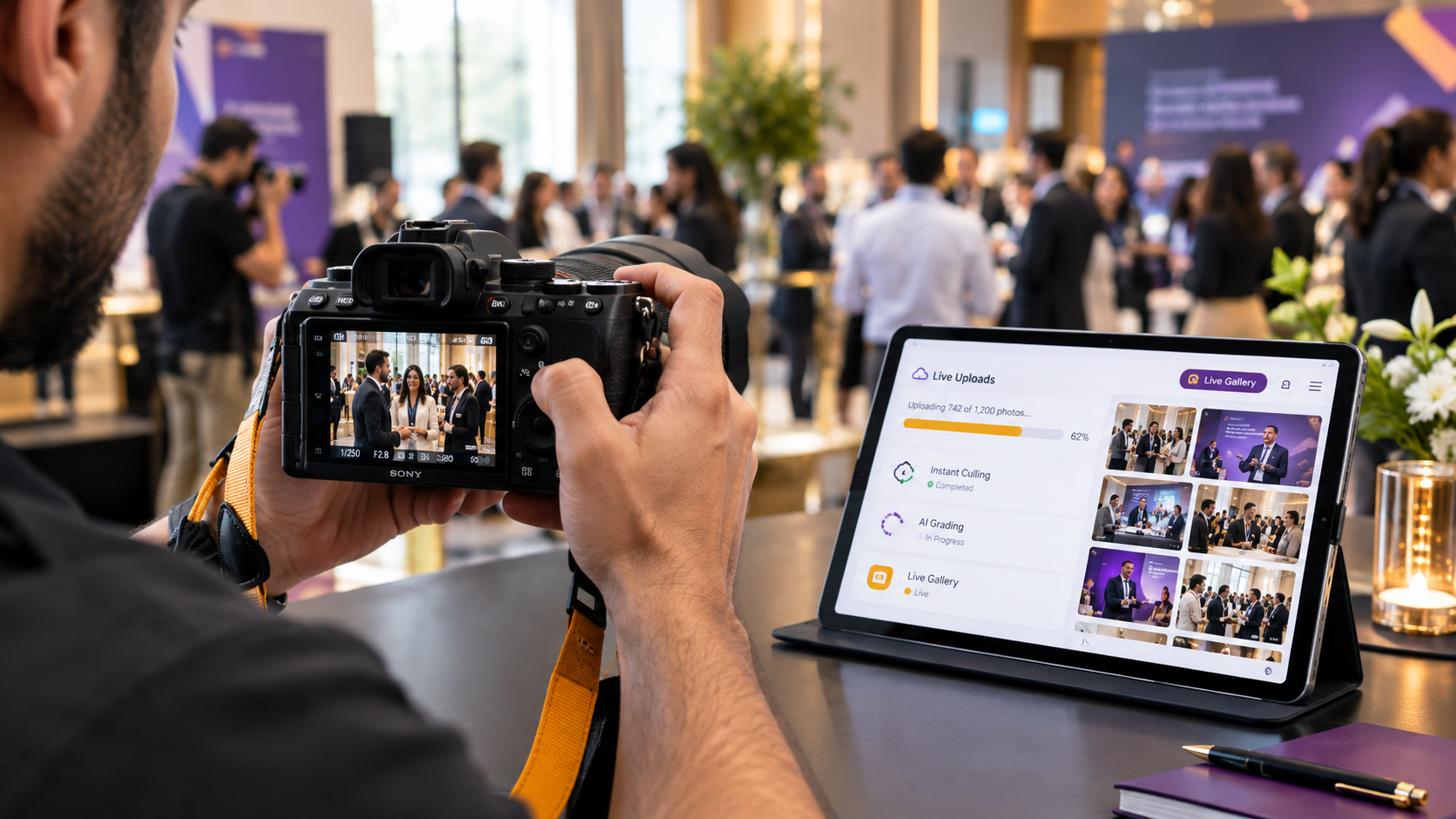
Modern pipelines eliminate the traditional "shoot-then-upload" delay. With Kam-Sync, camera-to-cloud file transmission operates directly over on-ground Wi-Fi or bonded 5G networks. Professional camera bodies transfer raw or high-res JPG frames via secure background FTP protocols directly into cloud ingestion queues.
This unlocks concurrent processing: media is ingested, indexed, and made available while the photographer is still actively shooting on the event floor. High-resolution uploads of up to 50 MB per asset are handled via non-blocking asynchronous microservices, protecting the integrity of the photographer's originals while generating instant, responsive web previews.
2. High-Throughput Algorithmic Processing: Automated Photo Culling Software
Manual review of high-volume burst photography represents the single largest operational drain on post-production labor. Modern infrastructure deploys automated photo culling software at the ingestion stage.
Algorithmic models evaluate incoming frames based on objective technical metrics:
- Focus Vector Mapping: Analyzing focal planes and depth maps to discard frames with micro-motion blur or missed subject focus.
- Facial Metrics & Expression Auditing: Automated detection of closed eyes, awkward expressions, and partially obscured profiles within high-speed bursts.
- Smart Duplicate Clustering: Grouping continuous bursts into single candidate sets and surfacing the statistically superior frame based on exposure balance and composition.
By offloading early-stage triage to automated background processes, studios can reduce initial selection times by over 70%, routing clean candidate batches directly to finishing workflows.
3. Consistency and Brand Styling: Integrated AI Photo Enhancement Presets
Finishing multi-source captures across multiple second-shooters presents substantial color and exposure calibration challenges. Rather than relying entirely on manual, frame-by-frame desktop exports, modern pipelines incorporate AI photo enhancement presets.
These pipelines apply consistent style schemas across diverse lighting scenarios—from harsh midday event sun to ambient indoor ballroom banquet lighting. Neural-network enhancement workflows run contextual adjustments:
- Selective Facial Exposure Calibration: Lifting shadow details on subjects without blowing out ambient highlights.
- Dynamic White Balance Unification: Harmonizing multiple camera sensor outputs to match the studio's custom tone profiles.
- Style and Contrast Harmonization: Standardizing skin tones across entire collections before client-facing galleries are populated.
Technical Comparison: Disconnected Desktop Operations vs. Unified Studio Cloud
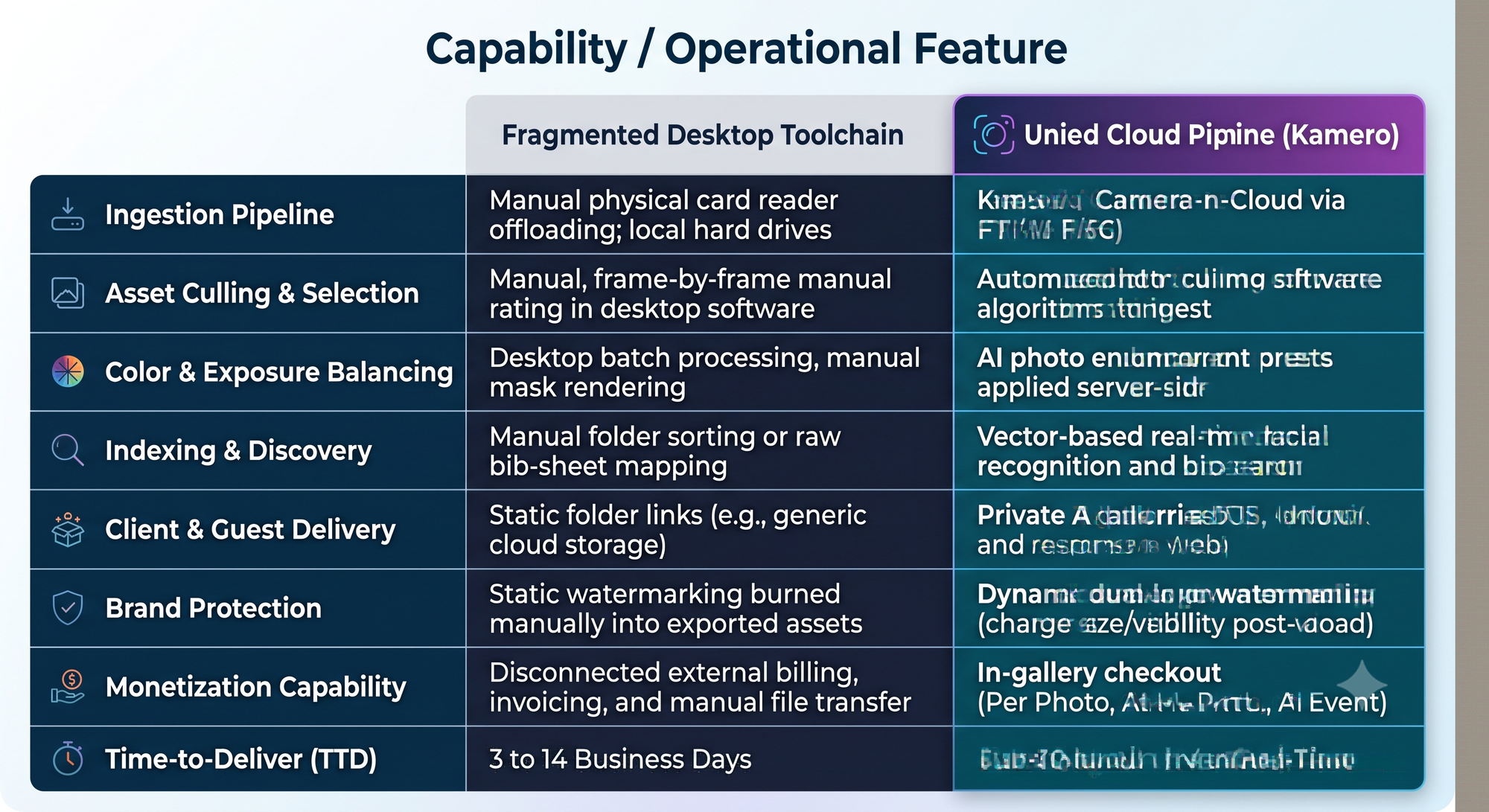
Edge Delivery: Event-Scoped Facial Recognition and In-Gallery Commerce
The primary failure point of legacy cloud storage links is the discovery experience. Providing a 3,000-photo folder to wedding guests or corporate attendees results in high bounce rates, low engagement, and minimal brand recall for the photographer.
Event-Scoped Vector Indexing
An extensible pipeline resolves asset discovery by deploying vector-based AI facial recognition directly within an event perimeter.
- The guest accesses the branded gallery via a quick URL or custom event QR code.
- The guest uploads a single reference selfie.
- The platform’s facial recognition engine extracts vector embeddings and maps them against the indexed event database in milliseconds.
- The guest immediately receives a curated, private feed containing only the photos in which they appear.
Because vector embeddings are strictly event-scoped, personal biometrics are never aggregated across unrelated databases or scraped for public indexing, maintaining rigorous privacy standards across social, school, and enterprise activations.
Integrated In-Gallery Commerce
By shortening the gap between photo capture and attendee delivery to under 30 minutes, attendee excitement remains at its peak. Kamero capitalizes on this attention window through integrated digital commerce engines:
- Granular Pricing Models: Studios can monetize media via Per Photo licensing, All My Photos (powered by AI selfie aggregation), or full-resolution All Event Photos bundles.
- Zero-Friction Checkout: Direct payment gateway integrations (including Razorpay, PhonePe, and Stripe) allow international and local guests to purchase high-resolution digital files or order print SKUs immediately.
- Automated Lead Generation: Guest registrations capture phone numbers, email addresses, and interaction metrics, turning standard guest galleries into active lead-generation engines for studio re-bookings.
Real-World Case Scenarios: Scaled Automation Across Core Segments
Modern workflow infrastructure adapts across diverse industry segments, replacing manual friction with purpose-built automation pipelines.
1. High-Volume Wedding & Social Studios
- The Operational Challenge: Wedding photography teams average 8,000 to 15,000 photos across multi-day ceremonies. Post-event album selection often stalls for months because clients are overwhelmed by raw proofs, delaying final album invoicing and studio cash flow.
- The Automated Solution: Leveraging Kam-Sync, the studio streams real-time ceremony captures to a client-branded gallery. Guests access their own portraits via instant QR scanning and AI face match during the reception.
- The Business Impact: Brides and grooms use built-in, native album shortlisting tools inside the mobile app to mark favorites with a single tap. Time-to-deliver drops below 24 hours for proofing, and album proof approval turnaround speeds up significantly, accelerating final studio receivables.
2. Large-Scale Sports Events & Marathons
- The Operational Challenge: In endurance athletic events with 5,000 to 20,000 participants, manual sorting by bib numbers takes days, leading to delayed delivery and missed digital print sales.
- The Automated Solution: The platform ingests multi-camera finish line bursts and course-marker captures. Dual-engine indexing extracts optical bib numbers and maps facial vectors concurrently.
- The Business Impact: Athletes receive real-time notifications with an open rate exceeding 40%. Dynamic, dual-logo watermarking places event sponsors alongside the production company’s brand, fulfilling contractual sponsorship impressions while converting personalized digital photo bundles directly in the gallery.
3. Corporate Conferences & Brand Activations
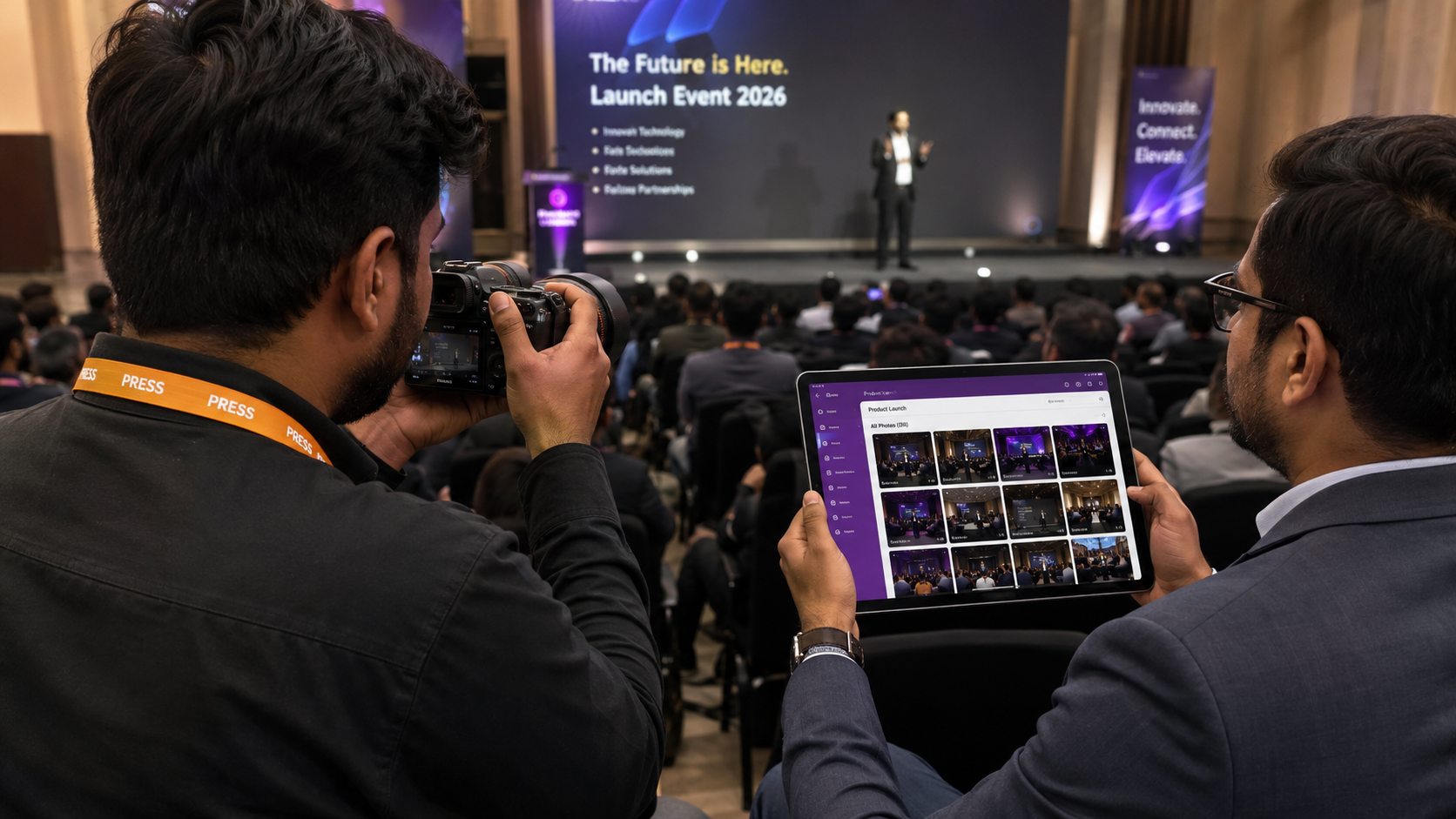
- The Operational Challenge: Enterprise marketing, PR, and communications teams need high-res assets delivered immediately during keynote sessions to capitalize on live social amplification, but internal brand-safety rules forbid messy, public link drops.
- The Automated Solution: Kamero deploys brand-safe galleries protected by multi-level PIN privacy, centralized administrative access controls, and custom color-theming.
- The Business Impact: Marketing stakeholders access verified, press-ready highlight reels instantly during the event, ensuring 100% brand-compliant asset distribution while providing event planners with comprehensive attendee download metrics.

Architectural Scalability: Future-Proofing Studio Operations
The technical requirements of enterprise-grade photo distribution demand infrastructure built for high concurrency. High-volume activations generate acute, bursty ingestion profiles: thousands of assets arrive within minutes, and thousands of concurrent users ping the vector database simultaneously to retrieve images.
An enterprise pipeline handles this operational load through modular architectural design:
- Decoupled Processing Workers: Bulk image ingestion routes through asynchronous queue back-pressures, ensuring high-res files upload without connection drops or server timeouts.
- Edge CDN Distribution: Image assets, thumbnails, and preview caches are served from geographically distributed endpoints, ensuring millisecond load times on mobile apps even during peak gallery access spikes.
- Pluggable Architecture for AI: As computer vision and generative models evolve, the processing core remains extensible. Studios can integrate modular background segmentations, automated object tagging, and custom facial-clustering thresholds without refactoring their primary client-facing delivery storefronts.
Moving to an automated studio pipeline eliminates operational bottlenecks, minimizes multi-tool software subscriptions, and turns event photography delivery into an immediate driver of brand equity and revenue.
Modernize Your Studio Workflow with Kamero
Eliminate post-production delays and reclaim your billable hours. Switch to a single, unified, AI-powered event media platform built to accelerate ingestion, curate captures, and monetize galleries at scale.
- Start your hands-on evaluation: Sign Up for a Free Trial on Kamero and experience live camera-to-cloud delivery.
- Schedule an architectural walk-through: Book a 1-on-1 Studio Demo to evaluate enterprise pipelines, API embeds, and white-label setups.
- Stay connected with industry innovations: Follow Kamero on Instagram for real-time feature releases, workflow breakdowns, and case studies.
About Pavani Nagar
Hey there! Pavani Nagar, a Digital Marketing Manager who enjoys working on content, social media, and figuring out what makes people pay attention. I like trying new ideas, learning along the way, and keeping things simple.