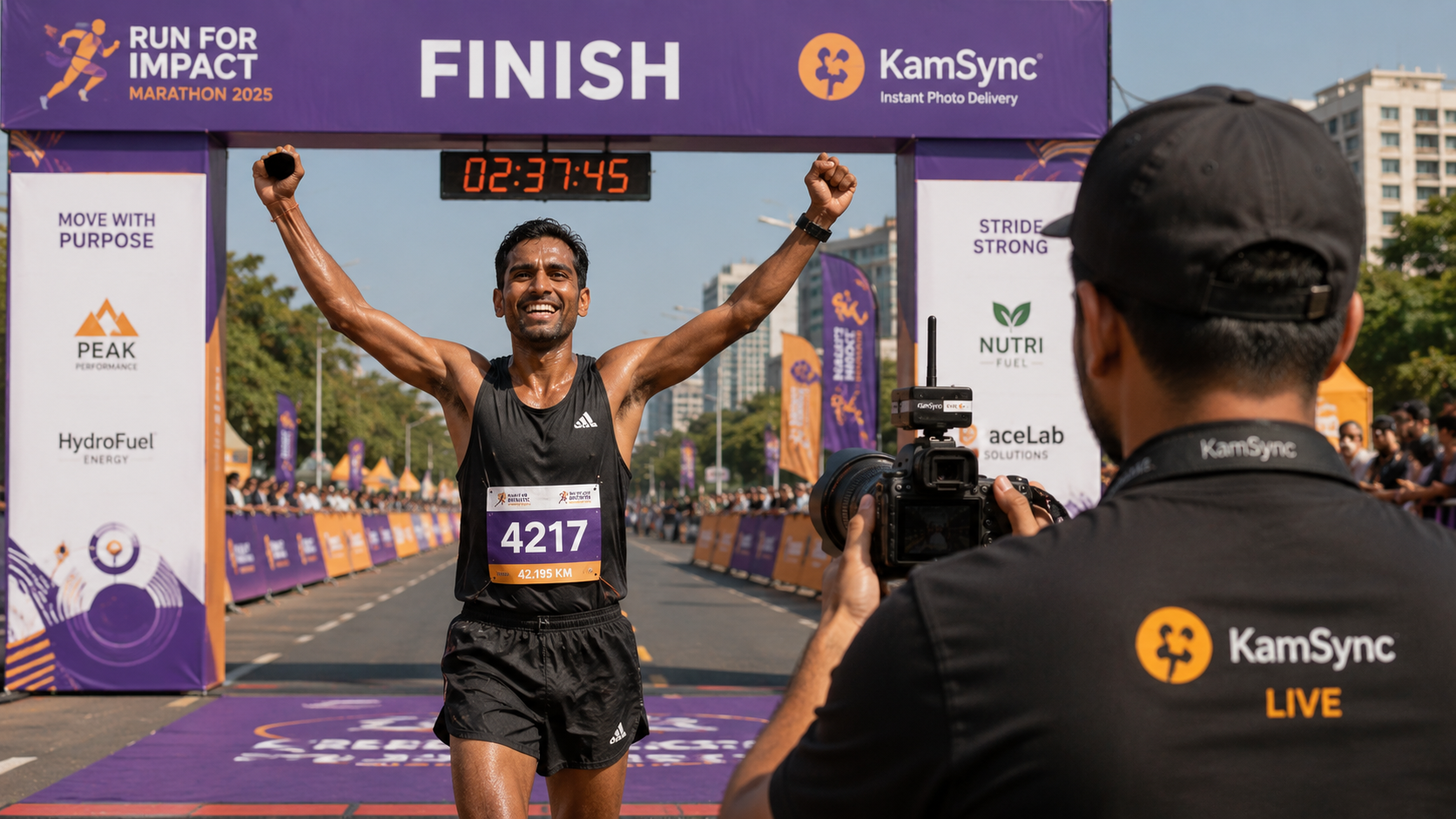
Introduction: The Millisecond Economy of Finisher Line Media Logistics
For decades, race photography followed a predictable timeline. Thousands of images were captured during the event, memory cards were collected after the finish line closed, files were transferred to local systems, photographers spent days sorting and organizing assets, and participants eventually received access to their photos several days later.
That workflow no longer aligns with modern participant expectations.
Athletes today expect instant access to their achievements. The moment they cross the finish line, they are already sharing race statistics, posting medal photos, updating social profiles, and celebrating personal milestones. A photo delivered three days later enters a completely different engagement environment than one delivered within minutes.
This shift has transformed race photography from a documentation exercise into a real-time engagement channel. Event organizers, sponsors, and photography teams increasingly recognize that the value of a race photo is highest immediately after capture.
As expectations evolve, real-time marathon delivery is becoming the new competitive standard.
The Decay Curve of Athlete Excitement and Viral Momentum
The hours immediately following a race represent the highest engagement window for participants.
Athletes are actively checking race results, sharing finish-line moments, interacting with sponsors, and discussing the event with friends and fellow runners. During this period, excitement levels are at their peak and social sharing activity is strongest.
When race photos arrive several days later, much of that momentum has already disappeared. Participants have moved on to other activities, conversations have slowed, and the opportunity for organic visibility has significantly declined.
The challenge for modern race organizers is no longer capturing great photos. The challenge is delivering them while excitement still exists.
Embracing Real-Time Marathon Delivery Architectures
Modern event photography workflows distribute processing throughout the event rather than concentrating all work after the race ends.
Instead of waiting for photographers to return with memory cards, images can move directly into cloud environments while the event is still taking place. Automated sorting, matching, indexing, and delivery systems begin working immediately after capture.
This operational shift dramatically reduces turnaround times and allows organizers to deliver images while athletes are still celebrating their achievements.
The result is a new standard for fast race photo sharing where participants discover photos minutes after crossing the finish line instead of days later.
Edge Architecture: Engineering Zero-Lag File Capture and Ingestion
The foundation of any real-time delivery system is the infrastructure responsible for moving images from the camera to the cloud.
Traditional workflows rely on multiple manual transfer stages. Files move from camera to memory card, memory card to laptop, laptop to storage device, and eventually into a gallery platform. Each step introduces delays, creates opportunities for error, and increases operational overhead.
Modern race photography environments eliminate many of these bottlenecks through direct camera-to-cloud workflows.
Direct Hardware-Integrated Streaming via Camera-to-Cloud Sync
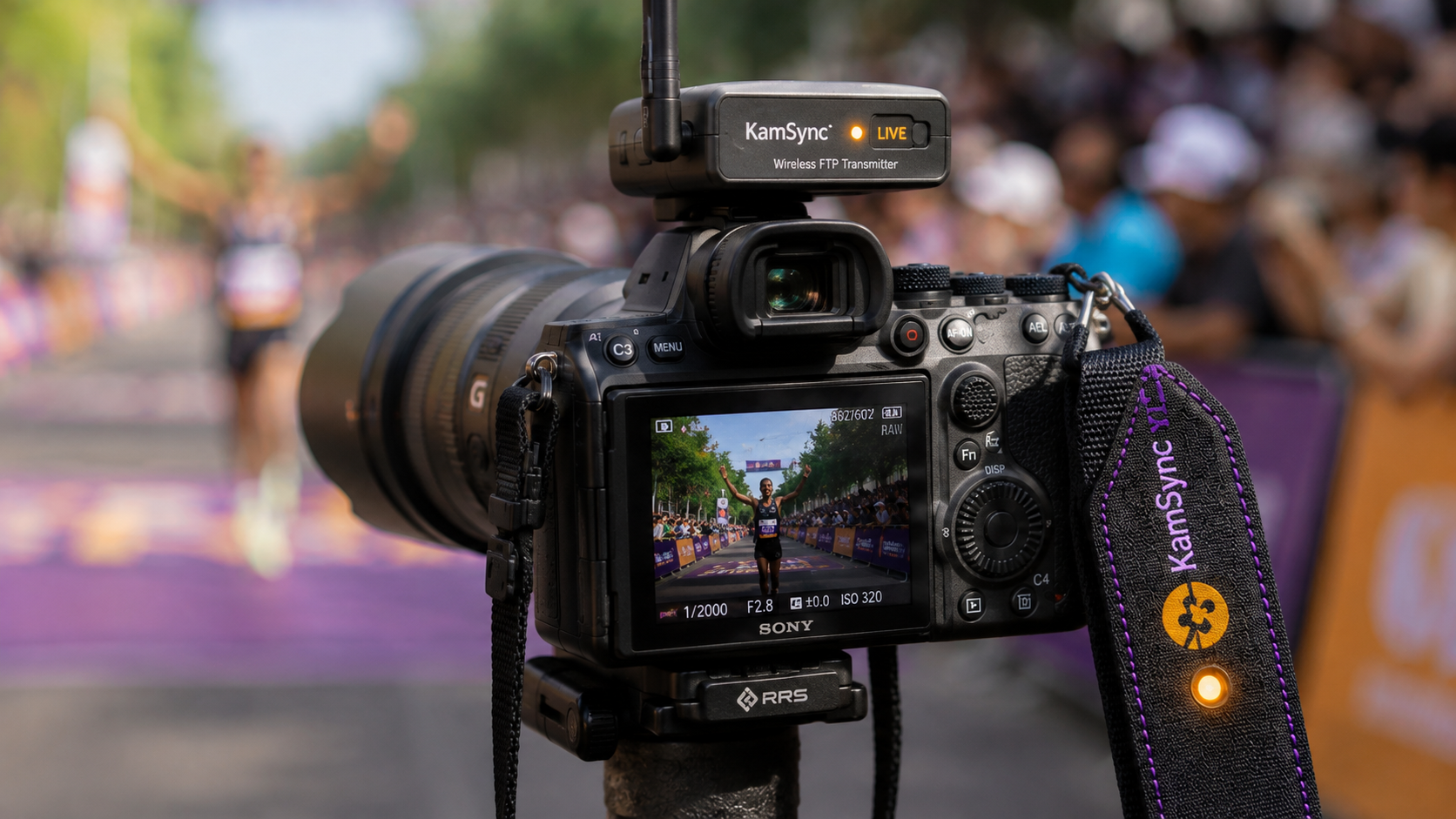
Rather than waiting until the race ends, photographers can transmit images directly from the camera body into cloud infrastructure using wireless FTP connections.
This approach allows uploads to begin while photographers remain actively shooting. Images are continuously transferred throughout the event, distributing network traffic and reducing the massive upload backlog that traditionally occurs after race completion.
For high-volume races with thousands of participants, this continuous flow architecture becomes essential.
Managing High-Volume Race Traffic
Marathons create unique operational challenges because participant traffic is highly concentrated around key moments.
Large waves of runners often arrive within short time windows, creating sudden spikes in image production. Systems must absorb these surges without slowing photographers or interrupting uploads.
Modern ingestion architectures address this challenge through distributed processing queues that prioritize speed while maintaining reliability. Lightweight preview versions can be processed immediately while full-resolution assets continue uploading in the background.
This approach enables rapid discovery without compromising image quality.
Automated Distribution: Shifting from Mass Link Dumps to Personalized Delivery
Fast uploads alone do not solve the participant experience problem.
Even when images are available quickly, athletes still face a challenge if they must manually search through thousands of race photos to find themselves.
The next evolution of race photography focuses on personalized discovery.
Real-Time Directory Structuring and Metadata Automation
Traditional event galleries often become overwhelming collections containing thousands of images with minimal organization.
Modern systems instead use metadata, timestamps, location markers, timing information, and automated categorization to structure media as it arrives.
Because organization occurs during ingestion rather than after the event, galleries become immediately usable. Participants can locate relevant content without navigating enormous directories or waiting for manual sorting processes to finish.
This automation significantly reduces administrative workloads while improving participant satisfaction.
Personalized Discovery at Scale
As race sizes continue to grow, personalized discovery becomes increasingly important.
Participants no longer want access to every image from the event. They want access to their images.
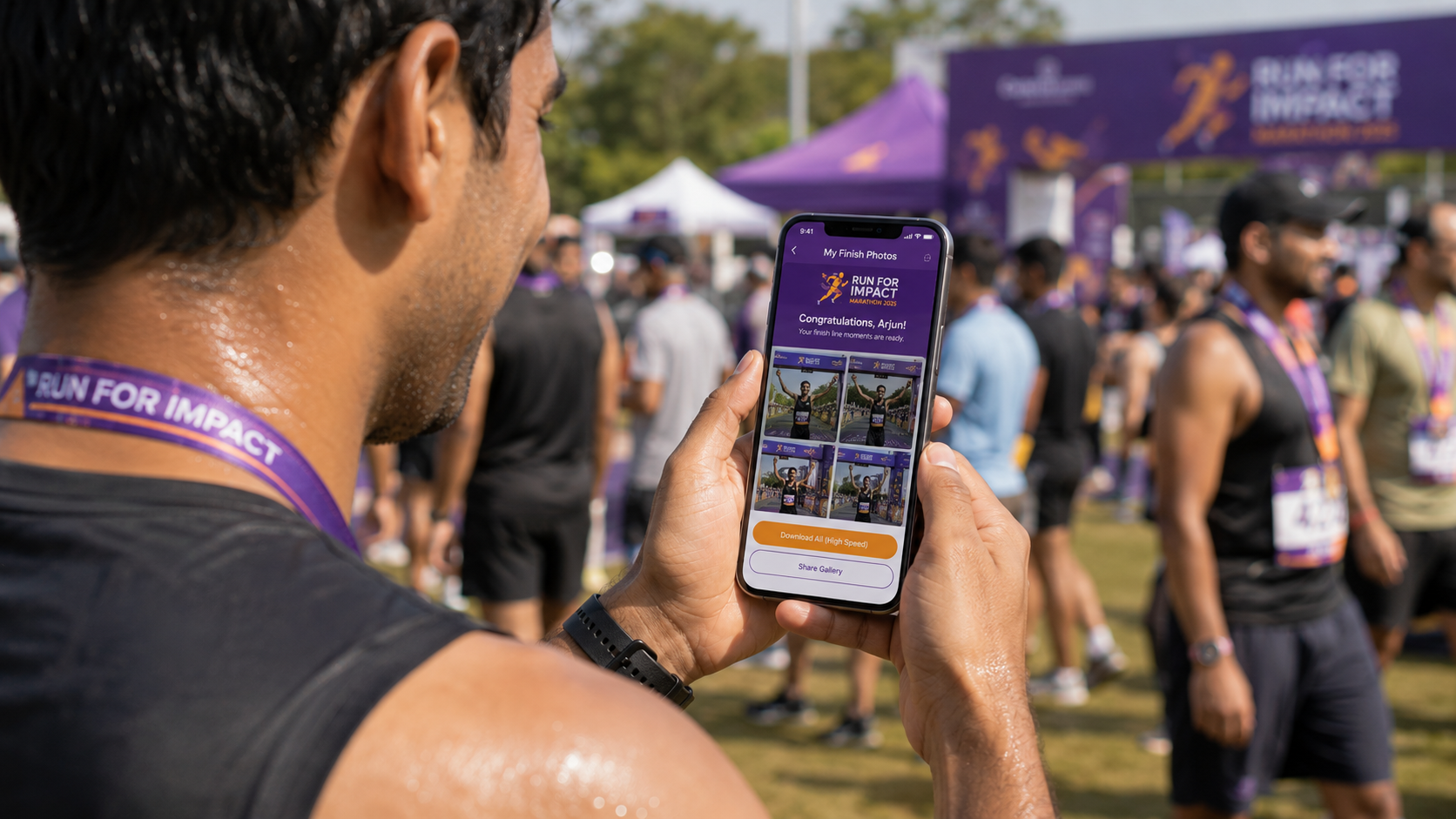
Modern AI-powered matching systems help athletes locate relevant photos almost instantly. Instead of browsing endless galleries, runners can quickly access a personalized collection of race moments, finish-line celebrations, and achievement photos.
This dramatically improves the overall event experience while reducing support requests and search frustration.
The Kamero Competitive Edge: Continuous Real-Time FTP vs. Batch-Processing Competitors
The difference between modern and traditional race photography platforms is increasingly defined by infrastructure rather than gallery design.
Many platforms still depend on post-event uploads, manual organization processes, and browser-based workflows that were designed for smaller projects.
High-volume race events require a different approach.
Kamero combines camera-to-cloud FTP workflows through Kam-Sync with automated media processing, AI-powered discovery, secure cloud infrastructure, and scalable distribution systems built specifically for large-volume event environments.
By eliminating upload bottlenecks, reducing manual intervention, and accelerating participant discovery, organizers can move from multi-day delivery cycles to near real-time distribution.
The platform also supports dynamic watermarking, white-label branding, role-based access controls, native mobile experiences, and integrated communication workflows that help organizers manage large participant communities more effectively.
Rather than functioning as a simple gallery host, the system becomes a complete event media operations platform.
Quantifying Race Production Success: Operational Metrics and Commercial Scale
The impact of real-time delivery extends beyond participant satisfaction.
Faster delivery often produces measurable operational and commercial benefits for race organizers and photography teams.
Slashing Studio Labor Overhead and Processing Complexity
Traditional workflows require multiple software tools for file transfers, storage management, watermarking, organization, gallery delivery, and participant communication.
Each additional tool introduces complexity, training requirements, and administrative overhead.
By consolidating these functions into a single workflow, teams can significantly reduce manual effort while accelerating production timelines.
Instead of spending days processing media after the event, staff can focus on higher-value activities such as client relationships, sponsor management, and future event growth.
Turning Live Engagement into Long-Term Business Value
Race photos are more than participant memories. They also represent valuable engagement opportunities.
When participants actively interact with galleries immediately after an event, organizers can strengthen sponsor visibility, increase brand recall, promote future races, and generate inbound partnership opportunities.
Faster delivery creates more engagement. More engagement creates more visibility. More visibility creates stronger commercial outcomes.
The operational benefits and business benefits are closely connected.
Strategic Conclusion: Setting the Modern Standard for Fast Race Photo Sharing
The future of race photography is not defined by image quality alone.
Success increasingly depends on how quickly those images move from capture to participant discovery.
As participant expectations continue to evolve, multi-day delivery cycles are becoming difficult to justify. Athletes expect speed, personalization, and convenience. Organizers need scalable workflows that can support thousands of participants without creating operational bottlenecks.
Real-time marathon delivery addresses both challenges simultaneously.
By combining camera-to-cloud infrastructure, automated media processing, intelligent discovery systems, and mobile-first distribution channels, race organizers can transform photography from a post-event task into a live engagement engine.
The organizations that embrace these workflows will be better positioned to improve participant experiences, strengthen sponsor relationships, and establish new standards for modern event media delivery.
Ready to Deliver Race Photos in Real Time?
Discover how Kamero helps race organizers eliminate delivery bottlenecks, automate participant discovery, and create faster, more engaging event experiences through AI-powered galleries, Kam-Sync camera-to-cloud workflows, privacy-first recognition, and integrated distribution infrastructure.
Book a Demo: Click Here
Start Your Free Trial: Click Here
Follow Kamero on Instagram: Click Here
About Mohit Prakash Lal
Hi, I’m Mohit, an MBA student at TAPMI, Manipal, exploring the world of business with a focus on marketing and strategy. I’m interested in understanding how brands connect with people and create meaningful, lasting impact in a competitive landscape. I enjoy working on real-world projects across marketing, sales, and business development, where I can apply ideas in practical settings.
I also enjoy simplifying ideas into clear, practical insights. Outside of work, I like travelling, reading, and taking time to recharge.