Introduction: The Operational Ceiling of Uncalibrated Multi-Cam Roster Shoots
The Logistical Friction of Cross-Body Chromatic Inconsistencies at Large-Scale Events
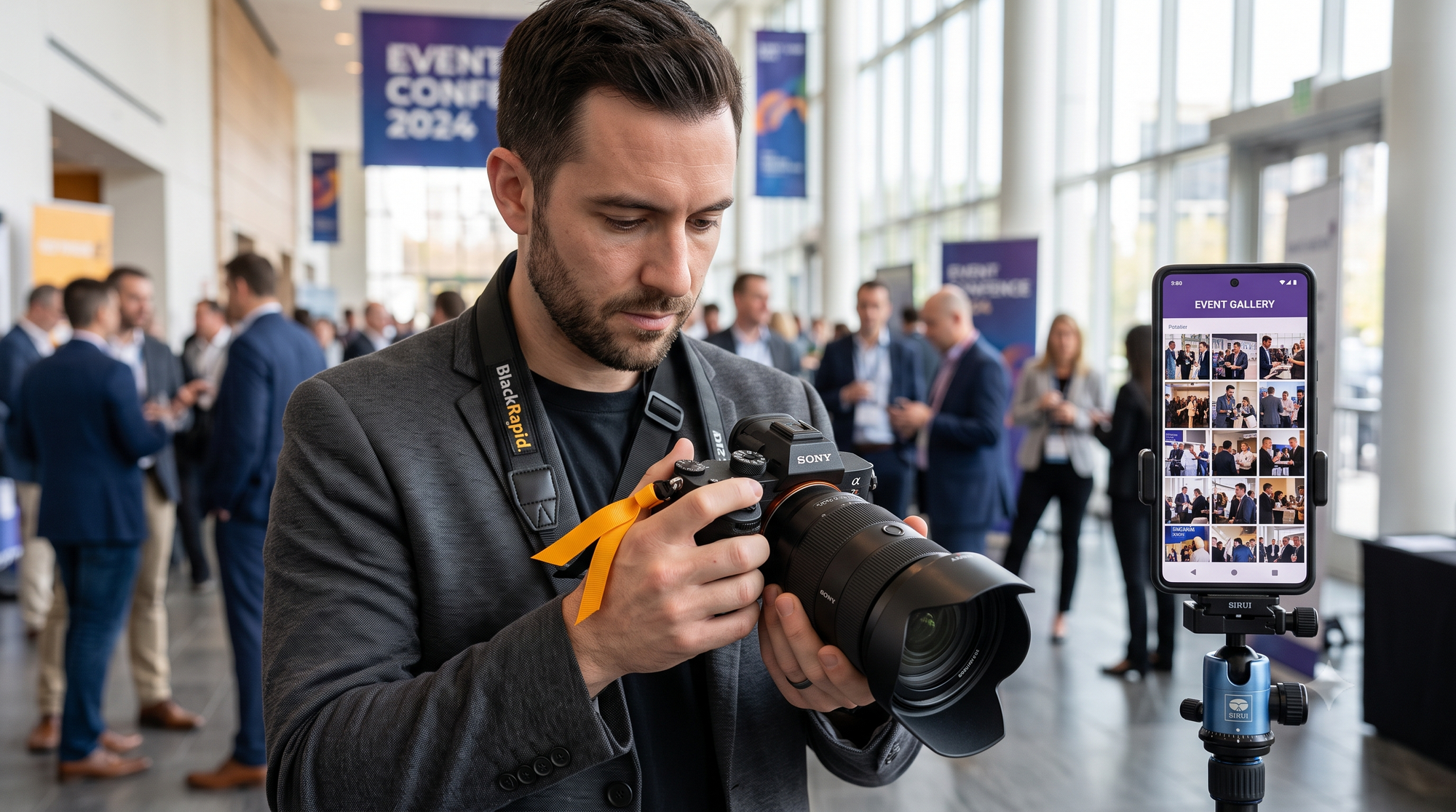
Operating a multi-photographer roster at enterprise-scale activations, conferences, and high-end weddings introduces immediate technical friction. When five shooters operate independently across a floor, variations in hardware firmware, lens coatings, and sensor filtration generate erratic color deviations. These visual discrepancies break narrative flow, multiplying post-production review cycles and stalling project sign-offs.
Why Real-Time AI-First Delivery Platforms Demand a Shift to Pre-Capture Calibration
Next-generation live delivery pipelines ingest, process, and distribute visual media within seconds of the shutter releasing. When downstream workflows rely on instant facial recognition and on-site distribution, relying on "fixing it in RAW" collapses. Pre-capture discipline is now an operational mandate: camera-to-cloud workflows require absolute chromatic parity at the point of ingestion.
Eliminating Color Drift Across Raw Ingestion Channels to Compress Time-to-Deliver (TTD) Metrics
Chromatic drift across independent ingestion channels forces batch correction overhead onto field operations. By synchronizing all active bodies to a fixed operational baseline, studios eliminate corrective review stages, compressing Time-to-Deliver (TTD) from days to minutes while safeguarding visual consistency across every customer touchpoint.
The Science of Color Consistency in Real-Time AI Delivery Ecosystems
Algorithmic Vulnerabilities to Color Fluctuations and Kelvin Flutter
How Shifting Tint Profiles Alter Facial Mid-Tones and Disrupt Localized Vector Indexing Precision
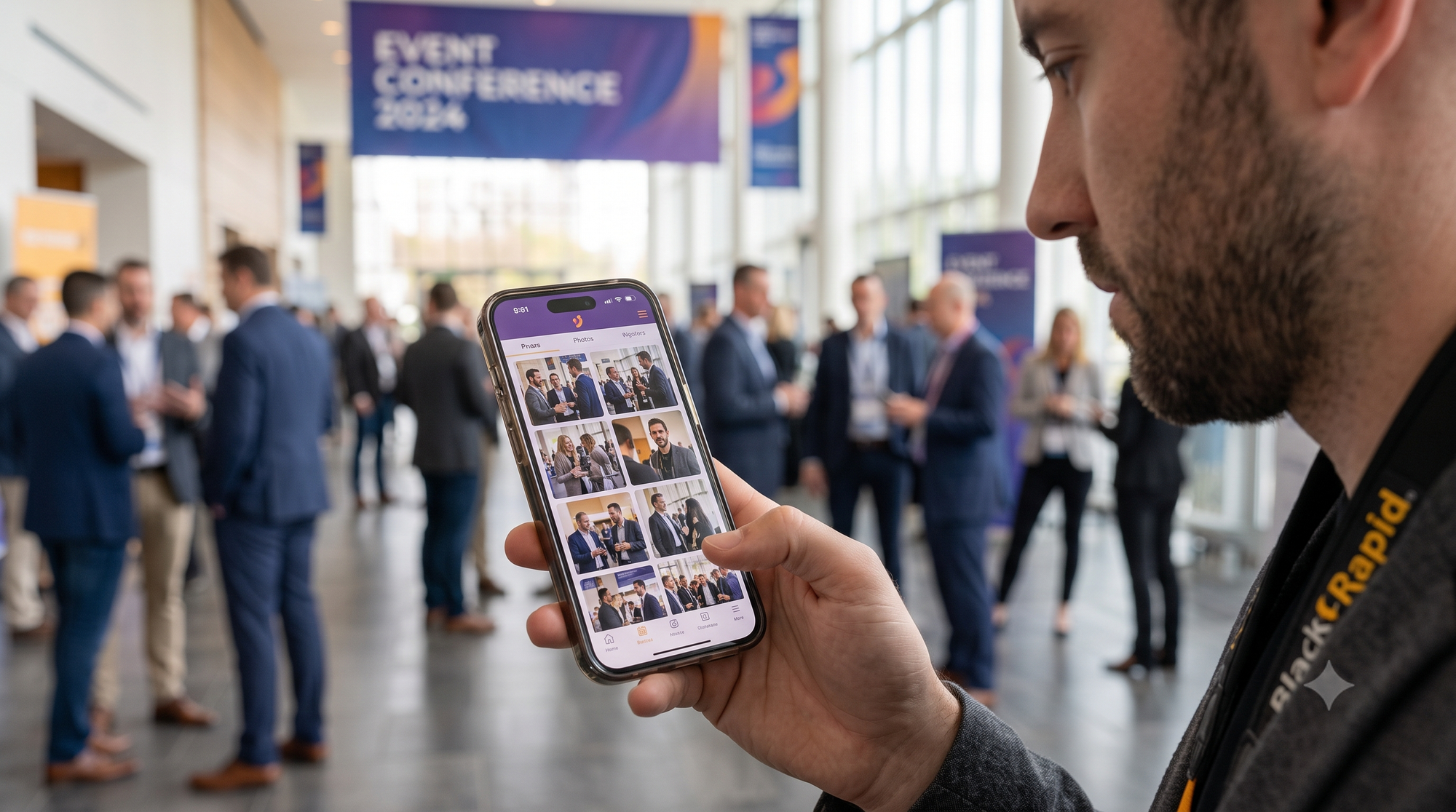
Modern computer vision models detect individuals by constructing mathematical vector embeddings derived from facial geometry and localized luminance levels. Dynamic tint shifts along the green-magenta axis alter skin mid-tones, changing the underlying pixel value matrices. These chromatic anomalies distort confidence scores, causing matching algorithms to miss target profiles in live-indexed galleries.
Why Color Anomalies Cause Machine Learning Models to Fail-Safe and Slow Down Processing Speeds
When real-time computer vision engines encounter erratic chromatic transitions within sequential frames of the same subject, system confidence drops below automated verification thresholds. The platform triggers computationally expensive secondary passes to verify identity, spiking server latency, exhausting compute budgets, and throttling live pipeline performance.
The Compounding Cost of Batch Color Grading Bottlenecks
Quantifying the Revenue Drain of Post-Event Correction Loops Delaying Live Gallery Deployment
Manual color correction loops consume margin. Every hour production teams spend reconciling disparate look-up tables (LUTs) across mixed-chassis event assets inflates labor costs. For high-volume studios, these post-production hours erode the operational margins built into fixed-bid corporate and wedding contracts.
How Missing the Peak Guest Emotional Attention Window Suppresses Impulse Purchase Intent
Guest engagement follows a steep decay curve. Attendees are most inclined to share and purchase professional photographs while still on-site, immersed in the energy of the event. Delaying access by even four hours to correct chromatic drift drops impulse print orders, digital downloads, and organic social visibility by up to 70%.
Chromatic Uniformity as an Enterprise Brand Mandate
Why Premium Corporate Activations and Planners Enforce Strict Visual Consistency Over Media Assets
Enterprise sponsors and agency producers audit delivered event streams against precise brand identity manuals. Visual inconsistencies—such as corporate backdrops fluctuating between teal and navy—violate brand governance agreements and undermine client confidence in the agency of record.
Protecting Creative Studio Reputation by Delivering Flawless Cohesive Timelines Under Press Cycles
Real-time PR distributions demand immediate editorial syndication. Newsdesks and wire agencies reject assets requiring selective exposure balancing or tint cleanup. Delivering a clean, visually unified timeline establishes an agency as an enterprise-ready production partner.
The 5500K Standard: Establishing an Absolute Baseline on Ground
The Physics Behind the Mid-Day Spectral Profile as a Reliable Hardware Baseline
The 5500K standard represents direct mid-day sunlight (CIE Illuminant D55) and matches the native balanced discharge of modern Xenon flashtubes and pro-grade LED arrays. Because its spectral power distribution remains well-balanced across the visible electromagnetic spectrum, 5500K serves as a stable mathematical anchor for image sensors, minimizing the sensor-level signal amplification that causes digital noise.
Calibrating Sensors to a Consistent Color Temperature Anchor Prior to Shutter Release
Locking all cameras directly to 5500K prior to deployment establishes a standardized baseline across every body on the floor. This eliminates mid-event white balance hunting and ensures uniform sensor calibration from the very first frame.
Overcoming Auto White Balance (AWB) Sensor Discrepancies
Why Disparate Camera Sensors Reading the Same Ambient Environment Produce Wildly Varied Tones
Auto White Balance (AWB) engines are inherently non-deterministic. AWB calculates color temperature by analyzing luminance averages and dominant frame colors. If Shooter A captures a wide architectural frame while Shooter B frames a close portrait against velvet drapery, their respective AWB systems will calculate divergent Kelvin values for the same ambient light.
Eliminating Dynamic White Balance Fluttering Across Secondary and Candid Roster Shooters
Dynamic AWB shifts across secondary shooters create erratic chronological timelines. Locking sensors to an absolute value eliminates Kelvin flutter entirely, ensuring identical chromatic response across every photographer on the team.
Managing Complex Mixed Ambient Environments
Deploying a Fixed Kelvin Baseline in Venues with Competing Interior and Tungsten Lighting Setups
In mixed lighting environments featuring competing 3200K tungsten fixtures, 4000K commercial halogens, and 6000K architectural displays, dynamic white balance algorithms fail. By establishing an event photography lighting standard rooted at 5500K, speedlights and strobes act as dominant key lights, naturally converting ambient fixtures into warm, deliberate background accents.
Safeguarding Raw Highlight and Shadow Details from Uncontrolled Electronic Shifts
Uncalibrated AWB systems introduce extreme digital shifts in low-light environments, frequently pushing the blue or magenta channels into clipping territory. An absolute 5500K baseline preserves raw highlight and shadow channel data, protecting dynamic range for direct rendering.
Practical Execution Strategy for Multi-Camera White Balance Calibration
Synchronizing Multi-Shooter Sensor Arrays Natively
Aligning Primary, Secondary, and Candid Shooters to an Identical Target Profile Before Execution
Team-wide alignment starts in pre-production. Before deploying across the floor, gather all primary, secondary, and roaming shooters to perform a synchronized hardware audit. Ensure that color spaces (sRGB for real-time web delivery, Adobe RGB for print streams) and picture profiles remain unified across all active bodies.
Setting Custom In-Camera Presets to Standardize Real-Time Bulk Upload Color Management
Modern camera chassis feature assignable memory banks (e.g., Sony 1/2/3, Canon C1/C2/C3). Lock 5500K, a standard color profile, and matching custom offsets into these custom banks. Standardizing these profiles allows field operators to reset their hardware instantly with a physical dial turn, laying the groundwork for clean bulk upload color management.
Utilizing Physical Gray Cards and Incident Light Meters
Bypassing Post-Production Guesswork via Definitive, On-Site Physical Technical References
Prior to the first shot, place an 18% physical neutral gray card under the venue’s calibrated key lighting. Direct all roster shooters to capture a frame filling the central metering zone. This reference frame serves as an unambiguous verification anchor for downstream delivery systems.
Calibrating the Exposure Triangle and Contrast Baselines and Ensuring Chromatic Balance Up Front
Use an incident light meter to measure physical illuminance at key positions rather than relying solely on reflective in-camera meters. Establishing balanced baseline exposures across all shooters guarantees consistent contrast ratios and color values across diverse angles.
Aligning Across Conflicting Cross-Brand Camera Architectures
Compensating for the Structural Color Matrix Tuning Variations Between Sony, Canon, and Nikon Sensors
Cross-brand productions frequently suffer from distinct sensor signatures: Sony sensors often lean slightly cool/green, Canon profiles skew toward warm/magenta, and Nikon platforms deliver punchy amber mid-tones. Unchecked, this architectural variance disrupts gallery uniformity.
Hardcoding Custom Fine-Tuning Offsets Natively in the Chassis to Secure Uniform Raw Output
To achieve true multi camera white balance calibration, calibrate custom white balance shifts within each camera body. Using an 18% gray card shot under a 5500K reference light source:
- Shift Sony bodies by A2-B1 (Amber +2, Blue -1) or adjust tint profiles directly.
- Shift Canon bodies along the G1-G2 (Green) axis to balance out excess magenta.
- Test and lock these offsets natively to ensure consistent output across mixed fleets.
Streamlining Bulk Upload Color Management Natively Inside Kamero
Managing High-Volume Stream Ingestion Fields
Organizing Multi-Shooter Inputs Into Automated, Clean Hierarchical Directory Trees
During high-capacity events, hundreds of images enter the production environment every minute. Kamero automates file organization by mapping incoming streams into hierarchical directory trees categorized by shooter, stage, and timestamp, preventing data collisions and missing assets.
Processing Heavy, Uncompressed Original Assets Up to 50 MB Without Ingestion Queue Latency
Legacy upload solutions buckle under enterprise file sizes. Kamero’s stream-optimized pipelines process full-resolution assets up to 50 MB without queuing delays, rendering high-resolution previews instantly while safely parking original files in long-term cloud storage.
Processing Color Spaces via Kam-Sync Tech Infrastructure
How Our Real-Time Camera-to-Cloud Engine Ingests Visual Data While Preserving Color Integrity
The proprietary Kam-Sync engine bridges hardware outputs and cloud distribution systems without destructive profile conversion. By maintaining raw color profiles through ingestion, Kam-Sync preserves calibrated dynamic range across the pipeline.
Preventing Image Degradation and Caching Glitches During Wireless Transmission Over Local 5G/Wi-Fi
Unstable venue networks frequently cause partial packet loss and color degradation in unoptimized tools. Kam-Sync employs robust data-check protocols and progressive transmission layers, ensuring visual fidelity remains intact even over fluctuating local 5G or congested Wi-Fi bands.
Automated Metadata Reading and Background Processing
Tapping Direct Metadata Tags to Route and Smart-Cluster Assets Without Inducing System Stalls
Kamero actively parses EXIF and IPTC data streams during ingestion. By instantly extracting camera model, lens metadata, and custom color profiles, the platform routes files directly to appropriate processing clusters without system latency.
Running High-Performance Identification Tasks and Rendering Custom Feeds Instantly
With standardized color calibration locked in at the hardware level, Kamero's facial recognition engines process visitor identification models at peak velocity, serving personalized, color-balanced feeds to guests in seconds.
Preserving Consistent Wedding Photo Editing Tones for High-End Studios
Delivering Uniform Multi-Day Luxury Wedding Timelines
Ensuring Seamless Chromatic Transitions Across Shifting Venue Backdrops and Lighting Climates
Luxury multi-day weddings transition through challenging environments—from sunlit outdoor lawns to candlelit ballrooms and dynamic performance stages. Deploying strict hardware color protocols across all roster shooters ensures that the final gallery delivers consistent wedding photo editing tones, maintaining a cohesive editorial aesthetic across thousands of delivered frames.
Protecting Skin Tone Accuracy Across Diverse Demographics
Eradicating Erratic Green and Magenta Color Casts to Safeguard Natural Skin Profiles in Crowded Frames
Erratic color casts ruin portraits and skin tones. Calibrating hardware sensors natively removes fluctuating green and magenta tints, ensuring that diverse skin profiles are accurately and flatteringly preserved across mixed group settings.
Accelerating Print Album Selection and Digital Store Conversions
How Uniform Color Spaces Eliminate Consumer Choice Paralysis and Drive High In-App Order Values
When images of the same subject vary wildly in tint and color temperature, consumers hesitate, caught in decision paralysis over inconsistent edits. Cohesive, color-uniform galleries remove this friction, encouraging faster selections and driving higher average order values across print collections.
Maximizing Post-Event Revenue by Automating Checkouts for Print SKUs and Selfie-Driven Bundles
Delivering color-accurate images to client devices in real time drives immediate commercial momentum. Kamero connects verified faces directly to instant in-app checkouts for premium print packages, photo books, and digital bundles, capitalizing on peak guest excitement.
Adapting Color Standards Across Varied Event Archetypes
Corporate Brand Activations and Major Trade Shows
Keeping Strict Brand Asset Guidelines and Corporate Identity Colors Accurate Across Multi-Booth Configs
Trade shows and brand activations present difficult lighting conditions, combining low-profile architectural lighting with vibrant, high-output LED video walls. Locking an absolute Kelvin baseline prevents brand logos, executive apparel, and promotional signage from shifting off-brand on public PR feeds.
High-Volume Marathons, Sports, and Festivals
Navigating Harsh, Continually Shifting Outdoor Conditions via an Event Photography Lighting Standard
Outdoor athletic events challenge sensors with shifting direct sun, intermittent cloud cover, and reflective track surfaces. Adopting an event photography lighting standard that pairs locked camera baselines with portable speedlight fills ensures uniform exposure and color balance for thousands of passing participants.
Educational Institutions, Schools, and Annual Campus Fests
Establishing Uniform, Pro-Grade Visual Foundations to Populate Secure Student Profile Galleries
Campus-wide graduations and dynamic sports events require fast, secure distribution to thousands of families. Enforcing baseline color standards across your photography team guarantees that student profile galleries retain balanced, pro-grade tones across every session.
Architectural Comparison: Kamero vs. Legacy Media Platforms
To scale high-volume operations efficiently, studios need infrastructure that replaces fragmented multi-SaaS software stacks, manual FTP steps, and disconnected editing plugins with an integrated, compliant workflow.
Kamero vs. Traditional Presentation Galleries (Pixieset / SmugMug)
Modern Workflow Integration: Real-Time Stream-Based Hardware FTP Ingestion vs. Outdated Post-Event Bulk Links
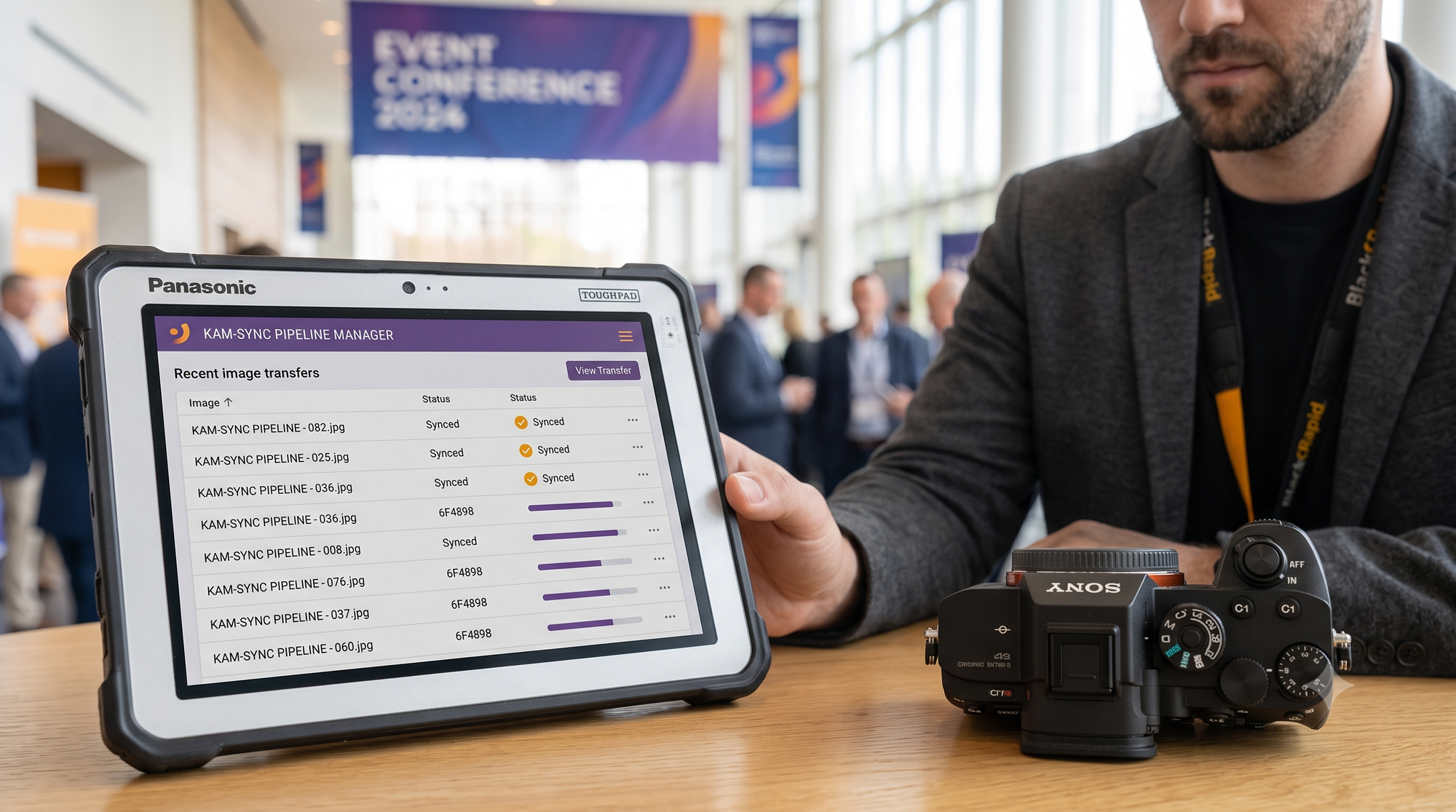
Traditional presentation tools rely on manual, post-event desktop upload workflows that introduce significant friction. Kamero leverages stream-based hardware FTP pipelines, ingesting full-resolution files directly from cameras over 5G and local networks to make content instantly available while shooting continues.
Kamero vs. Automated Chat-Bot Systems (Samaro.ai / Kwikpic)
Premium Data Security: Encrypted Event-Scoped Private Vector Sandboxing vs. Unsecured Public Messaging Chat Bots
Consumer-facing chat tools use unsecured third-party messaging networks that expose private client assets. Kamero processes biometric and visual data inside private, event-scoped vector sandboxes. This provides bank-grade data security and compliance without compromising delivery speed.
Kamero vs. Basic Storage Links (Fotoowl / Memzo)
Active Business Portfolios: Integrated White-Label Custom Color Themes and Inbound Lead-Gen Forms vs. Simple Technical Upload Buffers
Basic cloud links act as passive storage buckets that add little value to a photography business. Kamero transforms event galleries into active business engines, offering customizable white-label domains, brand-aligned color themes, and built-in lead generation tools designed to secure new bookings.
Step-by-Step Technical Playbook: Configuring a Color-Safe Pipeline
To establish an end-to-end color-safe pipeline, implement this standard operating procedure across all active personnel and hardware:
- Hardcoding Kelvin Lockdowns and Custom Matrix Offsets Across All Roster Bodies
- Access the main menu on every camera body and set White Balance mode to a manual 5500K.
- Input calibrated fine-tuning offsets (e.g., A2/B1 for Sony, G1 for Canon) based on baseline gray card tests.
- Save these settings to custom memory presets (e.g., C1/C2) on every chassis to lock the baseline.
- Configuring Real-Time Wireless Network Pipelines and Kam-Sync Profiles
- Establish local high-speed connectivity using dedicated 5G mobile hotspots or managed venue Wi-Fi access points.
- Configure native camera FTP/FTPS transmission protocols to target your dedicated Kam-Sync ingestion server.
- Set transfer rules to stream full-size JPEGs or lightweight original RAW files continuously upon shutter release.
- Monitoring Live Upload Feeds via the Central Platform Management Dashboard
- Launch the centralized Kamero management dashboard on a field production tablet or workstation.
- Monitor incoming media streams to verify steady transfer rates and review vector indexing success markers.
- Validate initial test frames against reference profiles to confirm chromatic unity across all active photographers before the main event begins.
Do not let mismatched camera sensors and extended post-production delays slow down your delivery pipeline. Implement a definitive event photography lighting standard across your team to unlock flawless bulk upload color management. Deliver a premium, instantly accessible experience to your clients by launching your next event with Kamero today.
[Start Your Free Trial with Kamero] | [Book an Enterprise Demo] | [Follow Us on Instagram]
About Pavani Nagar
Hey there! Pavani Nagar, a Digital Marketing Manager who enjoys working on content, social media, and figuring out what makes people pay attention. I like trying new ideas, learning along the way, and keeping things simple.