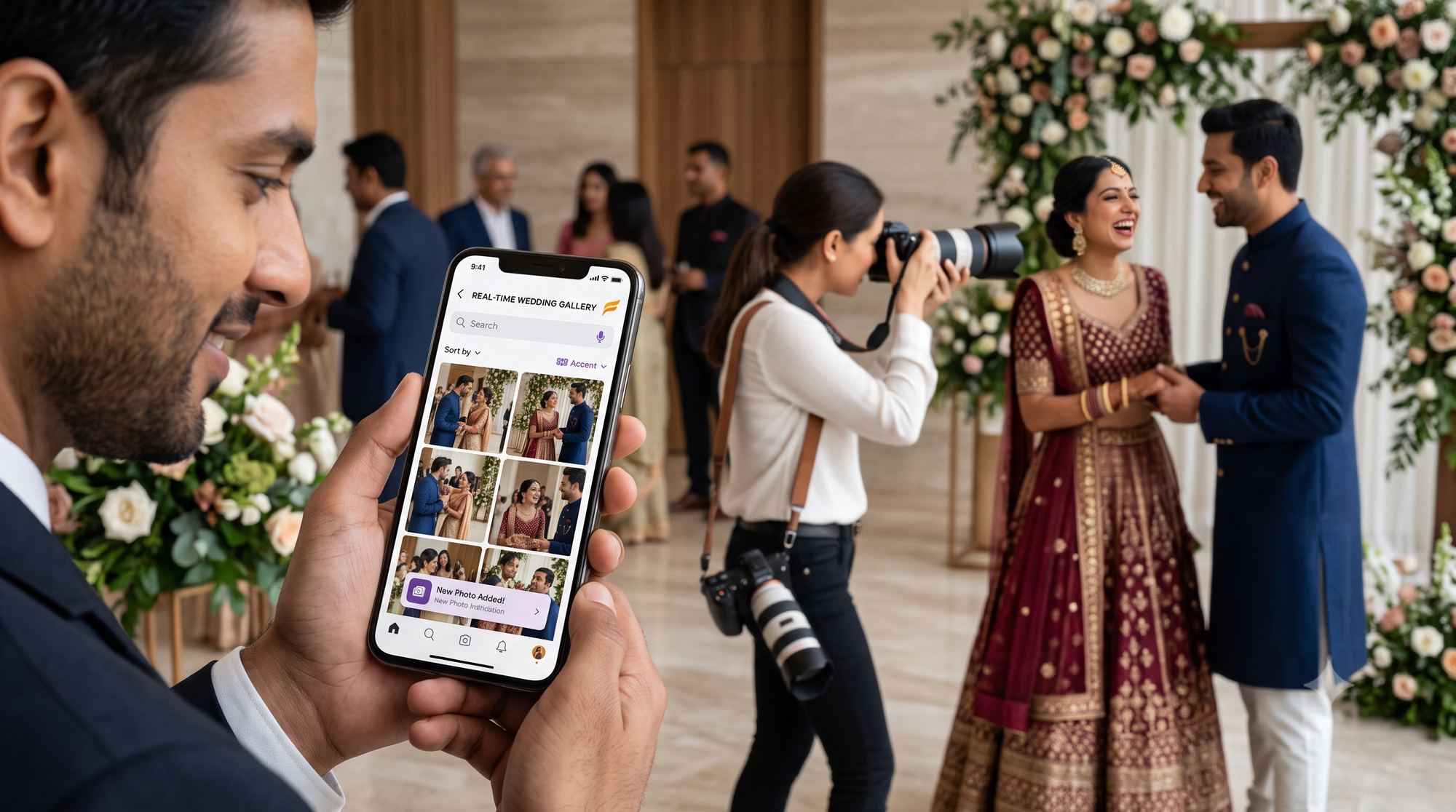
Introduction: The Historical Shift from Physical Media to Real-Time Cloud Infrastructure
The custom engraved wooden box with a matching USB flash drive once represented the pinnacle of high-end wedding photography client delivery. Studios considered branded physical media a necessary tactile artifact—a tangible deliverable that ostensibly justified premium package pricing.
Why Relying on Flash Drives in 2026 Signals Antiquated Operations
Physical hardware handoffs are an operational bottleneck. Modern high-volume consumers operate in a mobile-native, frictionless ecosystem dominated by immediate digital access. When a client receives a physical drive, they face immediate compatibility barriers: modern laptops lack USB-A ports, mobile devices require unwieldy dongles, and smart TVs struggle with unindexed directory trees. Handing a client a USB drive no longer communicates luxury; it signals an operational pipeline that has failed to modernize.
The Negative Impact of Physical Delivery Deadlocks on Studio Cash Flow
Physical deliverables tie your final accounts receivable to slow fulfillment logistics. When the final payment milestone is pegged to shipping a physical keepsake box, your cash flow is held hostage by print labs, courier delays, and hardware sourcing. Extended delivery intervals directly elongate the billing cycle, keeping operational capital locked up while overhead expenses continue to mount.
Deconstructing the Peak-Season Post-Production Administrative Bottleneck
During peak wedding seasons, a studio shooting three to five events per weekend quickly accumulates hundreds of gigabytes of raw data. The physical ingestion, manual selection, exporting, drive formatting, directory structuring, and postal dispatching create compounding administrative debt. Every hour spent packing parcel boxes or re-formatting corrupted flash drives is an unbillable operational drain that prevents creative teams from shooting, marketing, and scaling their enterprise.
The Friction of Physical Media: Why USB Drives are Bottlenecking Studio Growth
Studios scaling past 30 to 50 events annually cannot sustain hardware-bound fulfillment models. The financial and reputational drag of physical media manifests across every stage of client post-production.
The Hidden Operational Overhead of Hardware Sourcing and Shipping
The unit economics of physical media extend far beyond the raw cost of NAND flash memory.
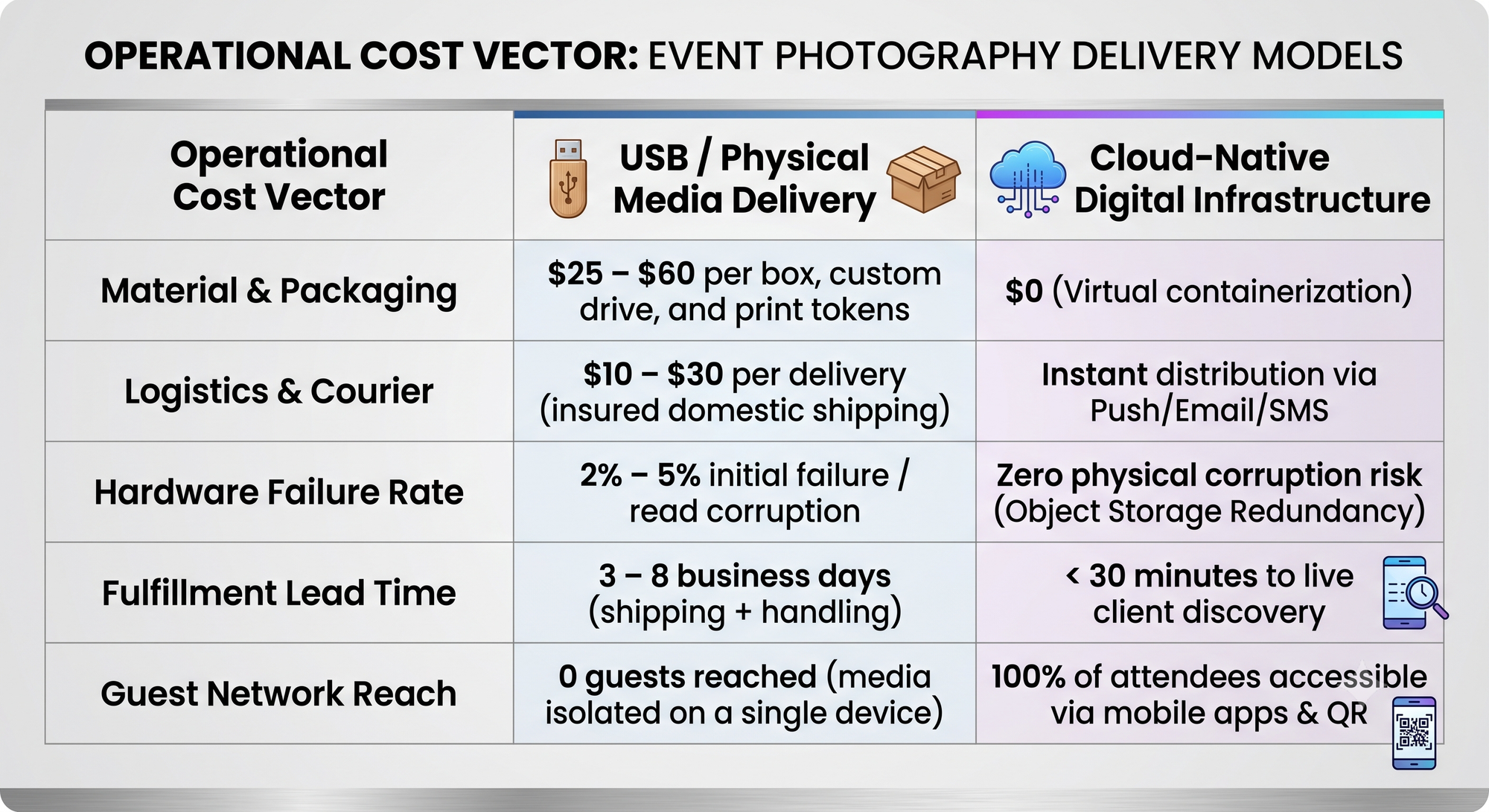
The Costs of Custom Presentation Boxes and Local Courier Coordination
Sourcing premium presentation boxes demands inventory forecasting, warehouse storage, and manual assembly. Courier transit introduces variables completely outside the studio's control: missed deliveries, postal strikes, broken presentation glass, and package theft. When a delivery goes missing, the studio absorbs both the financial cost of replacement and the reputational hit of an anxious bride waiting for her photos.
Managing the Recurring Vulnerability of Hardware Corruptions and Device Incompatibility
Flash storage is susceptible to static corruption, file system read errors (exFAT vs. NTFS vs. APFS compatibility issues), and mechanical wear. Studio managers routinely waste client-success hours troubleshooting basic file access problems with non-technical clients who simply cannot open nested .raw or high-resolution .jpeg directories on their smartphones.
How Post-Shoot Administrative Delays Kill Studio Word-of-Mouth
Client delight is tied directly to the speed of emotional validation. The highest emotional equity exists while the event's excitement is still fresh.
The Direct Correlation Between Extended Turnaround Times and Lost Client Referral Capital
When a studio takes six to twelve weeks to deliver wedding media, the couple's initial excitement fades. By the time the files arrive on a physical drive, the wedding is distant history. The organic impulse to share visual assets, post immediate reviews, and recommend the vendor to newly engaged friends has decayed.
Missing the Peak Emotional Window: Why a 60-Day Delivery Lag Destroys Guest Re-engagement
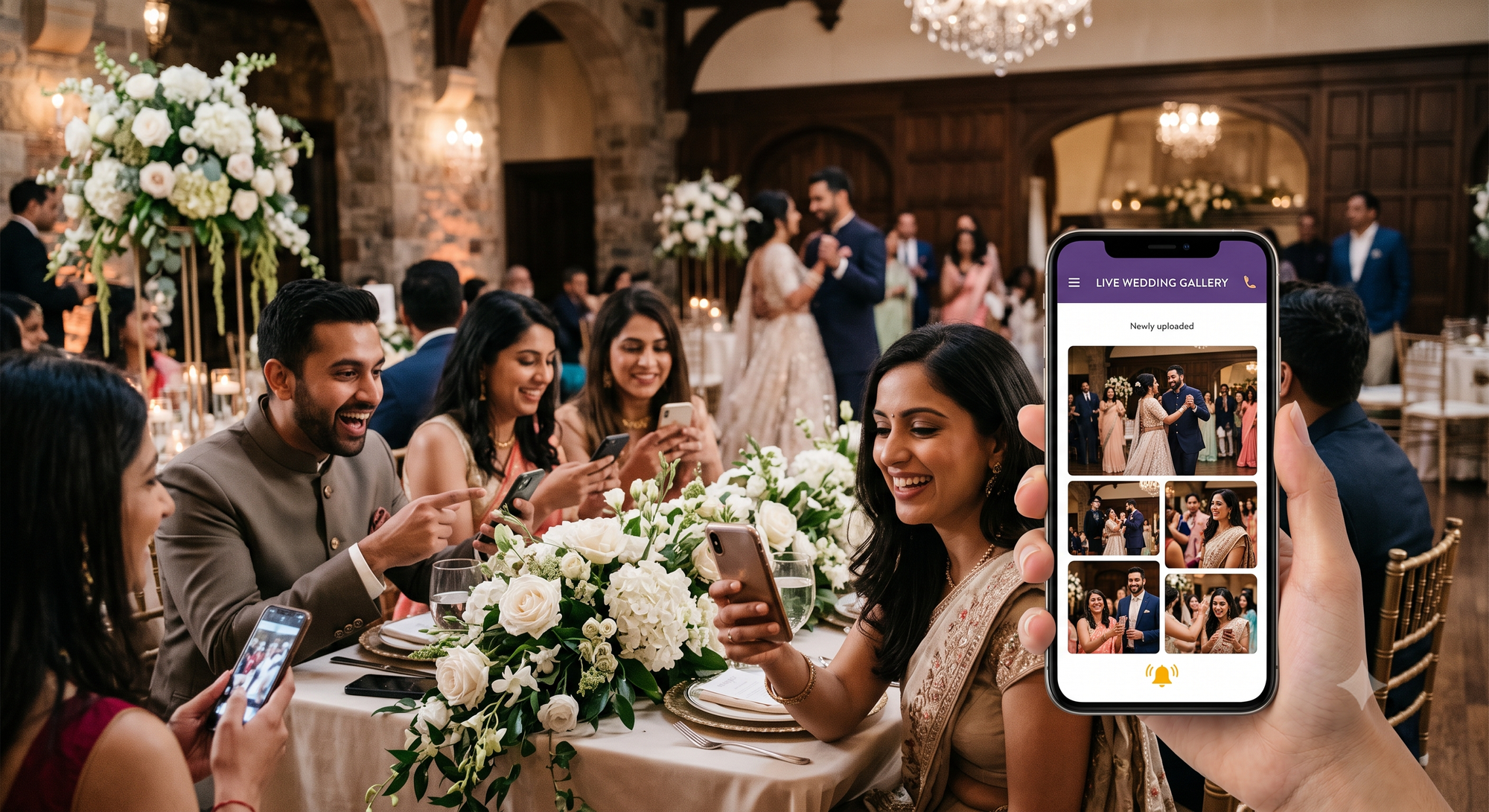
Event guests represent an underutilized pool of qualified leads. During the 48 hours following a reception, hundreds of high-intent attendees actively seek event images to post across their personal social networks. A 60-day physical delivery lag completely misses this peak engagement window, severing the viral loop that feeds premium referral pipelines.
The Archival Liability Problem of Local Hard Drives
Relying on a decentralized mosaic of physical office drives and mailed USB sticks introduces serious data protection risks.
Exposure to Unrecoverable Data Loss Under Local Physical Archiving Models
Physical hard drives degrade. If a client misplaces their single USB drive three months after their wedding and the studio suffers a localized RAID failure or silent sector corruption, the liability falls squarely on the photographer. Managing long-term client retention through loose hardware drives is an operational hazard.
Shifting to Secure, Compression-Free Cloud Storage Capable of Handling 50 MB Raw Assets
Modern enterprise studios safeguard raw digital assets using immutable, multi-region cloud object storage. Platforms built for professional workflows can ingest uncompressed assets—handling large individual file payloads up to 50 MB without lossy compression. This guarantees absolute pixel fidelity, automated geo-redundancy, and rapid recovery from any terminal on earth.
The Anatomy of Instant Delivery: Moving from Links to Native Mobile Ecosystems
The initial response to physical media was the desktop web-link gallery. However, legacy web links fall short for mobile-first users.
Why Desktop-Centric Gallery Links Fail the Mobile-First Wedding Guest
Over 85% of wedding guest media consumption occurs directly on mobile devices. Legacy desktop gallery portals force mobile users into browser tabs that mimic outdated desktop layouts.
How Legacy Web-Link Configurations Throttle Real-Time, On-the-Go Social Media Sharing
Web galleries require users to navigate cumbersome browser viewports, enter credentials on mobile keyboards, manually scroll through thousands of mixed unculled assets, pinch-to-zoom, and execute manual zip-extractions to save a single image to their device's local camera roll. This friction kills social sharing and lowers guest engagement.
Broken Mobile Browser Viewports: The Friction of Sluggish Image Lazy-Loading and Caching Errors
Responsive web wrappers often fail under weak cellular conditions. When hundreds of guests attempt to load high-resolution image grids over a congested venue network, unoptimized web scripts crash mobile browsers, drop active image caches, and cause rendering lag.
Real-Time vs. Post-Event Ingestion: The New Competitive Standard
High-end studios are adopting real-time data streaming architectures that turn delivery into a live event feature.
Streaming Curated Media Assets Natively on Ground to Capitalize on High User Intent
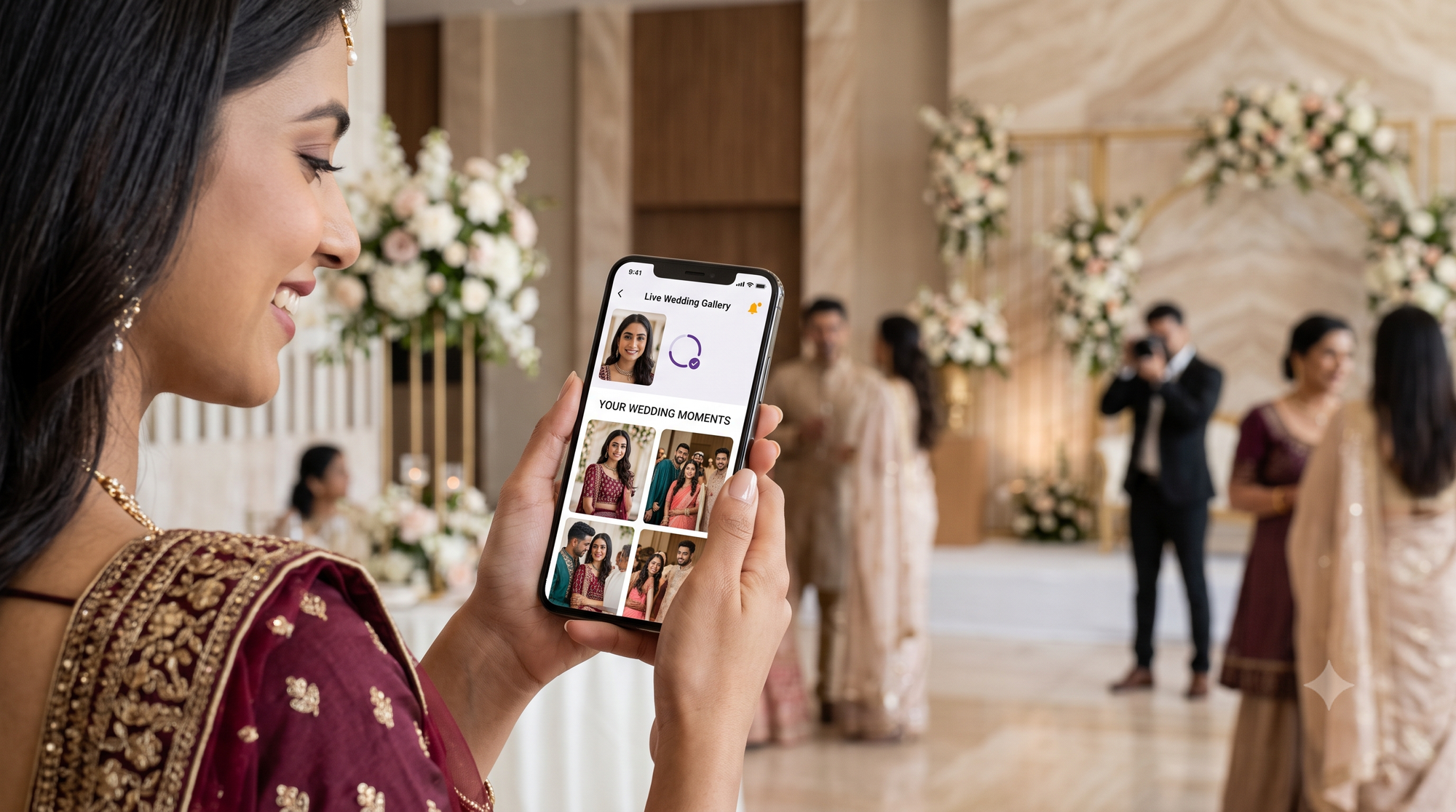
Using digital photo delivery software, studios can stream curated, color-corrected visual assets to an active event gallery while the reception is still underway. Guests view polished highlights before the final dance ends, capitalizing on their excitement and willingness to share the experience.
Elevating the Client Experience by Shrinking Delivery Turnaround from Weeks to Minutes
Eliminating the long delivery wait reshapes the client's perception of value. When a studio proves it can achieve a time-to-deliver (TTD) of under 30 minutes for real-time highlights, its positioning shifts from a basic vendor to an elite, high-tech production partner.
Re-Engineering the Guest Experience at Scale Using Automated Cloud Architectures
An automated cloud delivery pipeline transforms media from a passive, post-event handoff into a dynamic, interactive digital hub.
Transforming a Passive Web URL into an Interactive B2B Media Hub
By moving media delivery inside a unified mobile ecosystem, the gallery serves multiple operational needs: it securely collects guest contact profiles, manages access permissions, coordinates lead generation, and automates print selections within a single, cohesive brand environment.
Leveraging Multi-User Concurrency to Surface Target Visual Assets to Hundreds of Viewers Simultaneously
Cloud-native infrastructure easily scales to handle large traffic surges. When hundreds of wedding guests access the system simultaneously, scalable cloud clusters dynamically distribute compute resources. This ensures fast image delivery, rapid indexing, and smooth streaming playback across all active client connections.
Technical Framework: Engineering Near Real-Time Camera-to-Cloud Sync
To master how to deliver event photos instantly, modern studios must integrate hardware tethering with automated cloud backends.
Setting Up Wireless FTP Tethering Over 5G and Local Venue Networks
Modern mirrorless bodies (Sony, Canon, Nikon, Fujifilm) feature integrated hardware FTP clients. Photographers no longer need physical tethering cables or midway ingestion stations to start syncing files.
Eliminating Physical Data Cables and Card Ingestion Steps at the Point of Capture
Through proprietary cloud engines like Kam-Sync, camera systems establish an encrypted background connection to a remote cloud bucket over cellular 5G hotspots or local venue Wi-Fi. The photographer shoots without physical encumbrances, while images immediately mirror to processing servers the instant the shutter closes.
Tapping Direct FTP Engines Inside Modern Mirrorless Chassis to Stream to Cloud Storage Buckets
By mapping the camera’s internal FTP transfer rules directly to a studio's cloud-allocated ingestion pipeline, files stream continuously in the background without locking the camera buffer. Even high-speed bursts upload steadily as secondary processor threads process the network transfer.
Managing Heavy File Payloads and Streaming Background Indexing
Moving large media payloads directly from the camera edge to cloud systems requires resilient data pipelines.
How Enterprise-Grade Platforms Prevent Queue Back-Pressure and Server Drops During Multi-Cam Shoots
Multi-camera wedding shoots generate thousands of simultaneous file payloads. Professional delivery engines use smart queue management and load-balanced edge servers to absorb network spikes. If a local cellular connection drops, the camera-to-cloud engine pauses the queue and automatically resumes transfers without dropping files once connectivity returns.
Maintaining Steady Wireless Photo Transfer Performance Under Congested Network Conditions
Edge processing optimizes transfer speeds by prioritizing web-optimized companion files or embedded camera preview assets for instant processing, while full-resolution original assets upload continuously in a secondary background queue.
The 5500K Calibration Rule for Multi-Camera Pipelines
In live capture-to-cloud workflows, capture consistency is critical.
Preserving Uniform Color Space and Layout Consistency Across Varied Roster Shooters
To run an automated live-delivery pipeline without manual post-production steps for every single image, lead photographers enforce standardized color baselines across all associate bodies. Setting synchronized Kelvin color temperatures (e.g., establishing a 5500K daylight baseline or unified ambient values) paired with custom in-camera Picture Profiles ensures consistent output across every camera on the floor.
Standardizing Bulk Automated Ingestion Paths Before Images Land in Active Customer Streams
Standardized in-camera presets allow the cloud ingestion engine to apply global studio color profiles automatically upon receipt, publishing clean, branded visual streams straight to the customer's feed without manual human intervention.
Scaling Guest Engagement via Event-Scoped AI Face-Matching
Finding photos in a massive, unsorted gallery of several thousand wedding images is often a frustrating experience. Event-scoped AI face-matching is the best way to share wedding photos with guests without requiring them to scroll through thousands of unrelated photos.
How Vector-Based Face Recognition Eliminates Manual Culling Frustration
Instead of manually sorting photos into individual sub-folders or asking guests to check every album image, clients simply upload a single registration selfie.
The Mathematics of Event-Scoped Facial Vectors Natively Grouping Bulk Deliveries
The AI engine generates a mathematical vector map of key facial landmarks and searches against the event's isolated image database, delivering a precision-matched personal gallery with over 99% accuracy in seconds.
Enhancing User Trust by Indexing Unique Matches Natively Without Scraping Public Networks
Unlike generic social platforms, enterprise platforms like Kamero isolate biometric vector calculations strictly within the specific event container. Biometric vectors are never aggregated, matched across external databases, or shared with third-party networks, ensuring complete client privacy and data compliance.
Non-FR Fallbacks: Maintaining Automated Photo Delivery via Branded QR Codes
For events with strict privacy preferences, platforms must offer accessible, non-biometric delivery paths.
Constructing Frictionless, Privacy-First Onboarding Alternatives Using Smart QR Standees
Studios can deploy branded QR code stands across venue entry points and reception tables. Guests scan the code to instantly launch the event's progressive web app or native application shell, unlocking curated general highlights without requiring facial recognition scans.
Deploying Scoped Access Keys for Event Attendees Who Opt Out of Facial Matching
Granular privacy controls allow organizers to generate scoped access keys or folder-specific PINs. This enables guests who prefer not to use facial recognition to easily access traditional, chronologically sorted albums.
Segregating Master Admin Rights for the Couple from Restricted Guest View Channels
A cloud delivery architecture allows studios to create tiered access roles. The couple retains master administrative access—granting them private visibility over the entire media library, uncurated collections, and shortlisting tools—while guests are assigned restricted view channels limited to public moments and their own matched photos.
Protecting High-Profile and Celebrity Clients with Custom Permission Parameters
For VIP and celebrity clients, studios can disable public indexing entirely, implement strict PIN access, and deploy one-time password (OTP) verification requirements to ensure zero unauthorized media access.
Monetization and Workflows: Shortening the Print Album Selection Cycle
Instant delivery accelerates traditional post-production workflows and unlocks new, recurring monetization channels for the studio.
In-App Selection Mechanics: Speeding Up Client Proofing and Final Payouts
The slowest phase of wedding photography delivery is traditionally client proofing for print albums.
Eliminating Months of Client Inertia with Direct, One-Click Selection Favoriting Portals
Couples often take months to comb through thousands of loose files to pick their favorite print images. Native mobile apps simplify this by allowing couples to easily favorite, filter, and approve selections directly from their phones with a single click.
Compressing the Production Loop to Clear Final Milestone Invoices and Studio Billing Cycles
Streamlining the client proofing process helps studios close out album production milestones in days rather than months. This accelerates project sign-off and allows studios to collect final milestone payments faster.
Setting Up In-Gallery Digital and Print E-Commerce Stores
Cloud galleries turn passive viewing experiences into active, revenue-generating storefronts.
Activating Localized, Seamless Checkouts Supporting "Per Photo" and "All My Photos via Selfie" Packs
Integrated gallery storefronts enable flexible point-of-sale pricing models. Studios can monetize high guest intent by offering individual digital downloads, bundled "All My Photos" AI packages, or complete event packages through integrated checkouts (supporting Stripe, Razorpay, and regional gateways).
Maximizing Post-Event Revenue by Automating Fulfillment and Shipping for Print SKUs Natively
Automating digital print fulfillment allows studios to generate passive, high-margin revenue from family members and guests without requiring extra administrative work from the studio team.
Dynamic Watermarking Frameworks: Protecting Studio Copyrights Post-Upload
Protecting visual assets is critical when distributing high-resolution images to large audiences.
Deploying Real-Time, Adjust-on-the-Fly Dual-Logo Layouts to Neutralize Mobile Screenshot Theft
Static watermarks embedded directly into raw files permanently alter the original media. Modern cloud platforms apply dynamic watermark layers on the fly. Studios can customize opacity, positioning, and scale across thousands of images instantly, protecting against unauthorized screenshots while preserving clean original master files for print.
Seamlessly Blending Photographer Branding with Corporate or Event-Sponsor Visual Footprints
Dual-logo features allow photographers to position their studio watermark alongside the couple's personal monogram or a corporate sponsor's branding. This delivers clean, professional co-branding while maximizing brand exposure whenever images are shared on social media.
The Kamero Advantage: Why We Replaced the Fragmented Tool Stack
For years, studios were forced to stitch together separate software subscriptions to run their delivery pipelines:
- Cloud File Storage (Dropbox / Google Drive)
- Proofing & Favoriting Software
- Web Gallery Delivery (Pixieset / SmugMug)
- Automated Face Indexing Plugins
- Payment Gateways & E-Commerce Tools
- Messaging Systems (WhatsApp / SMS Outlets)
This fragmented stack introduces operational overhead, high software subscription costs, and fragile handoffs between disconnected apps. Kameroeliminates this tool sprawl by unifying real-time ingestion, vector-based AI face matching, interactive client proofing, dynamic watermarking, and integrated e-commerce into a single platform .
Kamero vs. Legacy Global Portals (Pixieset / SmugMug)
Traditional global portals were built for desktop-era web browsing.
Mobile Native Containerization: True App Enclosures vs. Responsive Web Browser Traps
Legacy platforms rely on basic responsive mobile web links that frequently encounter caching issues and slow mobile performance. Kamero provides native iOS and Android app environments alongside responsive web access. This guarantees smooth scrolling performance, offline image caching, automated push notifications, and a professional, app-driven client experience.
Kamero vs. Local Competitors (Samaro.ai / Kwikpic)
Entry-level instant delivery tools often rely on third-party messaging bots or simple web links.
Enterprise Administration: Professional-Grade Print Proofing and Tiered Privacy Controls vs. Generic Chatbots
Chatbot-driven delivery channels fragment your media assets and lack the structured presentation required for high-end wedding clients. Kamero provides complete studio management infrastructure: structured album proofing, custom PIN privacy hierarchies, role-based admin controls, and complete high-resolution media management designed specifically for professional studios.
Kamero vs. Fotoowl / Memzo
Basic AI upload tools provide image delivery, but often fail to help studios grow their underlying business.
Core Business Infrastructure: White-Label Custom Color Themes and Active Lead-Gen Profiles vs. Basic Technical Upload Interfaces
Kamero functions as a complete business engine. With customizable brand color themes, integrated social portfolios, custom booking inquiry forms, and automated lead capture, every gallery distributed to guests actively drives direct inquiries and future bookings back to the studio.
Modern Client Delivery Implementation: A Practical Studio Checklist
Transitioning your studio from physical media to an automated, cloud-native delivery pipeline is straightforward:
- 1. Modernize Client Contracts and Milestones
- Update photography service agreements to define real-time digital delivery as your primary deliverable.
- Establish clear proofing timelines and link final milestone sign-offs to your in-app selection workflows[cite: 3].
- 2. Establish Direct In-Camera FTP Pipelines
- Configure your camera's internal FTP settings to sync with your Kam-Sync cloud ingestion endpoint.
- Set standardized Kelvin color temperatures and synchronized picture profiles across all primary and associate camera bodies.
- 3. Deploy Frictionless On-Ground Guest Access
- Generate custom-branded event QR codes directly within your admin dashboard.
- Place branded display standees at venue reception tables and entrances to drive instant guest onboarding.
- 4. Configure Studio Branding & Dynamic Watermarks
- Apply your studio's custom brand colors, portfolio links, and inquiry channels across your mobile gallery interface.
- Configure dynamic dual-watermarks to automatically protect real-time uploads and showcase co-branded partner assets[cite: 2].
- 5. Activate In-Gallery E-Commerce Stores
- Connect your preferred payment gateway (Stripe, Razorpay, etc.) within your billing settings[cite: 2].
- Configure price lists for individual digital downloads, full event photo bundles, and automated physical print fulfillments[cite: 2].
Embracing the Future of Professional Media Distribution
The USB drive was an important bridge during photography's transition from darkroom prints to the digital era. But today, relying on physical hardware creates unnecessary administrative bottlenecks, increases operational overhead, and isolates your work from the mobile-first clients and guests who drive your business forward.
Upgrading to an automated, cloud-native delivery workflow modernizes your studio operations: it cuts turnaround times from months to minutes, streamlines proofing approvals, turns guests into active referral leads, and builds a faster, more scalable, and more profitable business.
Eliminate physical delivery bottlenecks and clear your post-production backlogs forever. Start your free trial with Kamero, Book a Live Demo with our workflow specialists, or Follow us on Instagram to see how top modern studios run their delivery pipelines

About Mayank Oraon
Hi, I’m Mayank, an MBA student exploring the business world with a focus on operations, supply chain, and product strategy (aka the parts of a business that keep things from quietly falling apart).
I’m interested in understanding how systems actually run behind the scenes- and why they sometimes don’t. I also enjoy simplifying complex ideas - partly because it helps others, and partly because if I can’t explain it simply, I probably didn’t understand it in the first place (which is a humbling but effective feedback loop).