Introduction: The Friction Point of Discovery in B2B Expo Media Deluges
Trade shows and exhibitions have evolved into highly immersive experiences. Attendees engage with keynote speakers, networking sessions, product demonstrations, booth activations, awards ceremonies, and countless branded experiences throughout the event.
As a result, event organizers and photography teams generate thousands—sometimes tens of thousands—of images within a matter of hours.
The challenge is no longer capturing the content.
The challenge is helping attendees find the content that matters to them.
Traditional gallery systems force visitors to scroll endlessly through large image collections, manually searching for photographs that may or may not include them. This process creates frustration, reduces engagement, and significantly lowers the value of event photography investments.
Modern events require a different approach.
AI photo matching is rapidly transforming how attendees interact with event galleries by replacing manual searching with personalized discovery experiences. Instead of browsing thousands of files, attendees can instantly access the images most relevant to them.
The result is faster engagement, stronger brand recall, and a significantly improved attendee experience.
The Hidden Cost of Search Fatigue
Many event galleries unintentionally create friction for the very people they are designed to serve.
Why Traditional Galleries Fail at Scale
A large exhibition can easily generate 20,000 to 50,000 photographs across multiple event zones.
Attendees often receive a gallery link and are expected to locate their images manually. While this approach may seem simple, it quickly becomes overwhelming.
Users must search through hundreds of pages, navigate multiple folders, and spend significant time identifying relevant content. Most eventually abandon the process before finding what they need.
The larger the event becomes, the worse the experience gets.
The Impact on Event Engagement
Photography is often one of the last touchpoints between an event and its attendees.
When participants cannot easily locate their photos, engagement drops sharply. Images remain undiscovered, social sharing decreases, and opportunities for post-event interaction are lost.
For organizers, this means reduced brand visibility and weaker long-term attendee engagement.
The problem is not content quality.
The problem is content discoverability.
The Rise of AI Photo Matching at Trade Shows
AI-powered discovery systems are changing the way event media is consumed.
Delivering Personalized Experiences at Scale
Modern attendees expect personalization.
Streaming platforms recommend content. Social media platforms personalize feeds. E-commerce websites customize product suggestions.
Event galleries are beginning to follow the same trend.
AI photo matching allows attendees to instantly access relevant images without browsing large directories. Rather than searching through thousands of files, users receive a personalized collection of event photos associated with them.
This transforms photo discovery from a tedious task into an engaging experience.
Moving Beyond Public Gallery Dumps
Traditional image repositories often operate like digital filing cabinets.
Everyone receives access to the same content regardless of relevance.
AI-powered galleries take a fundamentally different approach. Instead of exposing entire collections, they deliver curated experiences tailored to individual attendees.
This improves usability while also strengthening privacy controls.
Building Closed-Loop AI Discovery Systems
Behind every seamless attendee experience is a sophisticated matching infrastructure.
Event-Scoped Matching Environments
Modern AI matching systems operate within isolated event environments.
Instead of maintaining a universal database across unrelated projects, matching activities remain confined to a specific event or exhibition. This helps ensure that participant discovery occurs only within the intended gallery environment.
The result is stronger privacy protection and greater operational control.
Supporting Large-Scale Matching Workloads
Trade shows often involve thousands of attendees and tens of thousands of images.
Matching systems must therefore process large volumes of visual data while maintaining responsiveness. Efficient architecture allows organizers to deliver personalized experiences even during periods of heavy activity.
This scalability becomes increasingly important for multi-day exhibitions and international conferences.
The Selfie-Based Discovery Experience
One of the most significant advancements in event photography is the shift toward self-service discovery.
Enabling Opt-In Personalization
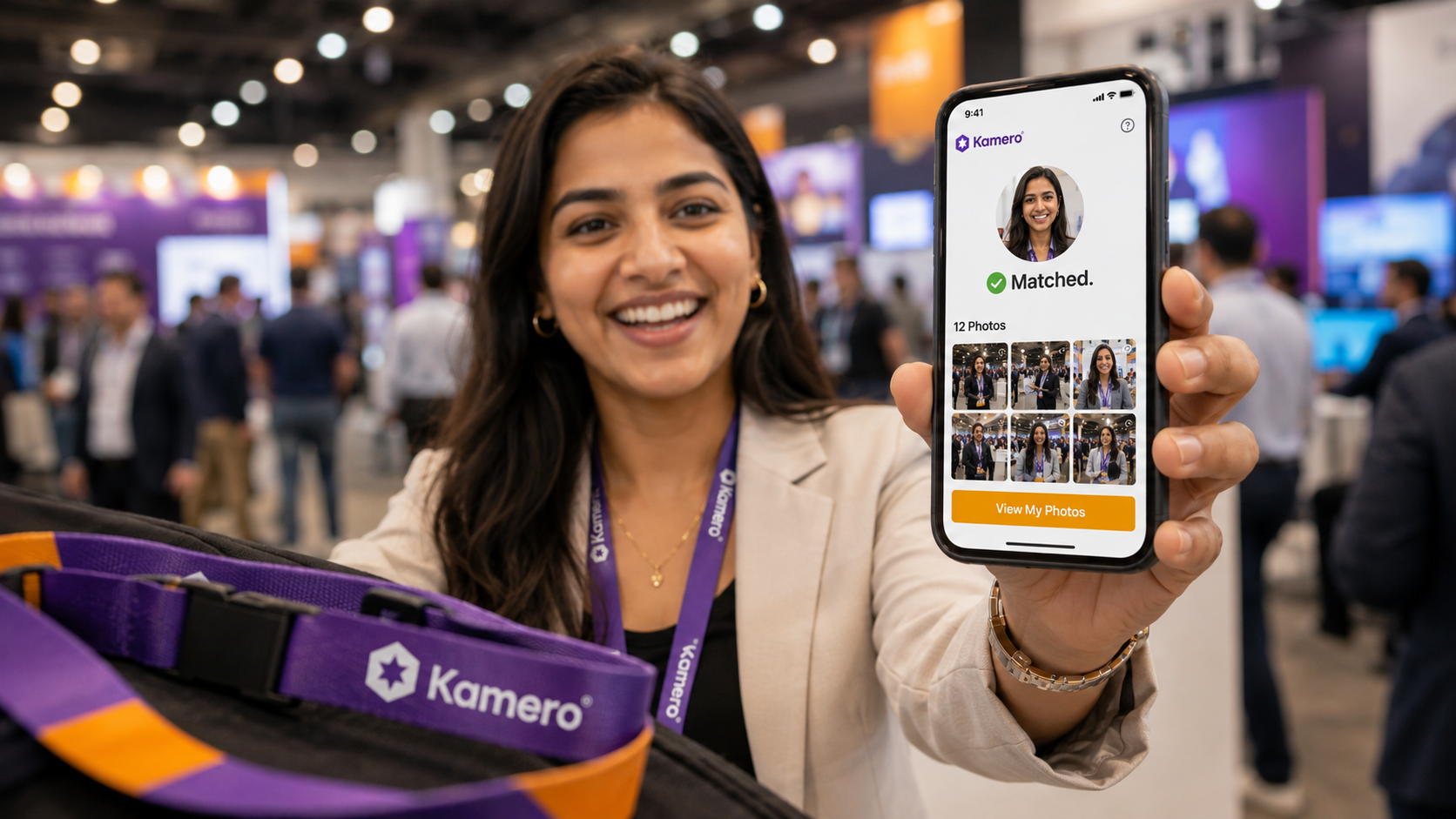
Rather than requiring attendees to manually search for themselves, modern systems allow participants to upload a simple selfie.
The platform then identifies relevant images and presents them automatically.
This approach significantly reduces friction while preserving attendee control over the discovery process.
The experience becomes faster, more intuitive, and far more engaging.
Eliminating Manual Identification Work
Historically, event teams often spent substantial time organizing, tagging, and categorizing photographs.
AI matching dramatically reduces these requirements.
Attendees can independently discover their content without relying on manual tagging processes or administrative intervention. This improves efficiency for organizers while delivering better outcomes for participants.
Powering High-Speed Discovery Through Real-Time Ingestion
Fast discovery depends on fast content availability.
Moving Beyond Browser-Based Upload Workflows
Many event platforms still rely on traditional upload processes that begin only after photographers transfer files from memory cards.
This introduces delays that can prevent attendees from accessing content while the event is still active.
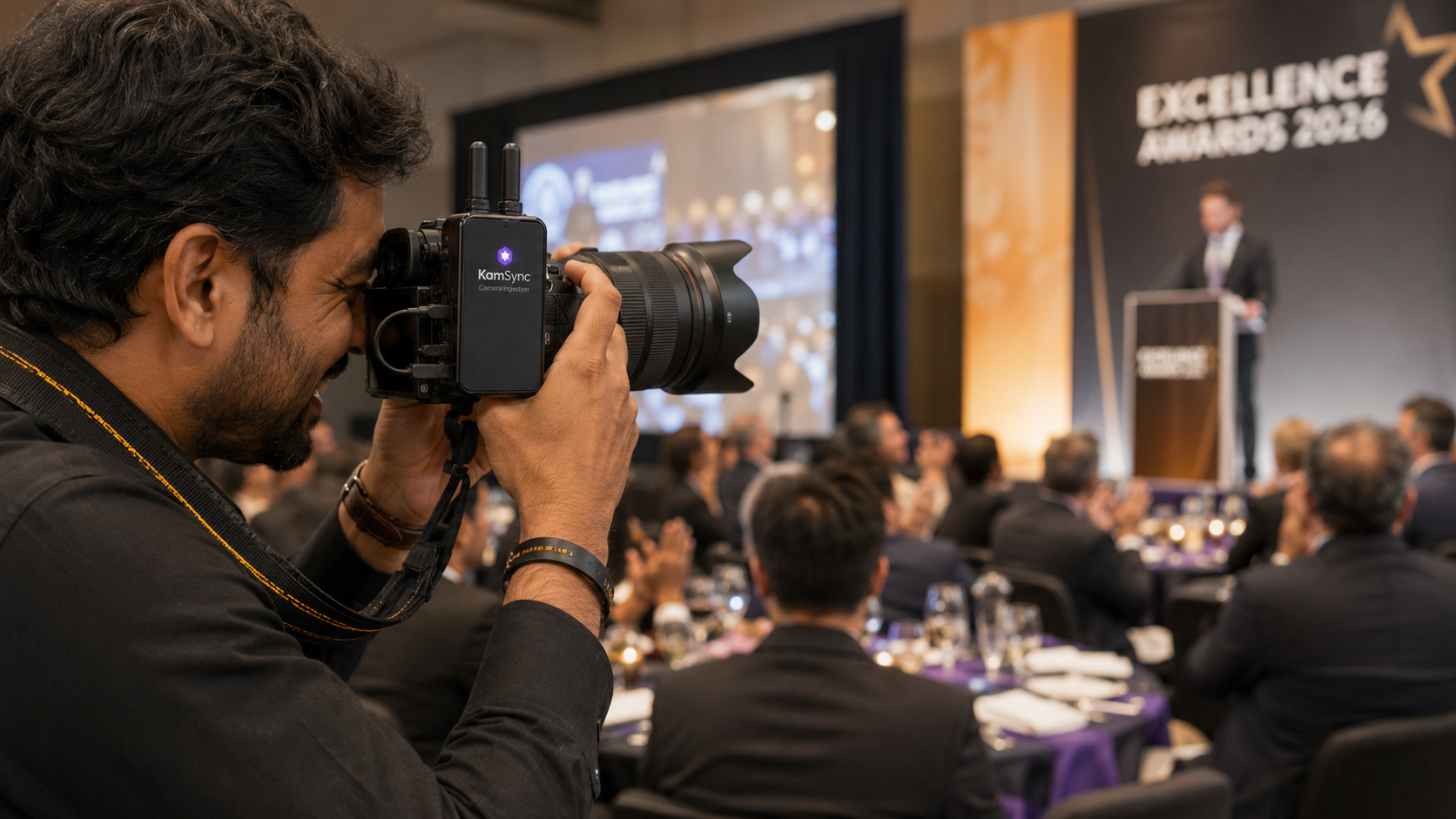
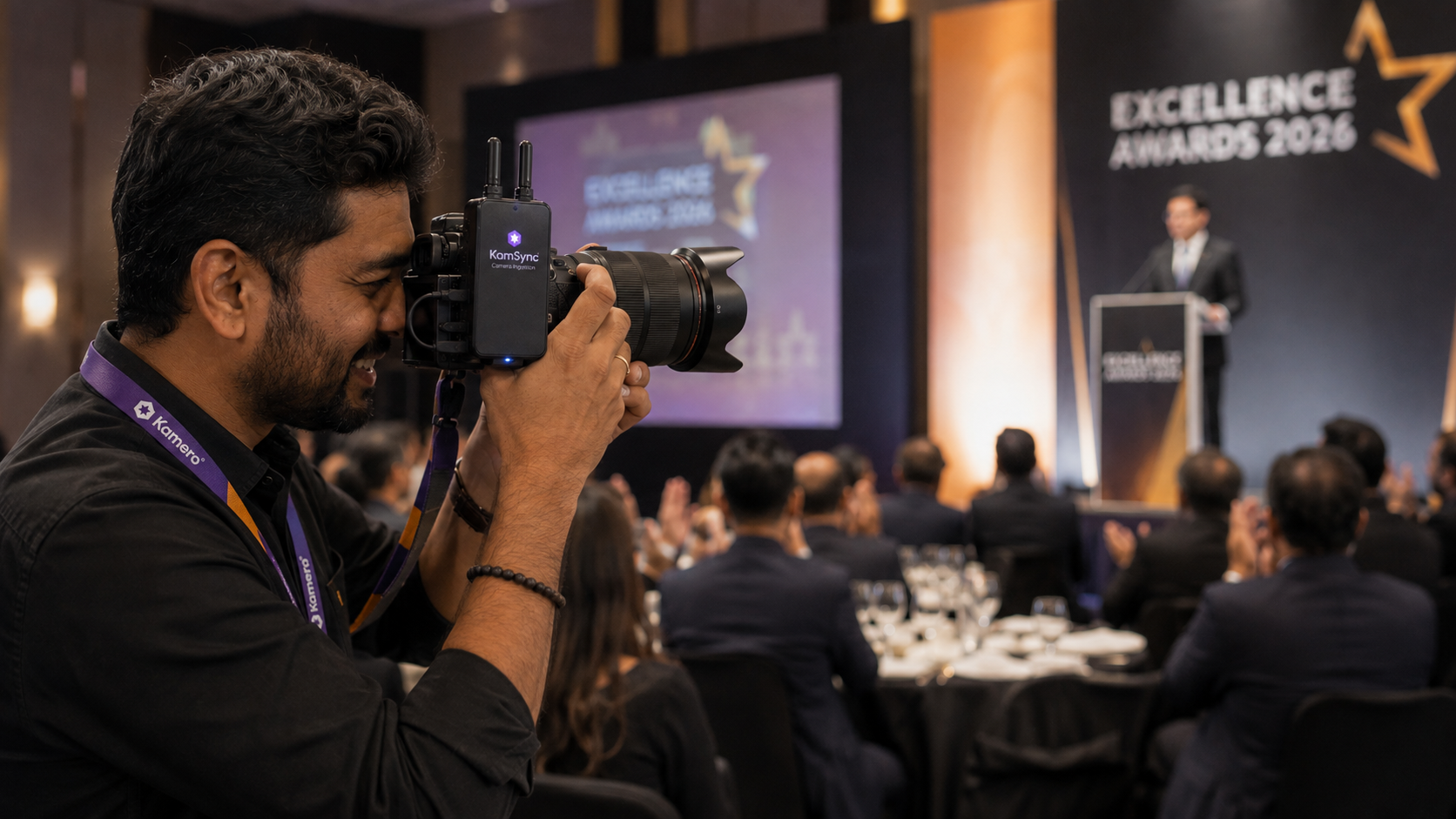
Camera-to-cloud workflows solve this problem by moving images directly from compatible camera systems into centralized cloud environments.
Through Kam-Sync, images can begin processing almost immediately after capture, enabling near real-time discovery experiences.
Managing High-Volume Event Traffic
Large exhibitions place significant demands on content infrastructure.
Thousands of attendees may attempt to access galleries simultaneously while photographers continue uploading new content throughout the event.
Modern platforms must balance ingestion, processing, matching, and delivery workloads without compromising performance.
Achieving this requires infrastructure specifically designed for high-volume event operations.
Governance and Access Control for Enterprise Events
Personalized discovery must be paired with strong governance controls.
Organizing Content Intelligently
Large exhibitions often span multiple halls, stages, exhibitors, sponsors, and activation zones.
Automated directory structures help ensure content remains organized and searchable throughout the event lifecycle. This improves operational efficiency while supporting better attendee experiences.
Maintaining Administrative Oversight
Not every image should become publicly available immediately.
Corporate events frequently require approval processes to verify branding, sponsor requirements, legal considerations, and content quality before publication.
Maker-checker workflows and role-based permissions help maintain governance without introducing unnecessary delays.
The Kamero Advantage: Smart Trade Show Galleries vs. Traditional Image Repositories
Many gallery systems were designed primarily for storage.
Kamero is designed around engagement.
Through Kam-Sync, images move directly from compatible camera systems into cloud environments, eliminating delays associated with manual transfers. AI-powered discovery mechanisms help attendees locate relevant content quickly, while governance controls ensure organizers maintain oversight of the publication process.
Features such as dynamic watermarking, role-based access controls, white-label branding, custom domains, and automated communications workflows create a unified experience that extends beyond simple image sharing.
Instead of forcing attendees to navigate large directories, Kamero transforms galleries into intelligent engagement environments built for modern exhibitions.
Turning Attendee Engagement into Business Value
Personalized discovery creates opportunities that extend beyond convenience.
Transforming Galleries into Lead Generation Channels
Every gallery interaction provides valuable engagement signals.
Registration forms, qualification workflows, content access requests, and attendee behaviors can help organizers gather meaningful first-party data while maintaining compliance requirements.
This enables event galleries to support both engagement and business development objectives.
Strengthening Brand Recall
Attendees are far more likely to remember an event when they can quickly access personalized content.
Custom-branded galleries, professional event experiences, and seamless discovery workflows reinforce positive impressions long after the exhibition concludes.
For organizers and sponsors, this creates additional opportunities to extend event impact.
Creating Revenue Opportunities Through Intelligent Discovery
AI-powered galleries can also support monetization strategies.
Simplifying Digital Commerce
When attendees instantly locate relevant content, purchase intent often increases.
Integrated payment systems can support premium downloads, branded packages, sponsor content, and other digital offerings directly within the gallery experience.
Reducing friction improves both engagement and conversion rates.
Supporting Sustainable Studio Economics
Commercial photography businesses increasingly seek flexible operating models that scale alongside event demand.
Platforms that combine discovery, delivery, engagement, and monetization within a single environment help reduce operational complexity while supporting stronger margins.
This allows studios to focus more on production and less on administrative overhead.
Conclusion: The Future of Event Engagement Is Personalized
The era of static event galleries is ending.
As exhibitions continue generating larger volumes of content, traditional browsing experiences become increasingly ineffective. Attendees no longer want to search through thousands of files to find a handful of relevant images.
They expect personalized experiences.
AI photo matching enables event organizers to replace search fatigue with instant discovery, transforming galleries from passive storage repositories into active engagement platforms.
Organizations that embrace this approach gain advantages in attendee satisfaction, brand visibility, lead generation, and post-event engagement.
For modern exhibitions, the future of event photography is not simply about capturing more images.
It is about helping every attendee instantly find the moments that matter most.
Ready to Eliminate Attendee Search Fatigue?
Book a Demo: Discover how AI-powered photo matching can transform attendee engagement and simplify content discovery at large-scale exhibitions.
Start Your Free Trial: Experience real-time camera-to-cloud delivery, intelligent photo matching, and enterprise-grade gallery management from a single platform.
Follow Kamero on Instagram: See how event organizers, exhibitors, and photography teams are using AI-powered galleries to create memorable attendee experiences.
About Mayank Oraon
Hi, I’m Mayank, an MBA student exploring the business world with a focus on operations, supply chain, and product strategy (aka the parts of a business that keep things from quietly falling apart).
I’m interested in understanding how systems actually run behind the scenes- and why they sometimes don’t. I also enjoy simplifying complex ideas - partly because it helps others, and partly because if I can’t explain it simply, I probably didn’t understand it in the first place (which is a humbling but effective feedback loop).