Introduction: Shifting Corporate Visual Assets from Marketing Overhead to Revenue Engines
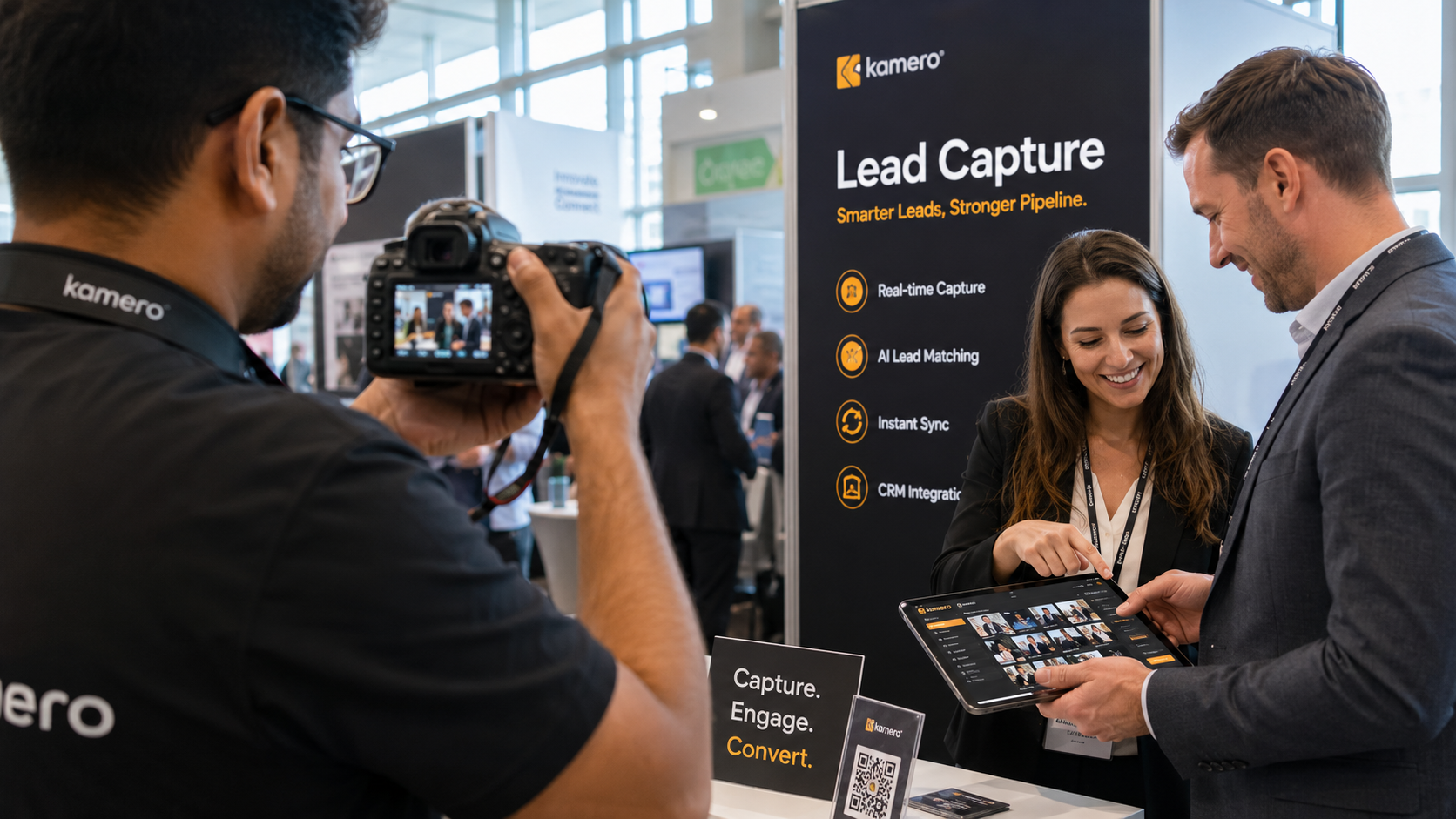
Most exhibition photography is treated as a post-event deliverable. Images are captured, uploaded to a gallery, shared through email links, and eventually forgotten.
This approach overlooks one of the most valuable opportunities available during trade shows and exhibitions: buyer intent.
Attendees actively engage with booths, products, demonstrations, keynote sessions, networking events, and brand activations while they are evaluating vendors and making purchasing decisions. Every interaction creates a potential sales signal.
Yet traditional photography workflows rarely capture that value. Images become static marketing assets rather than active components of the revenue generation process.
Forward-thinking organizers, exhibitors, and commercial photography teams are beginning to rethink this model. By connecting visual engagement directly to CRM systems, event photography can evolve from a marketing expense into a measurable business development engine.
The Lost Pipeline: Why Traditional B2B Expo Photography Fails to Capture Value
The problem is not the content itself. It is what happens after the content is created.
The Cost of Dead Media Libraries
Thousands of high-quality event images are generated at exhibitions every year. Most eventually end up inside shared folders, cloud storage links, or archived galleries.
While these assets may support social media campaigns or event recaps, they rarely contribute directly to lead generation efforts. Valuable attendee engagement data disappears the moment visitors leave the venue.
As a result, organizers lose visibility into which attendees interacted with specific content and which prospects demonstrated genuine interest.
The Missed CRM Opportunity
Trade shows represent one of the highest-intent environments in B2B marketing.
Prospects are actively researching solutions, comparing vendors, evaluating products, and engaging with decision-makers. When photography platforms operate independently from CRM systems, organizations lose the opportunity to connect engagement signals with active sales opportunities.
Every photo view, download, registration, and interaction can provide valuable context for sales teams. Without integration, that intelligence remains invisible.
Embracing the Modern B2B Event Data Capture Ecosystem
The role of event photography is changing.
From Documentation to Demand Generation
Modern exhibition photo platforms can do far more than store images.
They can serve as engagement hubs that capture attendee information, monitor interaction patterns, and provide sales teams with meaningful behavioral insights. Every gallery visit becomes an opportunity to identify interested prospects and enrich customer profiles.
Photography transforms from passive documentation into an active lead generation channel.
Shortening Sales Cycles Through Real-Time Engagement
Speed matters in B2B sales.
The closer follow-up occurs to the original interaction, the higher the likelihood of meaningful engagement. By combining real-time image delivery with structured lead capture, organizations can identify and nurture prospects while event conversations remain fresh.
This allows sales teams to move faster and prioritize leads based on demonstrated engagement rather than assumptions.
Building the Bridge Between Live Galleries and Enterprise CRMs
The effectiveness of a lead-generation workflow depends on how well event engagement data flows into existing business systems.
Connecting Gallery Activity to Sales Pipelines
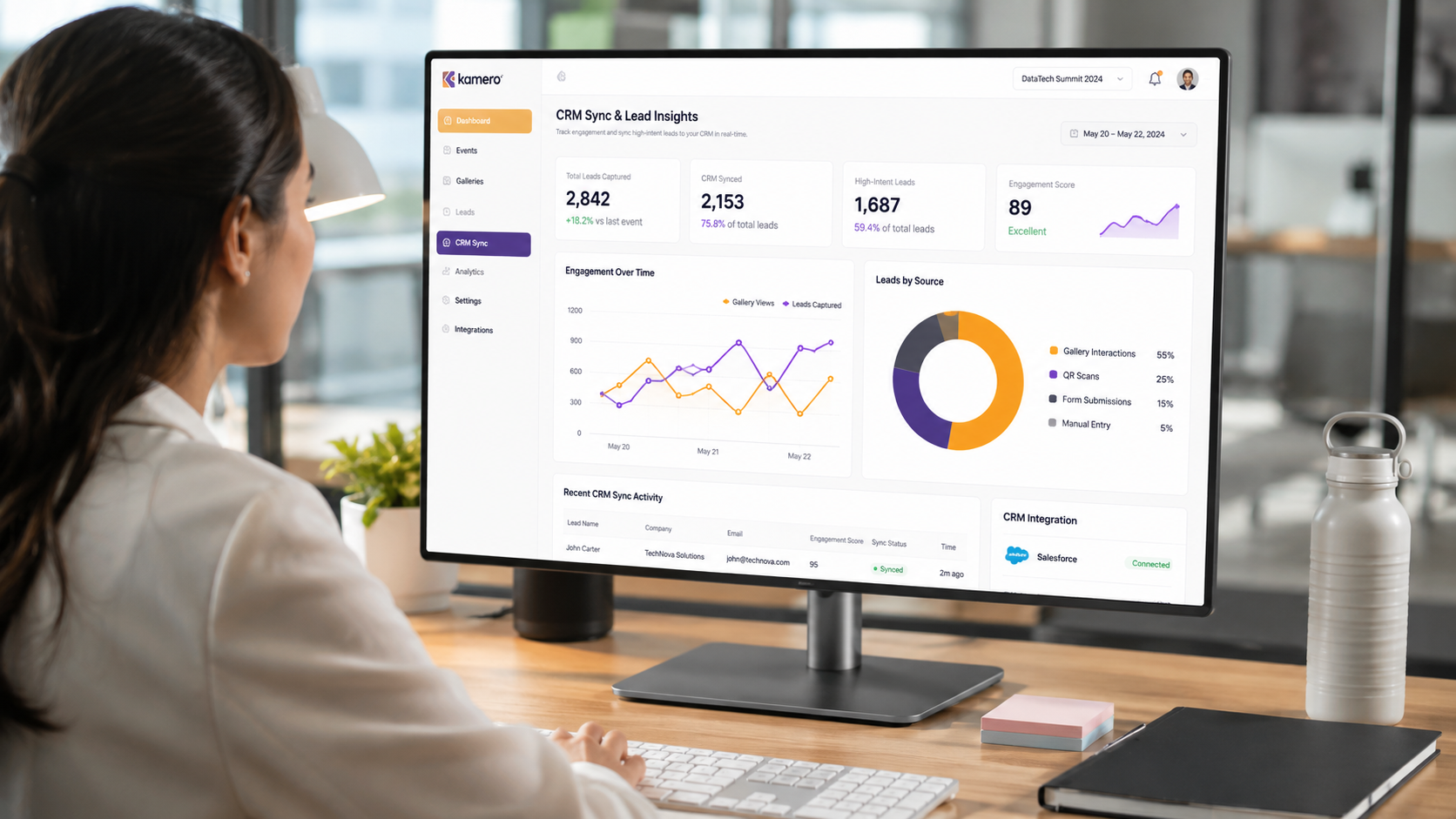
Modern trade show CRM integration workflows allow attendee interactions to be tracked and associated with identifiable prospect records.
When visitors register, access galleries, download assets, or engage with event content, those actions can trigger automated workflows that route information into CRM platforms.
Instead of manually exporting spreadsheets after an event, organizations gain structured lead intelligence in real time.
Creating Actionable Prospect Profiles
Not all attendees demonstrate the same level of intent.
By combining image engagement activity with registration information, organizations can build richer prospect profiles that help sales teams identify high-priority opportunities.
This provides greater visibility into attendee behavior and creates a more informed follow-up process.
Implementing Compliant B2B Lead Capture Workflows
Successful lead generation must balance conversion performance with data governance.
Integrating Data Collection Into the Experience
The most effective lead capture systems feel like a natural part of the attendee journey.
Registration forms, content access gates, branded experiences, and engagement prompts can be embedded directly within the gallery environment. Instead of redirecting visitors through multiple platforms, information is collected within a unified experience.
This reduces friction while improving completion rates.
Improving Data Quality
Lead generation is only valuable when the data is usable.
Structured forms can capture corporate email addresses, company information, job titles, industry segments, and buying authority indicators before granting access to premium content.
This ensures that sales teams receive qualified business data rather than incomplete contact records.
Ingestion Logic at the Edge: Supporting High-Volume Enterprise Events
Lead generation begins with reliable content delivery.
Real-Time Camera-to-Cloud Synchronization
Traditional event workflows require photographers to transfer files manually after an event concludes.
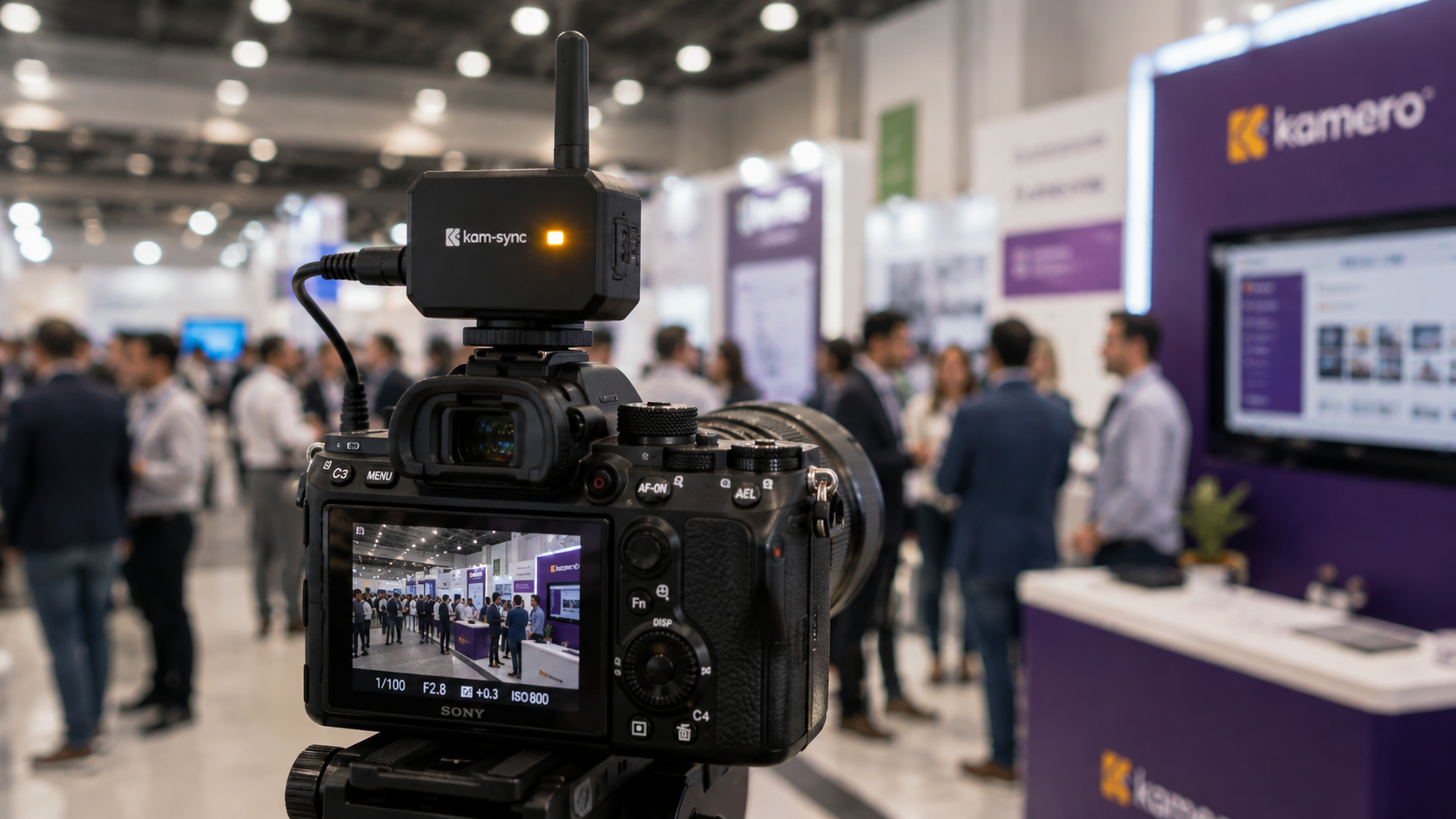
With camera-to-cloud systems such as Kam-Sync, images move directly from compatible cameras into centralized cloud environments while the event is still underway. This enables galleries to become available far sooner and allows attendee engagement to begin immediately.
Real-time delivery creates a significantly larger window for lead capture and prospect nurturing.
Maintaining Performance at Scale
Large exhibitions generate substantial volumes of content.
Enterprise-grade workflows must support simultaneous uploads from multiple photographers while maintaining reliable performance across venue Wi-Fi networks, private connections, and mobile infrastructure.
Consistent ingestion performance ensures galleries remain available even during periods of heavy activity.
Governance and Security for Enterprise Operations
Lead capture requires trust.
Structured Approval Workflows
Not every image should be published immediately.
Enterprise organizations often require approval processes to verify branding, compliance requirements, sponsor commitments, and legal considerations before content becomes publicly accessible.
Maker-checker workflows help ensure that assets are reviewed appropriately while preserving operational speed.
Role-Based Access Control
Different stakeholders require different permissions.
Event organizers, exhibitors, sponsors, photographers, marketing teams, and sales representatives all interact with event data differently. Role-based access controls provide visibility without compromising governance or security.
This is particularly important when galleries contain both media assets and lead-generation data.
The Kamero Advantage: Revenue-Optimized Lead Hubs vs. Static Galleries
Most photo platforms focus on storage and delivery. Kamero is designed to transform visual engagement into measurable business outcomes.
Through Kam-Sync, images can move directly from compatible camera systems into cloud environments without waiting for manual uploads. Real-time galleries allow attendee engagement to begin immediately, while integrated lead capture mechanisms help convert interactions into actionable business intelligence.
Kamero combines image delivery, CRM-ready workflows, lead capture forms, structured permissions, white-label branding, and operational governance within a single platform. Instead of managing multiple disconnected systems, organizers gain a unified environment capable of supporting both content distribution and business development.
For exhibition organizers, exhibitors, and commercial photography studios, this creates a direct connection between event media and revenue generation.
Commercial Optimization: Monetization Beyond Photography
Photography can generate value beyond lead capture alone.
Expanding Revenue Opportunities
Traditional event photography often relies on fixed project fees.
Modern digital galleries create opportunities for premium downloads, sponsor activations, branded experiences, corporate content packages, and additional engagement services. This allows organizers and studios to diversify revenue streams without increasing operational complexity.
Creating Sponsor Value
Exhibitions depend heavily on sponsor participation.
High-engagement galleries create premium inventory that can be monetized through branded placements, sponsored visibility opportunities, and targeted promotional experiences. Because engagement activity can be measured, organizers can offer sponsors greater accountability and more transparent performance reporting.
Conclusion: The Future of B2B Event Marketing Is Connected
Trade show photography is evolving beyond documentation.
Organizations that continue treating galleries as static storage repositories miss valuable opportunities to capture intent, accelerate sales conversations, and generate measurable business outcomes. By integrating visual engagement directly into CRM workflows, event media becomes an active component of the revenue engine rather than a post-event archive.
The future belongs to platforms that can connect content, engagement, data capture, and sales operations into a unified workflow.
For exhibition organizers, exhibitors, and commercial photography businesses, the question is no longer whether event photography can generate revenue. The question is how effectively that opportunity is being captured.
Ready to Turn Event Photos into Revenue?
Book a Demo: Discover how CRM-connected galleries can transform exhibition photography into a measurable lead-generation channel.
Start Your Free Trial: Experience real-time camera-to-cloud delivery, integrated lead capture, and enterprise-grade event media management from a single platform.
Follow Kamero on Instagram: See how leading event organizers and commercial studios are using connected media workflows to drive engagement and business growth.

About Nidhi S
Hey there! I’m an MBA student with a keen interest in the evolving world of digital marketing and business strategy. I enjoy exploring how brands build their online presence and the creative process behind turning strategic goals into engaging stories.
When I’m not caught up in marketing trends, you’ll probably find me down a YouTube rabbit hole or binge-watching sitcoms. I’m a fan of good stories—whether they’re in a marketing campaign or a 20-minute TV episode—and I’m always looking for new perspectives to keep things interesting!